
How Do Tarantulas Give Birth and Care for Their Spiderlings?
The miracle of a tarantula breeding cycle, from egg sac to tiny spiderlings, is one of the most profound and humbling spectacles a keeper can witness in private captivity. It feels less like animal husbandry and more like being granted a temporary window into a silent, ancient ritual. This guide explains the precise biology and delicate husbandry behind tarantula reproduction, answering the pivotal question of what happens after a successful mating.
- Quick Stats:
- Process: Oviposition, Egg Sac Construction, Guarding, Spiderling Emergence
- Timeframe: Weeks to months, species-dependent
- Yield: Hundreds to over a thousand spiderlings (eggs with legs)
This guide will walk you through the entire delicate process, from recognizing a gravid female to safely pulling an egg sac and raising the fragile spiderlings to their first molt.
1. The Path to Parenthood: Tarantula Mating and Fertilization
Courtship Rituals and Mating
The male’s journey is a dangerous dance of vibration and precision.
He announces his presence by drumming his pedipalps and first pair of legs against the ground or the female’s silk, creating a species-specific rhythmic signal. This tactile courtship is his only way to communicate intent without triggering a predatory response.
- Drumming Variations: A male Grammostola rosea, like those I’ve paired with my Rosie, uses slow, deliberate taps. In contrast, the vibrations from an OBT like my Flash are faster and more frantic.
- The Careful Approach: If the female is receptive, she will respond with gentle leg movements. The male then edges forward, using his tibial hooks to lift her fangs and secure her during the brief coupling.
- Sperm Transfer: He swiftly inserts his emboli, the modified tips of his pedipalps, into the female’s epigynum to deposit his sperm packet. The act itself often lasts less than a minute.
- The Essential Escape: Success is measured by survival. The male must disengage and retreat immediately. Cannibalism is a constant risk, especially with defensive species.
I always conduct pairings in the female’s enclosure to reduce her stress, and I have tools ready for a quick separation.
Witnessing this high-stakes ritual reinforces the ‘Look, Don’t Touch’ philosophy-any intervention can disrupt the delicate process and end in tragedy.
Internal Fertilization and Egg Development
After a successful mating, the female takes full control of reproduction.
She stores the received sperm in paired organs called spermathecae, where it remains viable for many months, sometimes over a year. This allows her to lay a fertile egg sac long after the male has departed.
- Sperm Storage Mastery: Species like Grammostola are famous for this extended storage. My 15-year-old Rosie could theoretically produce a fertile sac from a mating that happened years prior.
- Gestation and Influences: The period from mating to egg-laying, often 4 to 12 weeks, depends heavily on temperature and the female’s physical condition. I maintain a steady 75-80°F (24-27°C) for gravid females.
- Internal Egg Creation: Well-fed females build up yolk reserves. The eggs are fertilized internally as they pass the spermathecae on their way out during oviposition.
Providing perfect husbandry is my priority during this waiting phase.
For a moisture-dependent species like my Goliath (Theraphosa stirmi), I keep humidity at a constant 80% and offer shallow water dishes to support the impending energetic demand of sac construction.
2. The Egg Sac: Construction and Maternal Guarding
Silken Nursery: How and Where the Sac is Built
When the time is right, the female seeks a secure, humid spot to become an architect.
She begins by spinning a dense, circular sheet of silk-a hammock-onto which she will deposit her eggs. The silence of the enclosure is broken only by the faint scratching of her spinnerets.
- The Laying Process (Oviposition): She arches her abdomen over the silk hammock, releasing a fluid-covered mass of eggs. A typical clutch can range from 50 eggs for small species to over 1,500 for giants like Theraphosa.
- Silken Engineering: She carefully wraps the hammock around the egg mass, adding layer upon layer of silk. The finished sac has a soft, fluffy interior and a tough, papery exterior for protection.
- Species-Specific Designs: Burrowers like Rosie’s kin build sacs in their deepest tunnels. Arboreal tarantulas weave them into silken retreats. My OBT, Flash, plastered hers in a thick web funnel, incorporating substrate and debris for camouflage.
- Environmental Triggers: Consistent humidity is the biggest trigger for sac construction. A drop below 70% can cause a female to abandon the process or produce a desiccated, non-viable sac.
The Mother’s Vigil: Incubation and Protection
Once her masterpiece is complete, the mother transforms into a dedicated guardian.
She will cradle the egg sac, rotating it with her legs and fangs multiple times a day to ensure even development and prevent fungal growth. This constant turning is mesmerizing to observe.
- Active Incubation: The mother regulates the sac’s microclimate. She may lick it to maintain moisture or move it to a warmer or cooler part of her enclosure. I rely on her instincts and simply ensure ambient humidity stays high-around 85% for my Goliath during this phase.
- Fierce Maternal Defense: This is when a normally docile tarantula can become aggressively protective. Any vibration or light change may prompt a threat posture. I’ve seen my calm Rosie adopt a defensive stance over a sac, a stark change from her usual ‘pet rock’ demeanor.
- The Risk of Disturbance: Stress can lead to sac abandonment or cannibalism. I do not feed the mother during this time and I minimize all enclosure activity. This intense maternal period is the ultimate reason for respectful, hands-off care; your observation should be silent and from a distance.
The incubation period lasts 6 to 10 weeks for most species at optimal temperatures of 78-82°F (25-28°C).
Watching a mother tarantula tend her sac is one of the most profound experiences in the hobby, a silent lesson in patience and natural instinct.
3. From Eggs to Spiderlings: Hatching and First Molt
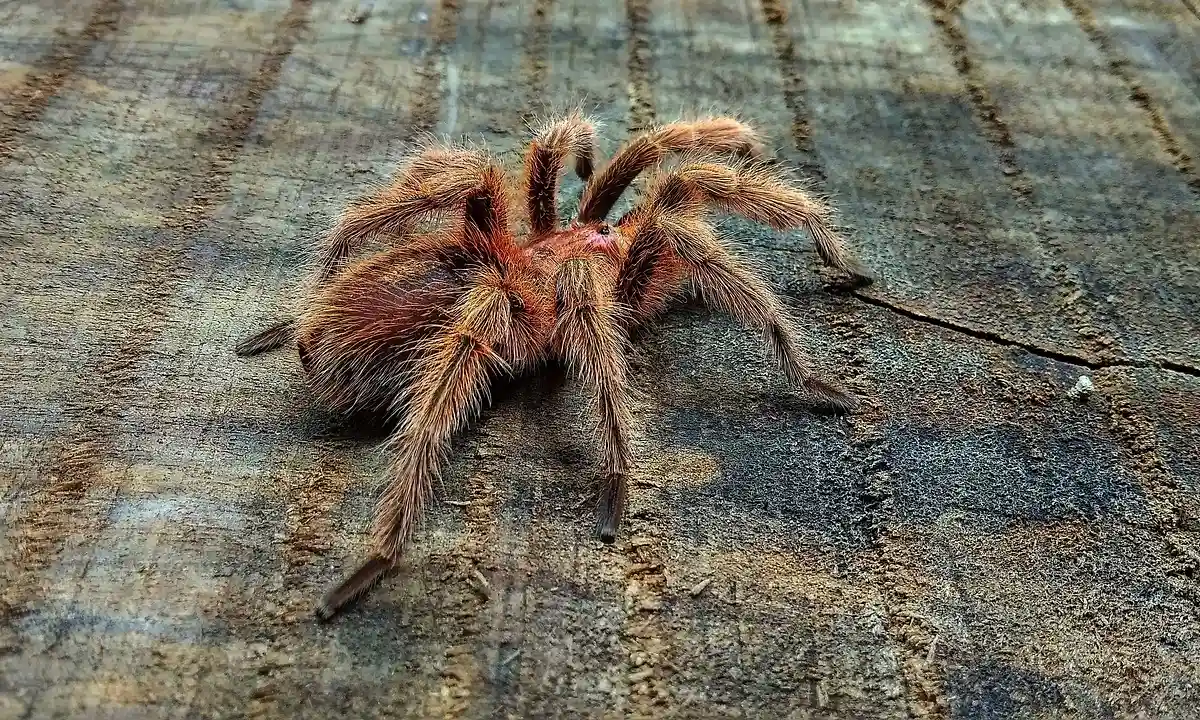
The Hatching Process and Egg Sac Management
Inside the silken fortress of the egg sac, a quiet miracle unfolds. The pearl-like eggs do not hatch directly into tiny spiders. Instead, they first release prelarvae-immobile, legless forms that rely entirely on their yolk reserves. This stage is a silent, vulnerable waiting game.
After roughly two to three weeks, depending heavily on temperature, the prelarvae molt into the next stage: the larvae. These still lack functional mouthparts and legs. The mother’s role here is not one of feeding, but of vigilant protection and subtle environmental control-she may rotate the sac or adjust her position to regulate humidity and temperature. I’ve observed my female G. rosea gently palpating her sac, a behavior thought to prevent the developing young from sticking together.
Typical incubation times are climate-dependent. In a warm, stable enclosure (78-80°F), the entire process from egg to the next stage can take 4-7 weeks. Cooler temperatures will significantly slow development. During this time, the keeper’s job is to provide absolute peace and constant, appropriate humidity-disturbing a female with a sac risks her destroying it.
Becoming True Spiderlings: The First Instar Molt
The transformation into a recognizable tarantula happens with the postembryonic molt, often called the first instar. The larvae molt one final time inside the egg sac to emerge as first instar (i1) spiderlings. This is their true “birth.” They now possess miniature fangs, working legs, and silk spinners. They are ready to face the world. Understanding tarantula molting cycles starts with these early molts and continues as spiderlings grow and molt toward adulthood. By noting the timing and frequency of i1 molts, researchers and hobbyists gain clues about growth rates, development milestones, and care needs during the spiderling stage.
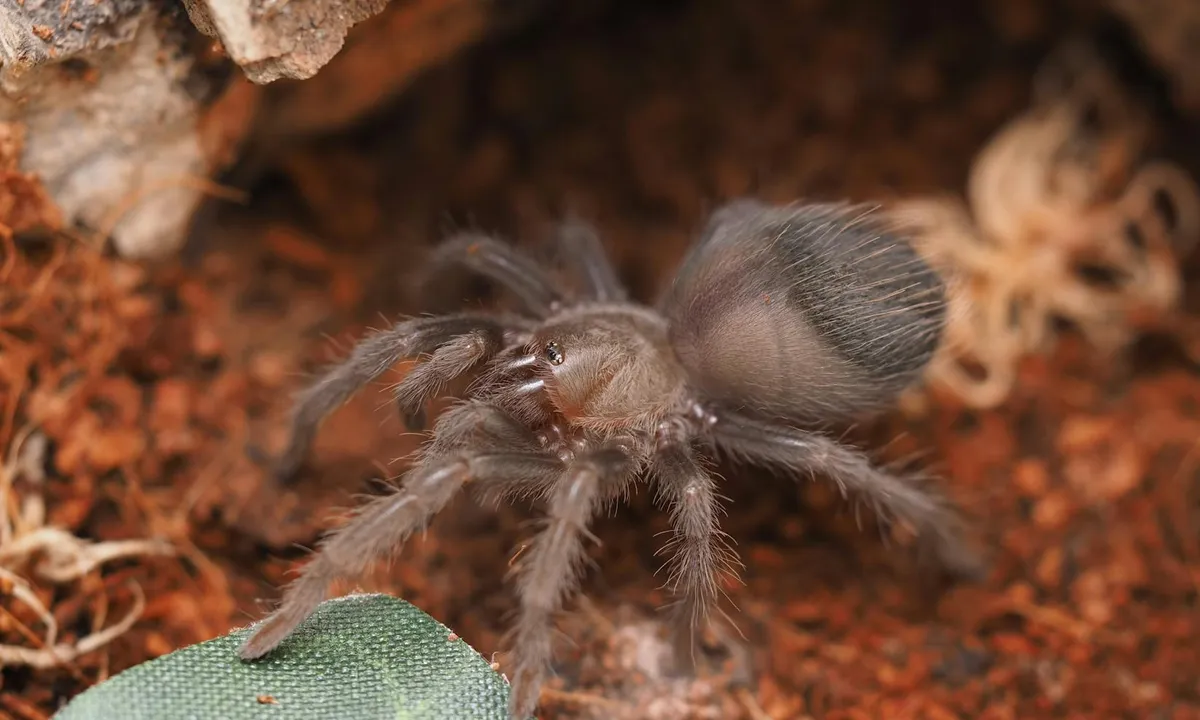
The differences between these spiderlings and adults are profound. At this stage, they are often pale, extremely fragile, and their proportions are vastly different-they are all legs and abdomen with a tiny carapace. They lack the vibrant coloration of their parents; my OBTs, for example, hatch out a muted beige, not the fiery orange of their mother, Flash.
- Size: They can be shockingly small, often 3-5mm in legspan-no larger than a pinhead.
- Function: They can walk, produce silk, and may even perform threat poses, but they are not yet ready to feed.
- Dependence: They remain within the safety of the egg sac or their mother’s burrow for their first days as i1s.
4. Early Days: Maternal Care and Spiderling Behavior
The Communal Phase
For a brief, fascinating period, tarantulas exhibit a form of social living. The first instar spiderlings will remain with their mother, often clustered on or near her body or within the nursery burrow. This communal phase is one of the most captivating sights in arachnoculture—a patient mother surrounded by a living carpet of her young, exhibiting typical tarantula behavior.
They may share prey items, with the mother subduing a cricket that the spiderlings then swarm. This care period varies dramatically by species. My docile Grammostola rosea (like Rosie) may tolerate her young for only a few weeks before her maternal instincts wane. In contrast, some heavy-webbers or fossorial species may cohabit for several months. You must watch for the mother’s changing demeanor; the moment she becomes restless or the spiderlings begin to disperse independently, it is time to separate them to prevent cannibalism.
First Meals and Growth
Once the spiderlings have left the egg sac and hardened after their first instar molt, they will soon need their first meal. Their prey must be microscopic. Appropriate first food items are critical for their survival and include flightless fruit flies (Drosophila melanogaster) or freshly hatched pinhead crickets. I culture my own fruit flies for this exact purpose.
An early feeding schedule is not aggressive. Offer one or two appropriately sized prey items per spiderling every 3-5 days. Their abdomens will visibly plump. Do not leave live prey in the enclosure if uneaten, as even a small cricket can stress or injure a vulnerable spiderling. Housing them individually in small deli cups or condiment containers with ventilation and slightly damp substrate simplifies feeding and monitoring their crucial early growth, leading up to their next molt in just a few weeks (learning what and how much to feed them).
5. The Great Dispersal: Spiderlings Leave the Nest
Triggers for Dispersal
The tight-knit nursery web begins to stir with independent life. Spiderlings, once a static cluster, become restless. Crowding is a primary physical trigger. As each tiny tarantula grows, the shared space becomes limited, sparking an innate drive to explore.
Hunger amplifies this urge. The immediate area around the mother is soon depleted of microscopic prey. In some species, the mother may even reduce her care, a behavioral cue that it is time to go. This dispersal is not random chaos but a calibrated survival strategy to reduce competition and colonize new territory.
The most dramatic method is ballooning. Spiderlings climb to an elevated point, tip their abdomens, and release streams of silk that catch the wind. I witnessed this with my Grammostola rosea offspring, seeing them vanish from the lid like living dust. This silent, aerial journey can distribute them over astonishing distances, a beautiful and efficient start to a solitary life.
- Crowding: Increased size and activity in the nest prompts departure.
- Resource Depletion: Hunger drives the search for new hunting grounds.
- Maternal Signals: Reduced interaction or feeding from the mother can be a cue.
- Ballooning: Using silk as a kite for wind-based dispersal.
Setting Up for Solo Life
Once dispersed, your role shifts to providing for dozens of independent lives. Immediate separation is non-negotiable to prevent cannibalism. I house mine in simple, clear deli cups or small dram vials. Proper ventilation is as crucial as security, preventing stagnant air while containing even the smallest escape artist.
Humidity needs are species-specific and must be precise. For my Theraphosa stirmi spiderlings, I maintain 80-85% humidity with damp substrate. For arid species like Grammostola rosea, 50-60% is sufficient, provided with a water dish. Spiderlings desiccate with terrifying speed, so consistent moisture monitoring is your daily duty. It’s especially important to understand the heating and humidity requirements for various tarantula species.
Feed them pinhead crickets or flightless fruit flies every three to four days. Their first solo molt is a milestone fraught with risk. Provide a stress-free environment with no handling, stable temperatures around 75-78°F, and gentle humidity to ensure that critical shed goes smoothly.
- Housing: Individual, escape-proof containers with cross-ventilation.
- Humidity: Match to species: high for tropical (75-85%), low for arid (50-65%).
- Substrate: Use a moisture-retentive layer like coconut fiber or peat moss.
- Feeding: Offer appropriately sized live prey twice weekly.
- Water: A bottle cap filled with water or a damp cotton swab is essential.
6. Challenges for the Breeder: Egg Sac and Spiderling Care
Recognizing and Responding to Problems
Signs of a Failing Egg Sac
A viable sac is typically plump and guarded fervently by the mother. Problems manifest visibly and olfactorily. Discoloration, such as a shift to gray or black, is a major red flag. A healthy sac has no smell; a foul, sour odor indicates fungal or bacterial invasion and likely internal death.
Abandonment is another critical sign. If the mother consistently leaves the sac uncovered and exposed, intervention may be needed. “Pulling” the sac for artificial incubation is a last resort. Using sterilized tools, I once carefully opened a Pterinochilus murinus sac showing mold, placing the eggs in a ventilated container on damp paper towel at 78°F, gently rotating them daily.
- Visual Clues: Shriveling, dents, or dark, sunken spots on the sac.
- Odor: Any detectable rotten or fermented smell.
- Maternal Behavior: Prolonged abandonment or aggressive damaging of the sac.
- Emergency Steps: If failed, remove sac with clean tools, provide humid incubation at 78-80°F, and mimic natural movement.
Spiderling Health and Survival
The first few instars are a delicate gauntlet. Cannibalism is the most direct threat, often triggered by inadequate space or hunger. Dehydration appears as lethargy and a pinched, shriveled abdomen. Failure to thrive, where spiderlings refuse food and never molt, can stem from congenital weakness or incorrect environmental parameters.
Successful early molts depend on perfect hydration and zero disturbance. I learned this harshly when a batch of Theraphosa stirmi spiderlings stalled before their first molt due to humidity dipping to 70%. Meticulous record-keeping of each spiderling’s feeding and molting cycle is your best tool for preempting health crises. For a quick guide on how often tarantulas molt, consider factors like species and age. Different species and age stages molt at different intervals.
- Cannibalism: Prevent with immediate, individual housing upon dispersal.
- Dehydration: Combat with constant water access and species-specific humidity.
- Molting Issues: Ensure a secure hide and never disturb a spiderling in pre-molt.
- Monitoring: Keep a log for each spiderling to track growth and identify laggards.
The Ethics and Realities of Home Breeding
Breeding tarantulas is an exercise in profound responsibility, not just a curious experiment. A single egg sac can produce 500 to 1,000 spiderlings. You are committing to the long-term care, housing, and ethical rehoming of an entire generation of animals.
The “Look, Don’t Touch” ethos is paramount here. Spiderlings are exceptionally fragile; even a gentle touch can rupture their delicate exoskeletons or cause fatal stress. Your respect for their autonomy directly translates to their survival rates and overall well-being, much like understanding why handling isn’t always a sign of affection.
Breeding should be undertaken to sustain the hobby, not for novelty. I have spent countless hours preparing vials and sourcing food for hundreds of offspring. The true reward is not in handling them, but in observing the silent, efficient perfection of their independent lives from the very start.
- Scale of Commitment: Prepare for hundreds of tiny lives needing care for months.
- Responsible Rehoming: Have a verified plan for placing spiderlings before breeding.
- Hands-Off Care: Adhere strictly to observational care to ensure spiderling safety.
- Purposeful Breeding: Aim to improve genetic diversity and husbandry knowledge, not just produce numbers.
FAQs
When should I pull an egg sac from the mother?
Pulling the egg sac is generally a last resort and should only be done if the mother abandons it or if it shows clear signs of failure like mold or a foul odor. Artificial incubation is incredibly delicate and carries a high risk of losing the entire sac due to improper humidity or handling. It is almost always best to trust the mother’s instincts, as her constant care in rotating and guarding the sac provides the ideal environment for development.
What are the risks of leaving the egg sac with the mother?
The primary risk is that a stressed or disturbed female may eat her own egg sac. Sudden environmental changes, excessive vibrations, or even routine maintenance can trigger this behavior. For some species with stronger maternal instincts, the risk is lower, but for others, it is a constant possibility. The best practice is to provide absolute peace, do not feed the female, and observe only from a distance to minimize any threat.
What do I feed newly hatched spiderlings?
First instar (i1) spiderlings do not eat; they live off their internal yolk reserves. Once they molt into the second instar (i2) and leave the egg sac, they require microscopic live prey. The most appropriate and safest food sources are flightless fruit flies (Drosophila melanogaster) or freshly hatched “pinhead” crickets. Never leave uneaten live prey in their enclosure, as it can injure or stress the fragile spiderlings.
How long do spiderlings stay with their mother?
The communal phase varies greatly by species, lasting from a few weeks to several months. You must observe the group closely for behavioral cues. When the spiderlings begin actively dispersing from the mother or she starts to become restless or shows less interest in them, it is time to separate them immediately. Delaying separation leads to cannibalism as they become mobile and hungry.
How do I house hundreds of spiderlings after dispersal?
You must house each spiderling individually in an escape-proof container to prevent cannibalism. Small deli cups, condiment cups, or dram vials with cross-ventilation are ideal. The setup needs a small amount of slightly damp (species-dependent) substrate, like coconut fiber, and a tiny water source. This allows for easy monitoring of health, feeding, and molts for each individual.
Why are my spiderlings not eating or molting?
Spiderlings may refuse food if they are in pre-molt, a normal behavior. Consistent refusal across many individuals often points to environmental issues, most commonly incorrect humidity or temperature. They are also extremely sensitive to stress and vibration. Ensure their housing provides stable, species-specific conditions and is kept in a quiet location, and never handle them. If your tarantula refuses to eat, check if it is in pre-molt or stressed by the environment. Simple adjustments addressing common causes and safe feeding strategies can often resolve the issue.
The Final Chapter: From Spiderlings to Self-Sufficiency
After the intense journey of egg-laying and sac-guarding, the most delicate phase begins. Your role shifts from protector to provider. The single most critical factor for newly dispersed spiderlings is consistent, gentle humidity-a slight dampness to one corner of their enclosures prevents fatal dehydration in these tiny, vulnerable arachnids. I keep my sling vials on a dedicated shelf, checking their moisture levels weekly. A collapsed, shriveled spiderling is a heartbreak you can easily prevent.
Now comes the reward. Observe them. Watch as they explore their miniature worlds, practice webbing, and pounce on fruit flies with shocking precision. Each successful molt is a triumph, a slight increase in leg span and color definition. This stage demands profound patience. Growth is measured in months, not weeks. Resist the urge to over-handle or over-feed. Your quiet observation is the greatest care you can offer. Sit with them. Learn their rhythms. In their silent, deliberate growth, you’ll find the true, deep fascination of this hobby.
Further Reading & Sources
- Raising Young Tarantulas [aka “spiderlings”]
- Do Tarantulas Eat Their Babies? Do THIS With Spiderlings! – Cute Monster Care
- Do tarantula mothers care for their spiderlings? – Quora
Arlo is a lifelong arachnid enthusiast who believes tarantulas are the world’s most misunderstood roommates. With years of hands-on experience in tarantula care, habitat setup, and species behavior, Arlo combines expert knowledge with a dash of humor to make spider ownership less scary and a lot more fascinating. From choosing the right enclosure to understanding why your eight-legged buddy is doing that weird little pose again, Arlo is here to help you become the best tarantula parent you can be, without getting tangled in the web of misinformation.
Breeding Tarantulas