
Is a Tarantula a Good ‘Classroom Pet’? A Realistic Assessment
Published on: January 31, 2026 | Last Updated: January 31, 2026
Written By: Arlo
Tarantulas inhabit a unique space in the human psyche, often evoking a mix of fear and fascination. In a classroom setting, this duality transforms them from objects of dread into powerful tools for teaching patience, biology, and respect for often-maligned life forms. This article provides a clear-eyed evaluation of their suitability, balancing the undeniable educational benefits against the absolute necessity for safe, non-interactive care. Success hinges entirely on selecting an appropriate, docile species and enforcing a strict “look, don’t touch” policy for the safety of both students and spider.
- Origin: Global, from South American rainforests to African savannas
- Type: New World (generally calmer, with urticating hairs) or Old World (often faster, more defensive)
- Growth Rate: Slow; reaching maturity can take several years
Based on my experience raising everything from my stoic Chilean Rose Hair to my skittish Orange Babbler Tarantula, I will detail the exact husbandry, habitat design, and classroom protocols required to foster a healthy tarantula and a meaningful learning experience.
The Classroom Reality: Beyond the Novelty
Student Curiosity vs. Arachnid Stress
A classroom bubbles with energy, but that energy can be a torrent of stress for a tarantula. Students naturally want to see action-a feeding, a walk, a reaction. A tarantula’s world is one of calculated stillness and sudden, silent strikes. My defensive OBT, Flash, illustrates this perfectly; a hand near his enclosure triggers a frantic webbing response and a threatening posture, his bright orange color a stark warning. These are not behaviors to provoke but to observe respectfully from a distance.
Common signs of arachnid stress include:
- Rapid, jerky movements or attempts to flee.
- Flicking urticating hairs (like my T. stirmi, Goliath, does frequently).
- Hiding for prolonged periods and refusing food.
- Aggressive posturing, raising front legs and fangs.
I learned the “Look, Don’t Touch” rule after my docile G. rosea, Rosie, would retreat into a frozen ball for days after even gentle handling. Your primary lesson must be that observing natural behavior is more valuable than forcing interaction. A stressed tarantula is not teaching; it is simply surviving.
The 24/7 Nature of Animal Welfare
A classroom pet is not a nine-to-three commitment. Animal care is a relentless, daily responsibility that doesn’t pause for weekends, holidays, or summer break. Neglecting this cycle for even a few days can have serious consequences, especially for species with precise needs. My Burgundy Goliath Bird Eater requires his substrate kept damp to maintain 80-85% humidity; letting it dry risks a failed, fatal molt.
Ask these questions before committing:
- Who will check humidity and temperature daily?
- Who will feed live prey and remove leftovers?
- Who will perform deep cleans and emergency rehousings?
- Who provides care during long vacations?
I’ve cared for tarantulas for over 15 years, and their needs are constant. You cannot overlook the silence of the enclosure over a long weekend; that silence hides a living creature depending on your foresight. Different tarantula species have varying lifespans and care needs, and the environment you provide can greatly influence longevity. From humidity and temperature to enclosure size and feeding schedule, these factors influence tarantula lifespan. A detailed care roster and a dedicated teacher or custodian are non-negotiable.
Weighing the Educational Value of a Tarantula
Live Observations in Biology and STEM
A tarantula is a captivating live model for core biological concepts. From the physics of silk deposition to the chemistry of digestion, it offers real-time lessons. You can chart molting cycles (ecdysis), track growth rates, and discuss predator-prey dynamics every time it feeds. This becomes especially clear when considering tarantula molting cycles in spiderlings. Tracking their molts shows how growth is staged across instars. My Chilean Rose Hair, Rosie, once fasted for nine months before molting, providing a masterclass in metabolic adaptation.
Specific, measurable data points for study include:
- Thermoregulation: Ideal gradients from 75°F (24°C) to 85°F (29°C).
- Hydration: How different substrates retain moisture at 70% vs. 80% humidity.
- Anatomy: Examining a shed exoskeleton to identify spinnerets, fangs, and book lungs.
- Behavior: Documenting web-building patterns in arboreal species.
The educational power lies in the details-the iridescent sheen of the carapace under light, the methodical grooming of pedipalps. These observations make textbook diagrams come alive.
Teaching Respectful Observation Over Interaction
This is the cornerstone of ethical science education. Training students to watch without disturbing cultivates patience, respect for life, and genuine scientific inquiry. I frame it as field biology: we are privileged observers of a wild creature’s private life, not its directors. During a demo with my old Grammostola rosea, I had students sketch her posture and substrate choice, not ask to hold her.
Implement this with clear classroom protocols:
- Use a journal to record observations like color changes or burrow construction.
- Maintain a quiet zone around the enclosure to prevent vibrational stress.
- Discuss the tarantula’s role in its ecosystem, reinforcing its intrinsic value.
The goal is to replace the desire to handle with the skill to see. When a student points out the delicate placement of a new silk strand instead of asking for a “pet,” you’ve succeeded. This mindset extends beyond arachnids to all living things.
Assessing the Risks: Venom, Hairs, and Allergies
Understanding Medically Significant Venom
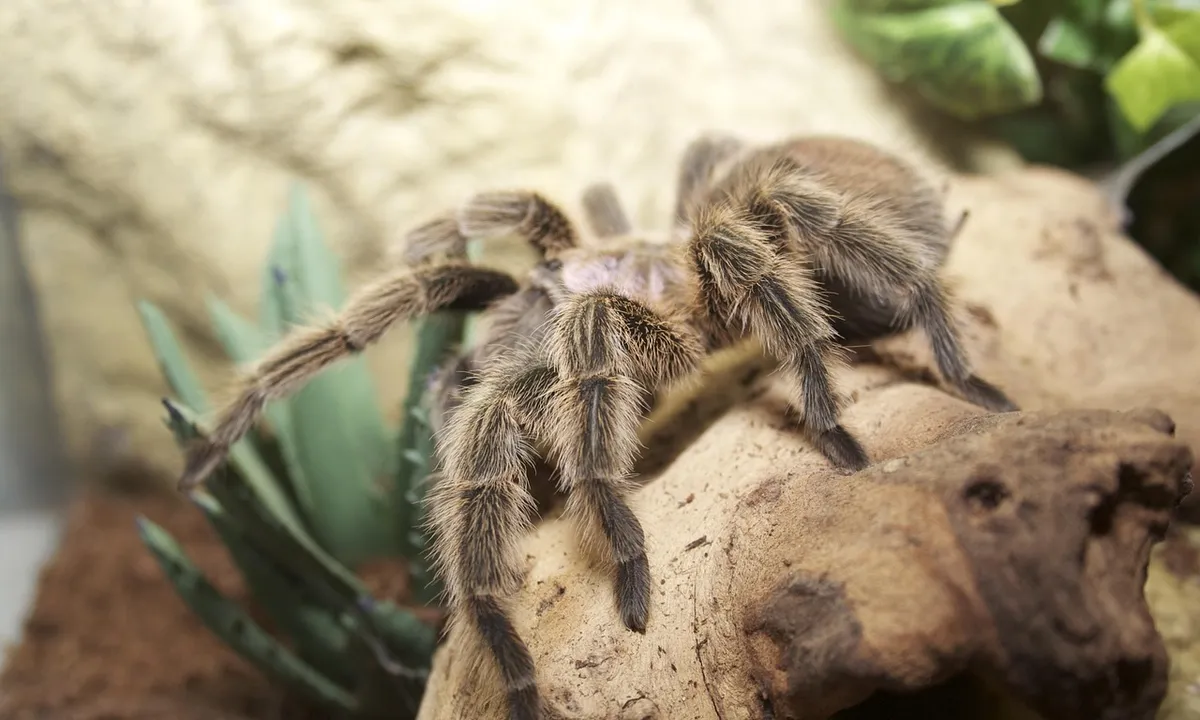
Let’s clarify tarantula venom first. For species like my old Chilean Rose Hair, Rosie, their venom is for crickets, not people. A bite from most common pet tarantulas typically causes localized pain and swelling, comparable to a bee sting. The term “medically significant” means symptoms could require a doctor’s visit, which is rare from New World species. To understand how painful a bite might be and what symptoms to expect, it’s helpful to compare it to familiar hurts. This helps people gauge pain levels and symptoms and recognize when symptoms might warrant medical advice.
Old World tarantulas from Africa and Asia, like my OBT Flash, possess stronger venom. While no tarantula venom is considered lethal to healthy adults, individual allergic reactions are unpredictable and pose the real danger. I have never been bitten by Flash, and I plan to keep it that way by never putting my hands in his web-filled enclosure—especially because Old World tarantulas are more dangerous than New World species when it comes to venom potency.
The Real Problem: Airborne Irritant Hairs
The greater classroom hazard comes from a passive defense. New World tarantulas, like my Burgundy Goliath Bird Eater, Goliath, kick clouds of urticating hairs from their abdomens. These microscopic, barbed hairs are a potent airborne irritant that can affect skin, eyes, and lungs. In a room with circulating air, these hairs can travel. This prompts the question: are tarantula urticating hairs dangerous? Understanding the real risks helps people respond appropriately and take precautions.
Allergies can develop or worsen with exposure. I wear a mask and goggles when servicing Goliath’s humid enclosure because his frequent hair-kicking has taught me respect for these invisible projectiles. For asthmatic or allergic students, an airborne event could trigger a serious reaction.
Creating a “No Touch, No Tap” Classroom Rule
This rule is your foundation for safety and animal welfare. “No Touch” protects students from potential bites or hair exposure and shields the tarantula from the profound stress of handling. These are not domesticated animals; they are wild creatures that perceive us as threats.
The “No Tap” part is equally critical. Vibrations from tapping on the glass travel like thunder through the substrate, often triggering a defensive posture or a frantic hair-flicking response. I enforce this by having students observe the silent, deliberate movements of a tarantula like Rosie instead.
Selecting a Suitable Tarantula: Temperament is Everything
Terrestrial vs. Arboreal: A Stability Decision
For classroom stability, terrestrial (ground-dwelling) species win. Their enclosures are simpler, with a focus on secure hides and deep substrate, minimizing the risk of dangerous falls. My Rosie, a terrestrial, is a classic “pet rock” who spends her days in peaceful stillness.
Arboreal (tree-dwelling) tarantulas are captivating but problematic. Their speed and climbing prowess make enclosure security paramount and any escape a high-speed chase scenario. Their natural skittishness can lead to sudden, startling movements that undermine a calm classroom atmosphere. Handling considerations differ (https://eightleggedlife.com/handling-considerations-arboreal-vs-terrestrial-tarantula-temperament): arboreal tarantulas are often more skittish and quick, requiring gentler, minimal contact. Terrestrial tarantulas tend to be slower and more tolerant, but handling should still be minimized in a classroom setting.
Top Species for a Calm Classroom Presence
Seek out species renowned for their docile nature and predictable behavior. The Chilean Rose Hair (Grammostola rosea) remains a top contender for its legendary patience and hardiness. Rosie’s 15-year tenure in my care, with her months-long fasting spells, demonstrates the uneventful rhythm these animals can bring.
Here are my top recommended, beginner-friendly terrestrials for a classroom setting:
- Curly Hair Tarantula (Tliltocatl albopilosus): A fuzzy, forgiving species that rarely flicks hairs and eats readily.
- Mexican Red Knee (Brachypelma hamorii): A slow-moving, iconic spider with stunning coloration and a generally placid disposition.
- Brazilian Black (Grammostola pulchra): Jet-black, velvety, and often described as a gentle giant with a reliable feeding response.
Species to Absolutely Avoid for a Classroom
Some tarantulas demand expert care and a quiet environment. Old World tarantulas, which lack urticating hairs and rely on speed and potent venom, have no place in a classroom. My OBT Flash, with his bright orange warning coloration and lightning-strike threat posture, is a perfect example of what to avoid.
Steer clear of these categories:
- Any Old World Arboreal (e.g., Poecilotheria genus): Extremely fast, defensive, and possess medically significant venom.
- Defensive Fossorials (e.g., Hysterocrates gigas): These burrowers can be reclusive and unexpectedly aggressive when disturbed.
- Any species labeled “advanced” or “defensive” by the community. This includes the beautiful but volatile Singapore Blue (Lampropelma violaceopes).
The Non-Negotiables of Classroom Enclosure Setup
Security: The Absolute Priority
A classroom tarantula enclosure cannot have a single point of failure. The silence of an escape is more alarming than any sound. I once underestimated the power of a determined OBT like Flash; she pried open a microscopic gap in a lid I thought was secure. You must treat the enclosure like a bank vault, where the safety of the animal and every person in the room depends on its integrity. Ventilation for a secure tarantula enclosure must be part of that security. Use secure, fine-mesh vents to ensure airflow without creating escape routes. This priority overrides all other design considerations.
Choosing a Simple, Escape-Proof Enclosure
Complexity is the enemy of security. You need a container that is simple to operate and impossible to breach accidentally.
- Material: Acrylic or glass terrariums with full sealing lids are superior to screen tops, which can warp.
- Locking Mechanism: Choose enclosures with sturdy, child-proof latches or clips. Front-opening doors are ideal for maintenance.
- Ventilation: Vents must be made of fine, stainless steel mesh or consist of small drilled holes. Plastic mesh can be chewed through.
For my moisture-dependent T. stirmi, Goliath, I use a gasketed, locking plastic tub because it holds humidity and has zero gaps. Test any enclosure by checking for flex in the lid and gaps where the lid meets the base-if it exists, a tarantula will find it.
Creating a Low-Maintenance Habitat
The interior setup must be as secure and simple as the enclosure itself. A busy classroom is no place for a delicate bioactive experiment or a deep, collapsing burrow.
- Substrate: Use 4 to 5 inches of a moisture-retentive, sterile mix like coconut fiber. This depth allows for natural digging and buffers humidity swings.
- Furnishings: One sturdy hide (cork bark flat or half-round) and an anchored, shallow water dish are all you need. Avoid tall, climbable decor near the lid.
- Moisture: Match the substrate dampness to the species. My G. rosea, Rosie, gets a bone-dry corner, while Goliath’s substrate is kept noticeably moist.
A sparse, purposeful habitat minimizes cleaning, reduces hiding spots for escaped feeder insects, and makes the tarantula easier to observe for health checks. This is the foundation of stress-free care.
The Realities of Daily and Long-Term Care
The Weekend, Holiday, and Summer Problem
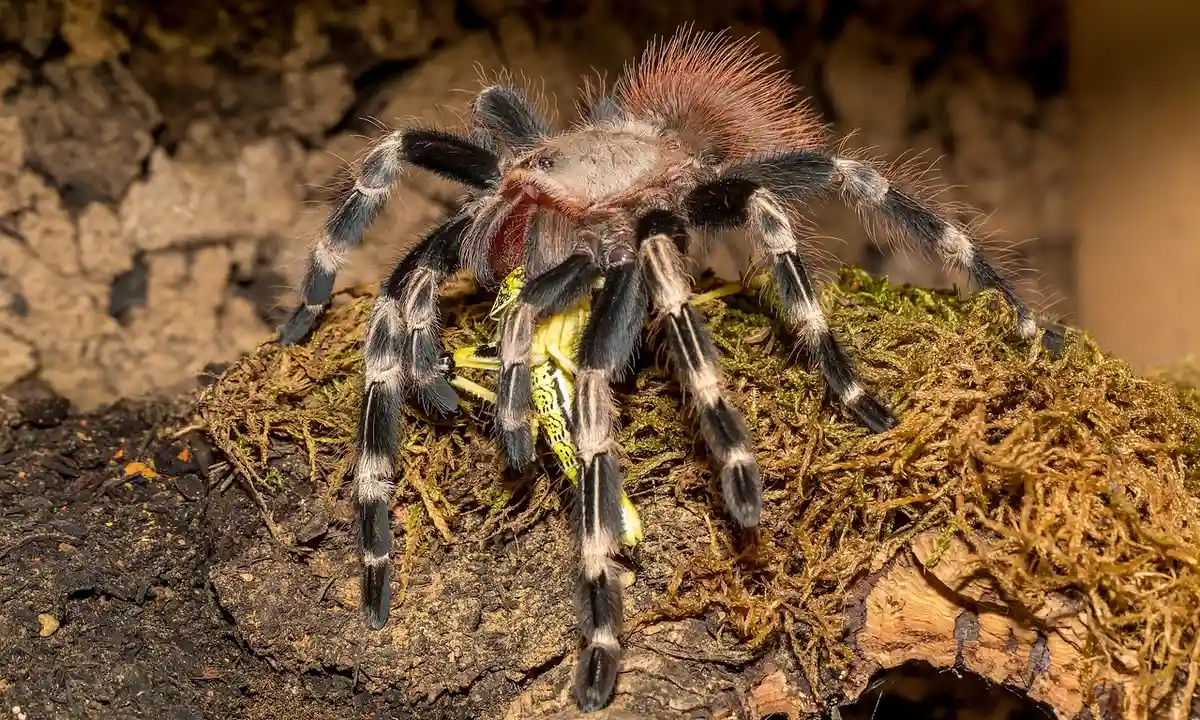
This is the most common reason classroom pet projects fail. Tarantulas can survive a weekend without attention, but a 10-day holiday or a 70-day summer break is a different matter. You cannot leave them alone. A formal care plan must be in place before the tarantula arrives, with a responsible adult identified to host the enclosure during long breaks. I rotate my collection between trusted friends who understand that care is about providing water and quiet, not interaction.
A Realistic Feeding and Maintenance Schedule
Consistency prevents problems. Create a posted schedule that students can follow.
- Feeding: Offer one appropriately-sized prey item (like a cricket) every 7-10 days. Always remove uneaten prey within 24 hours to prevent stress or injury to the tarantula.
- Water: Check and refill the shallow dish with fresh water every Monday. Evaporation is faster than you think.
- Enclosure Check: Perform a visual scan weekly for mold, mite presence, or excessive waste. Spot-clean only when necessary.
This routine takes less than 10 minutes a week and teaches responsibility through observation, not hands-on work. My fastidious P. murinus, Flash, has her webbing left entirely undisturbed during these checks.
Recognizing Molting and Illness in a Busy Room
In a dynamic classroom, you must train the eye to see subtle changes. Molting (ecdysis) is the most critical event.
- Pre-Molt Signs: The tarantula may refuse food for weeks or months. The abdomen darkens and appears shiny. The spider becomes reclusive and may seal its hide. My Rosie famously fasts for up to 8 months before a molt.
- During the Molt: The tarantula will flip onto its back or side. This process can take hours. Absolute silence and zero disturbance are mandatory-this is a vulnerable, life-or-death moment for the animal.
- Signs of Distress: A chronically shrunken abdomen signals dehydration. A tarantula that stumbles or has trouble moving may be injured. Constant hair-kicking, like my Goliath does, indicates environmental stress.
Implement a ‘hands-off’ observation protocol so students can report these signs without ever opening the enclosure. This protects the tarantula and turns health monitoring into a science lesson.
The Ethical Commitment and Hidden Costs
Bringing any animal into an educational space is a profound responsibility. For a tarantula, this commitment extends far beyond being a fascinating exhibit on a Monday. It requires a foundational shift in perspective from everyone involved.
Viewing the Tarantula as a Resident, Not a Prop
Students may initially see a captive invertebrate as a science project. Our role is to guide them toward seeing it as a living resident with specific, non-negotiable needs that continue during weekends, holidays, and summer breaks. Its care cannot hinge on a single enthusiastic teacher; it demands an institutional plan.
A tarantula is not a hamster. Its stress signals are subtle: refusing food for months like my Rosie, kicking urticating hairs like Goliath, or sealing its burrow. A classroom’s daily commotion can be a constant low-grade stressor. We must champion silent observation over handling, teaching respect for its space. The lesson isn’t in holding it, but in noticing the delicate placement of a new silk trip-line by an OBT like Flash.
The ethical core is acknowledging its lifespan. A female Grammostola rosea can live 25 years or more. Acquiring a tarantula for a classroom is a potential multi-decade commitment that will outlast students, teachers, and even curricula. Who assumes guardianship when the sponsoring teacher retires or moves on? This question must be answered before the enclosure is ever purchased.
Budgeting for the Entire Lifespan
The initial purchase price of the spider is the smallest financial component. True budgeting accounts for the full setup and decades of upkeep. Here is a realistic breakdown:
Essential Startup Costs
- Enclosure: A secure, well-ventilated terrarium appropriate for the species’ size and habits. For an adult, this can range from $50 to $150.
- Substrate: Several inches of pesticide-free topsoil, coconut fiber, or a bioactive mix. Plan for at least $20-$30 for a deep fill.
- Hides & Decor: A proper cork bark hide and perhaps artificial plants. ($15-$25).
- Water Dish & Tools: A shallow dish and long tongs for feeding and maintenance. ($10-$20).
Recurring & Hidden Costs
- Food: A steady supply of feeder insects (crickets, roaches). While cheap weekly, this cost never stops. ($5-$15/month).
- Substrate Replacement: Even in bioactive setups, periodic partial changes are needed. ($20-$40/year).
- Heating: Most classrooms are too cold at night. A small space heater for the room or a thermostat-controlled heat mat for the enclosure may be necessary. ($30-$80 initial, plus electricity).
- Contingency Fund: This is critical. Enclosures can crack, hygrometers fail, or a mysterious illness may require a specialized exotic veterinarian-a service that is rare and expensive. Having a fund of $200-$500 for emergencies is not an extravagance; it is a basic duty of care.
I advise any school to calculate a 5-year projected cost, not including the contingency fund. The total often surprises administrators thinking only of the $30 spider. This financial foresight is the practical backbone of the ethical commitment, ensuring the animal’s welfare is never compromised by budget shortfalls.
Common Questions
What is the single best tarantula species for a first-time classroom?
For a classroom, the Curly Hair Tarantula (Tliltocatl albopilosus) is often the top recommendation. It is famously docile, hardy, and has a good feeding response. Its tendency to be visible and its fuzzy appearance make it engaging for students, while its generally calm demeanor minimizes stress-related issues. It represents a perfect balance of educational interest and manageable care.
How do we safely handle an escape, and what should our plan include?
An escape plan is a non-negotiable part of classroom protocol. The plan must prioritize student safety first by having them calmly leave the immediate area. Designated staff should use clear plastic cups and stiff cardstock to gently capture the tarantula without touching it. The plan should be posted, rehearsed with staff, and include contact information for a local exotic pet expert who can assist.
Are there any tarantulas suitable for younger elementary classrooms (e.g., K-3)?
Generally, tarantulas are not recommended for very young classrooms due to the need for extremely consistent, quiet care and the inability of young children to fully understand the “no touch” rule. If pursued, it must be a teacher-managed exhibit only, with a docile terrestrial species like a Chilean Rose Hair. The focus would be on distant, guided observation rather than any student-led care. Beginners should read up on whether handling tarantulas is safe and recommended before considering them for any educational setting.
What are the ongoing costs beyond the initial setup?
The recurring costs are modest but perpetual. You will have a continuous expense for feeder insects (crickets, roaches) and occasional costs for replacing substrate. The most critical financial consideration is establishing an emergency vet fund, as consulting an exotic specialist can be costly. You should also budget for potential enclosure upgrades as the tarantula grows. For a comprehensive breakdown, refer to How Much Does a Pet Tarantula Cost: Initial and Ongoing Expenses.
What happens to the tarantula during summer break or if the teacher leaves?
This requires a formal, written custody plan established before acquiring the animal. A committed staff member or a responsible, trained student (with parental involvement) must take the enclosure home for the summer. The plan must also outline permanent rehoming procedures to a vetted individual should the school no longer be able to provide care, ensuring the tarantula’s welfare for its entire lifespan.
Long-Term Success: Beyond the Enclosure
The single most critical husbandry factor for any classroom tarantula is consistent, clean water access. A shallow, spill-proof water dish, refreshed weekly, is non-negotiable for hydration and microclimate stability, far outweighing temporary humidity swings. Dehydration is a silent, slow threat; that humble water dish is their lifeline.
True success is measured not in handling sessions, but in observed natural history. Watch for the methodical webbing of an Avicularia, the precision excavation of a fossorial species, or the patient ambush of a Grammostola. Patience is the ultimate educational tool, revealing more about arachnid biology in one quiet web-building session than any textbook diagram ever could. In a classroom, this cultivates a profound respect for an animal whose world is built on stillness, sensitivity, and sudden, efficient action.
Further Reading & Sources
- Classroom Pet Tarantula Advice | Arachnoboards
- Spiders in the Classroom – Oh My! ~ Pets in the Classroom | Education Grants
- r/tarantulas on Reddit: To-be-or-not-to-Be Getting a Tarantula for the Classroom
Arlo is a lifelong arachnid enthusiast who believes tarantulas are the world’s most misunderstood roommates. With years of hands-on experience in tarantula care, habitat setup, and species behavior, Arlo combines expert knowledge with a dash of humor to make spider ownership less scary and a lot more fascinating. From choosing the right enclosure to understanding why your eight-legged buddy is doing that weird little pose again, Arlo is here to help you become the best tarantula parent you can be, without getting tangled in the web of misinformation.
Handling and Interaction