
Tarantula Refusing Food? A Checklist of Non-Health-Related Reasons
Published on: December 26, 2025 | Last Updated: December 26, 2025
Written By: Arlo
A tarantula’s prolonged fast is one of the most common, and nerve-wracking, experiences for a new keeper, often having little to do with illness. You watch, you worry, you offer a plump cricket only to have it ignored or aggressively rebuffed. I’ve spent many quiet evenings observing my 15-year-old Grammostola rosea, Rosie, during her multi-month hunger strikes. This guide will walk you through the logical, step-by-step reasons-outside of sickness-why your eight-legged friend might be on a diet. The most frequent answer is simple: your tarantula is likely in pre-molt, a natural and healthy process where eating stops completely.
Quick Stats on Common ‘Fasting’ Species:
- Chilean Rose Hair (G. rosea): Origin: Chile, Type: New World, Growth Rate: Very Slow
- Burgundy Goliath Bird Eater (T. stirmi): Origin: South America, Type: New World, Growth Rate: Fast
- Orange Bitey Thing (P. murinus): Origin: Africa, Type: Old World, Growth Rate: Very Fast
This checklist will help you move from anxiety to understanding, transforming that silent enclosure from a source of stress into a window onto your pet’s incredible natural rhythms.
Understanding Normal Tarantula Fasting
Watching your tarantula ignore a plump cricket can trigger instant worry. But in their world, voluntary fasting is a standard feature, not a bug. The ability to go extended periods without food is a profound survival adaptation rooted in their slow metabolism and opportunistic feeding style in the wild. Your first task as a keeper is to recalibrate your expectations of a “normal” feeding schedule.
How Long Can a Healthy Tarantula Go Without Food?
This answer varies dramatically by species, age, and individual history. My oldest, Rosie, the Grammostola rosea, once fasted for a staggering 14 months as a mature adult. She was plump, hydrated, and simply… indifferent.
Here’s a general guide based on life stage and type:
- Spiderlings: Fast for days, maybe a week or two during premolt. They need regular food for growth.
- Juveniles: Can refuse food for 2-6 weeks, especially before a molt. Monitor abdomen size.
- Adult Desert Species (e.g., Grammostola, Aphonopelma): Champions of fasting. 6-12 month fasts are not unusual for healthy, well-fed specimens. I’ve seen it repeatedly.
- Adult Tropical Species (e.g., Caribena, Avicularia): Tend to fast for shorter periods, often 1-3 months, but are not immune to longer strikes.
The single best indicator of health during a fast is a rounded, plump abdomen. A tarantula with a full “opisthosoma” is running on stored reserves, intentionally.
When Fasting Signals a Problem
Fasting becomes concerning when paired with other physical signs. Refusal to eat is a symptom, not a diagnosis. You must look for corroborating clues.
- A Shrinking Abdomen: If the abdomen becomes small, wrinkled, or deflated over weeks during a fast, it signals the reserves are depleting without a voluntary reason (like premolt).
- Lethargy in an Active Species: My OBT, Flash, is always busy. If he sat listless in the open for days ignoring prey, I would be alarmed. Contrast this with Rosie, a natural “pet rock.”
- Odd Postures: A “death curl” is the ultimate emergency, but also watch for a constant, awkward hunching or pressing of the mouthparts against the ground.
- Dehydration: A shrunken abdomen combined with a puckered, shriveled cephalothorax points to critical water loss. The substrate may be too dry, or the water dish empty.
Action Step: If fasting is accompanied by a worsening abdomen size or odd posture, check husbandry first-refresh the water dish, ensure temperatures are correct-before assuming illness.
The Life Cycle Pause: Molt and Reproduction
Two of the most significant biological events in a tarantula’s life command a complete cessation of feeding. Both processes require immense internal resources and render the animal physically vulnerable.
Premolt: The Most Common Cause of Food Refusal
This is the number one reason your tarantula has gone off its food. Premolt is the preparatory stage where the new exoskeleton forms beneath the old. During premolt, a tarantula’s body is undergoing a complete internal remodeling; eating is not only impossible but dangerous, as the old mouthparts are loosening.
Signs of premolt include:
- Abdomen Darkening: The skin on the abdomen often turns a darker, almost blackish hue as the new setae (hairs) develop underneath.
- Bald Spot Darkening: For New World species that kick hairs, the bald patch will turn from pink to a deep blue-black.
- Lethargy and Web-Sealing: Many will become inactive, seal off their burrow or hide entrance with thick webbing, and refuse all interaction.
- Loss of Appetite: This is typically the first and most obvious sign, starting weeks or even months in advance for large adults.
Post-Molt Recovery and Hunger Strikes
Once the delicate process of ecdysis is complete, the new exoskeleton is soft, wet, and utterly fragile. You must not offer food until the tarantula’s fangs have hardened, a process that takes a minimum of 7-10 days for a small sling, and up to 3-4 weeks for a large adult. Offering prey too early can injure your tarantula or result in a stressful, failed hunt.
Some individuals, like my Rosie, extend this recovery into a deliberate hunger strike. Even after her fangs are clearly hardened (black and glossy), she may wait another month or two before accepting a meal. Patience is non-negotiable.
Reproductive Behaviors That Halt Feeding
Sexual maturity brings feeding pauses tied to reproduction, not illness.
Male Maturity and Wandering
Once a male matures at his ultimate molt, his biological programming changes entirely. His sole purpose becomes wandering to find a mate; feeding becomes a distant secondary concern. He will often stop eating, pace his enclosure relentlessly, and develop tibial hooks and emboli on his pedipalps. This “wandering” phase can last for months until he is paired or succumbs to natural decline.
Gravid Females and Pre-Egg Sac Fasting
A successfully bred female, now gravid (carrying fertilized eggs), will often cease feeding as she prepares to construct her egg sac. This fasting allows her to create a clean, secure nursery without attracting mold or pests from leftover prey items in her sealed burrow. She may fast for the entire 6-8 week period of egg sac construction, guarding, and incubation. Do not attempt to force-feed her. Ensure she has a full water dish and respect her profound instinct to protect the next generation.
Environmental Audit: Stressors in the Enclosure
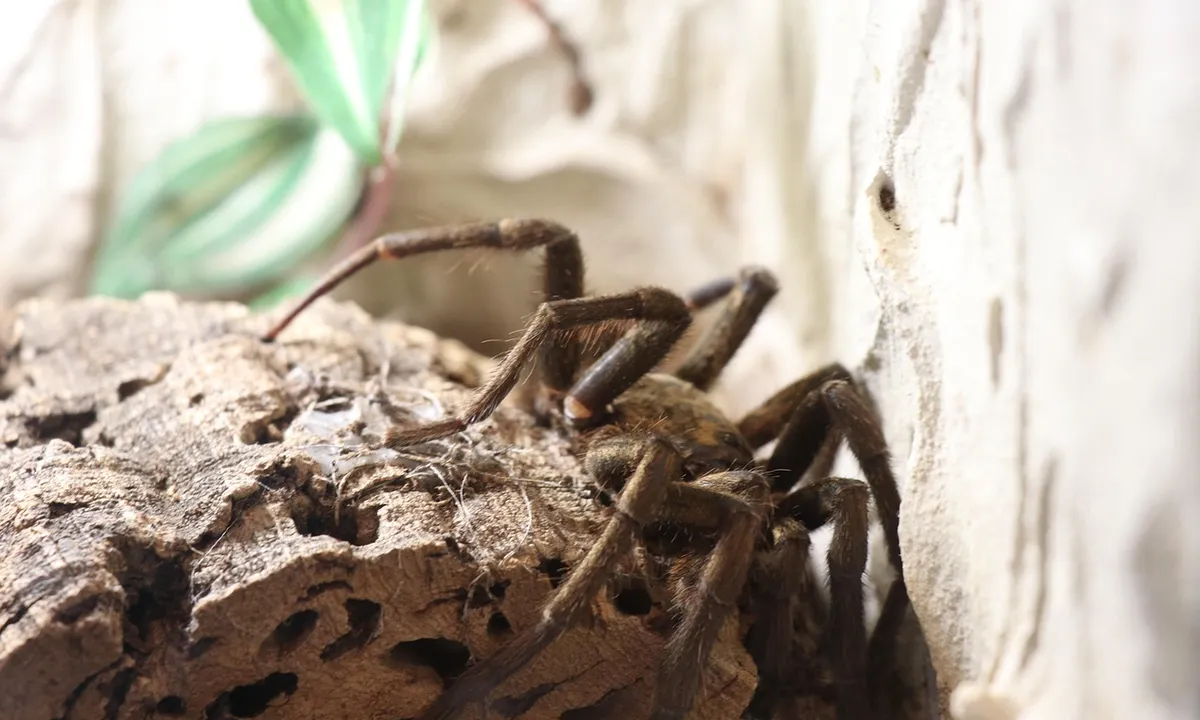
A tarantula’s world is its enclosure. When they stop eating, the first place I look is their immediate environment. Tiny, unseen stressors can trigger a complete feeding shutdown. If you’re wondering whether they’re hungry or stressed, a quick feeding behavior guide can help. It outlines common hunger cues and stress signals so you can decide when to feed and how to adjust their environment.
Temperature and Humidity Imbalances
Think of temperature as the tarantula’s metabolic engine. Too cool, and everything slows to a crawl, including appetite. I keep most of my terrestrial species between 75-80°F (24-27°C). A common mistake is assuming room temperature is sufficient, but a drafty room can drop well below a tarantula’s comfort zone. Use a small digital thermometer placed at substrate level for truth, not guesswork, especially when concerned about how temperature affects a tarantula’s metabolism.
Humidity is species-specific and critical. My T. stirmi, Goliath, will fast if her deep, moist substrate dries out even slightly. Conversely, my arid-adapted G. rosea, Rosie, would sulk in a swamp. Research your species’ needs and measure humidity with a gauge-“lightly misting” is not a husbandry plan. For moisture-dependent species, I pour water directly into a corner of the substrate to create a deep, damp zone without saturating the entire floor.
Enclosure Issues: Size, Location, and Layout
An enclosure can be too big, too open, or just wrong. A large, barren tank feels like an exposed desert to a prey animal. Providing multiple hides and ample clutter, like cork bark flats and silk plants, gives your tarantula security lines and ambush points. My defensive P. murinus, Flash, refused food in a basic setup but began feeding readily once I gave him a complex network of anchor points for his dense webbing.
Location matters immensely. Enclosures in high-traffic areas, like next to a TV or in a hallway, cause constant low-grade stress. Vibrations from speakers, slamming doors, and even frequent shadows passing over the tank can make a tarantula feel perpetually under threat. I keep my collection in a quiet, dedicated room with indirect, ambient light.
The Impact of Recent Changes
Tarantulas are creatures of profound routine. Any change can trigger a fasting period. This includes:
- Rehousing into a new enclosure.
- Changing the brand or type of substrate.
- Rearranging the cage decor.
- Moving the entire enclosure to a new room.
After any change, give your tarantula a full week of absolute peace with no feeding attempts to let them re-establish their territory and sense of safety. I’ve seen fasts last two weeks post-rehousing, which is a normal adjustment period, not a crisis.
Prey and Presentation Problems
Sometimes, the issue isn’t the tarantula’s environment, but what you’re offering and how you’re offering it. Presentation is everything.
Prey Size and Type Mismatch
A prey item that is too large can intimidate, not entice. The general rule is the prey should be no larger than the tarantula’s carapace. An oversized cricket is not a generous meal; it’s a potential threat that can injure your tarantula during a struggle. Conversely, prey that is too small might not be detected or seem worth the energy.
Prey type also counts. Some tarantulas develop clear preferences.
- Most will take gut-loaded crickets or dubia roaches.
- Superworms can sometimes burrow and become a nuisance before being caught.
- I’ve had individuals that would only strike at flying prey, like wax moths, ignoring all else.
Between superworms and mealworms, both can be safe options if the prey is appropriately sized for your tarantula. Superworms are larger and tougher, so offer them sparingly to bigger spiders; mealworms are smaller but their hard exoskeleton can be tougher for some species to digest. Experiment with different feeders if your tarantula is consistently uninterested.
Feeding Schedule and Technique Errors
Tarantulas do not need, or want, a rigid weekly feeding schedule. Their metabolism is slow. Offering food too frequently, especially to adults, is a prime cause for refusal-they simply aren’t hungry. For a mature female like my 15-year-old Rosie, a single large insect every 3-4 weeks is often plenty. This is an example of the best diet feeding schedule for a healthy tarantula: infrequent, sizeable meals. Adjust the frequency to the spider’s age, size, and species.
Your technique during feeding can also cause stress. Avoid:
- Dropping prey directly on top of the tarantula.
- Using long tweezers that bump or startle the animal.
- Leaving live prey, especially crickets, roaming in the enclosure for more than 24 hours. A harassing cricket can force a tarantula to abandon its hide.
Being aware of common signs your tarantula is stressed or aggressive can help you adjust your approach. Look for a defensive posture with raised legs and exposed fangs, sudden aggressive movements, or a retreat to its hide.
The best method is to gently place the prey item near the tarantula’s hide or current position and then leave the room, allowing the natural, silent ambush to happen on its own terms. If the prey isn’t taken overnight, remove it and try again in 5-7 days. Patience is the keeper’s most vital tool.
Behavioral and Seasonal Considerations
Species-Specific Temperaments and Habits
Your tarantula’s refusal might simply be its personality. Not all species are ravenous hunters. My 15-year-old Grammostola rosea, Rosie, embodies the ‘pet rock’ archetype, fasting for up to nine months with serene indifference. Old World fossorials like my Pterinochilus murinus (Flash) may vanish for weeks, fasting while engineering intricate tunnel systems you rarely see. An arboreal species might refuse food if its cork bark hide feels insecure. Learn your spider’s baseline rhythm-what’s normal for one is a crisis for another.
Seasonal Rest Periods and Appetite Changes
Tarantulas are exquisitely tuned to environmental cycles you may not notice. In the wild, dry or cool seasons signal a time to slow down. In captivity, a slight drop in room temperature or changes in barometric pressure can trigger a voluntary fast. This seasonal slowdown, often mistaken for premolt, is a natural conservation of energy and requires no intervention beyond constant fresh water. Across species and climates, winter often brings dormancy or slower metabolism, while summer tends to bring more activity and hunting. My Burgundy Goliath (Theraphosa stirmi) will sometimes reduce feeding for a month during winter, despite steady heat and humidity, only to resume with vigor come spring.
Stress from External Factors
Vibrations, constant light, and heavy traffic near the enclosure are invisible stressors. A slamming door or loud subwoofer can feel like an earthquake. Persistent stress shuts down the feeding response as the spider remains in a heightened state of alert, prioritizing hiding over hunting. I learned this after moving Flash’s enclosure to a busier room; his legendary appetite vanished until I returned him to a quiet corner. Even the shadow of a larger pet passing by can be enough.
Step-by-Step Diagnostic Checklist
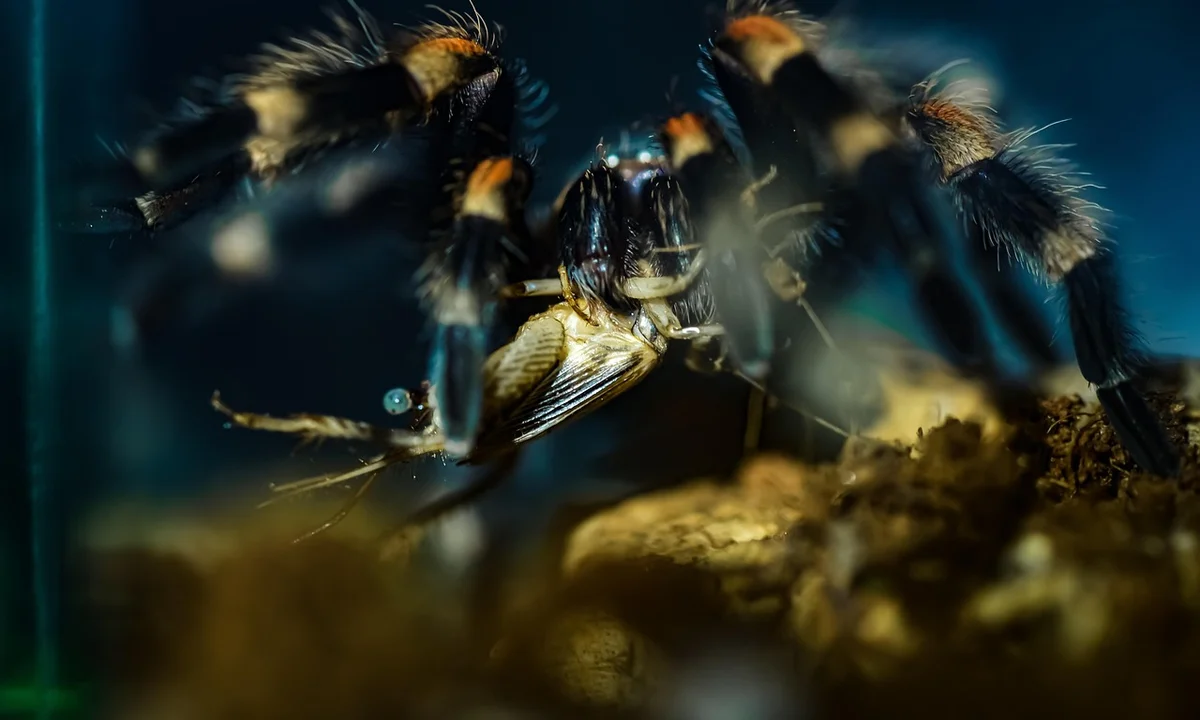
Quick Reference: Is It Molt, Environment, or Prey?
- Molting Signs: Darkened, shiny abdomen; lethargy; webbed-up hide; bald spot turning from pink to black.
- Environment Issues: Wrong temperature (too cold/hot); incorrect humidity; excessive vibration or light; enclosure too large/bare.
- Prey Problems: Feeder is too large/aggressive; wrong type (e.g., offering superworms to a timid sling); prey is left roaming too long.
Systematic Troubleshooting Flow
Step 1: Assess for Molt Signs
Observe without disturbance. Is the abdomen plump and dark with a glossy sheen? Has the tarantula sealed itself in a silk retreat? A bald patch on an Old World or New World terrestrial, which appears shiny and dark, is one of the most reliable premolt indicators. If you see these signs, cease all feeding attempts immediately. Offering food now is dangerous and will be ignored.
Step 2: Evaluate Enclosure Conditions
- Temperature: Use a digital gauge. Is it between 70-80°F (21-27°C) for most species? A drop below 70°F can suppress metabolism.
- Humidity: Not a guessing game. Is the substrate appropriately damp for your species? My T. stirmi needs moist peat, while my G. rosea needs it bone dry.
- Security: Does the tarantula have a proper, snug hide? Is there sufficient substrate to prevent injury from a fall?
Step 3: Review Prey and Feeding Method
- Size: The prey item should be no larger than the tarantula’s carapace.
- Type: Try a different feeder. A stubborn spider may accept a cricket one week and a roach nymph the next.
- Presentation: Crush the head of a mealworm or superworm to prevent it from burrowing and stressing the tarantula. Never leave live prey unsupervised for more than 24 hours.
Step 4: Consider Life Stage and Season
Mature males, focused solely on finding a mate, will almost always reject food. Adult females may slow their intake. Remember the seasonal rhythm; a healthy, plump tarantula can fast for many months during a self-imposed rest period without any ill effects. Record the last successful meal and molt dates-this data is invaluable.
Step 5: Minimize All Stress Sources
- Relocate the enclosure to a quiet, low-traffic area.
- Ensure the enclosure is not in direct sunlight or under bright room lights.
- Cover sides of a glass tank with background paper if the spider seems exposed.
- Commit to observation-only interaction. Handling is a profound stressor that can disrupt feeding for weeks, and it risks both your safety and the spider’s wellbeing.
Safely Encouraging Appetite Without Force
Seeing your tarantula ignore a plump cricket can be frustrating. My rose hair, Rosie, has taught me more about patience than any other creature, with fasts lasting over a year that required no intervention. Before assuming illness, you can make subtle, respectful changes to coax a feeding response. The goal is to reduce stress and mimic ideal conditions.
Optimizing the Environment for Feeding
Your tarantula’s world is defined by its enclosure. Small tweaks here can trigger big changes in behavior. Start by verifying your temperature gradient. Heating and humidity requirements vary by species, even among popular tarantula favorites. Knowing these specifics helps you tailor enclosure conditions to each tarantula’s comfort and health.
A drop of just a few degrees can shut down metabolism. I keep a digital thermometer probe at substrate level on the warm end. For most species, aim for a warm side of 75-80°F (24-27°C). The cool side can be 5 degrees lower.
Check for vibrations and light cycles. Enclosures on entertainment centers or in rooms with loud subwoofers can cause chronic stress. Ensure they have a consistent day/night cycle, even if just from room lighting.
Consider a partial substrate change if it’s old or compacted. For my moisture-dependent T. stirmi Goliath, I gently replace the top inch of substrate every few months to prevent mild fungal growth, which seems to stimulate his appetite.
- Verify a proper heat gradient with a reliable thermometer.
- Move the enclosure away from sources of vibration or heavy foot traffic.
- Refresh a portion of the substrate to introduce new, clean scent markers.
- For burrowing species, ensure the substrate is deep enough to feel secure.
Prey Presentation Tricks That Work
How you offer food is as critical as the food itself. A clumsy presentation can startle a tarantula. I approach my OBT Flash’s web tunnel with the same cautious focus I’d use for a delicate scientific procedure.
For tarantulas that bolt at movement, try pre-killed prey. Leave a motionless cricket or roach nymph at the entrance of their hide or web. This removes the threat of a struggling insect and allows the tarantula to scavenge on its own terms.
Crush the prey insect’s head before offering. This creates an enticing scent trail without frantic movement. I’ve used this for weeks with a hesitant sling until it confidently transitioned to live food.
Switch up the prey type. If you always use crickets, try a small dubia roach or a mealworm. The different shape and movement pattern can trigger a feeding response. The sudden strike for a novel prey item is a testament to their instinctual programming.
- Offer pre-killed prey to eliminate threat perception.
- Gently crush the prey’s head to release hemolymph scent.
- Experiment with a different feeder insect species.
- Present food at dusk or night, during their natural active period.
When to Step Back and Simply Observe
The most vital skill in arachnoculture is knowing when to do nothing. Constant interference creates more stress. After you’ve optimized the environment and offered prey appropriately, you must wait.
Remove uneaten prey within 24 hours. A live cricket can harass a molting tarantula. A decaying prey item fouls the enclosure. This is non-negotiable for the animal’s safety.
Resist the urge to prod, poke, or attempt to “hand-feed.” This risks a defensive bite or a painful flick of urticating hairs from New World species. It also destroys any trust you’ve built.
Adopt a weekly check-in routine. Offer one appropriately sized prey item. If it’s refused, note it in a log and do not offer again for 5-7 days. This routine minimizes disturbance. Your quiet observation is the highest form of care you can provide during a fasting period. The silence of the enclosure is not emptiness; it’s a state of equilibrium.
FAQs
When should I seek veterinary care for a tarantula that won’t eat?
You should seek an exotic vet if the food refusal is accompanied by clear physical distress. Major warning signs include a shriveled abdomen from severe dehydration, signs of injury like a ruptured abdomen, or odd postures such as a constant death curl. If your tarantula is listless, leaking hemolymph, or has mites visible on its body, professional help is needed. A simple fast in an otherwise healthy-looking tarantula rarely requires a vet visit.
Is it normal for older tarantulas to eat less?
Yes, it is very normal for mature tarantulas to eat significantly less. Adult females, especially of slow-growing species, have vastly slower metabolisms and may fast for many months between meals. Mature males will often stop eating entirely during their post-ultimate molt wandering phase as their sole focus shifts to finding a mate. As long as the abdomen remains plump, this reduced appetite is a standard part of the aging process and not a cause for concern.
Could dehydration cause a tarantula to refuse food?
Absolutely. Dehydration is a common non-health-related reason for fasting. A tarantula lacking adequate hydration will often lose its appetite well before showing severe physical signs. Always ensure a clean, full water dish is available. For moisture-dependent species, maintaining correctly damp substrate is also crucial. A dehydrated tarantula will usually resume eating once it has rehydrated itself from its water dish.
Does stress from handling affect feeding in tarantulas?
Yes, handling is a significant stressor that can cause a tarantula to refuse food for days or weeks. Tarantulas are not domesticated animals and interpret handling as a major predatory threat. This stress triggers a defensive state where hiding is prioritized over hunting. For consistent feeding, it is best to observe your tarantula without physical interaction, allowing it to feel secure and undisturbed in its enclosure.
Can changes in enclosure or substrate affect a tarantula’s appetite?
Definitely. Tarantulas are creatures of habit and even positive changes, like a rehouse into a larger enclosure, can trigger a temporary feeding strike. They need time to settle, lay down new silk, and establish their territory as a safe space. After any enclosure change, allow at least a full week of peace with no feeding attempts to let your tarantula adjust before offering food again.
What foods are appropriate for tarantulas and how should they be offered?
Appropriate feeder insects include gut-loaded crickets, dubia roach nymphs, and mealworms. The prey size should not be larger than the tarantula’s carapace. Gently place the insect near the tarantula, ideally at dusk, and leave the room to allow for a natural ambush. Live prey vs pre-killed prey can trigger natural hunting behavior, while pre-killed prey offers a safer, hands-off option. Your choice may depend on your tarantula’s temperament and how you balance enrichment with safety. Always remove any uneaten live prey within 24 hours to prevent stress or injury to your tarantula.
The Keeper’s Path
Throughout a tarantula’s life, especially during prolonged fasts, maintaining correct environmental humidity is your most powerful tool for supporting their health. Always prioritize a properly moistened substrate area over misting the air, as this allows your spider to drink from the ground and helps prevent dangerous dehydration, particularly before a molt. To support this, create a subtle substrate moisture gradient so your tarantula can access moister and drier zones. A layered substrate with a damp base and a drier top helps maintain the gradient and provides drinking options on the ground.
Shift your focus from the uneaten cricket to the living architecture of the enclosure. Watch the meticulous repair of a tunnel entrance or the patient, silent ambush from a silken retreat. I’ve spent hours watching my OBT, Flash, landscape his entire world with dense webbing, a behavior far more fascinating than any feeding response. This hobby rewards the patient observer. Your tarantula’s fast is not a problem to be solved, but a natural rhythm to be respected and understood.
Further Reading & Sources
- Why Won’t My Tarantula Eat? – The Tye-Dyed Iguana – Reptiles and Reptile Supplies in St. Louis.
- Has Your Tarantula Stopped Eating? Here’s What To Do
- Why Is My Tarantula Not Eating? Top 15 Reasons and Solutions – Care Guides For Pet Lizards
Arlo is a lifelong arachnid enthusiast who believes tarantulas are the world’s most misunderstood roommates. With years of hands-on experience in tarantula care, habitat setup, and species behavior, Arlo combines expert knowledge with a dash of humor to make spider ownership less scary and a lot more fascinating. From choosing the right enclosure to understanding why your eight-legged buddy is doing that weird little pose again, Arlo is here to help you become the best tarantula parent you can be, without getting tangled in the web of misinformation.
Understanding Tarantula Behavior