
Tarantula Mating Season: Insights from the Chilean Rose Hair and Beyond
The Chilean Rose Hair (Grammostola rosea) is famed as a beginner’s ‘pet rock’ for its profound stillness, but this dusty-pink spider harbors a hidden rhythmic drive tied to the seasons. In this article, we’ll dissect the timing of tarantula mating cycles and the fascinating behavioral shifts that accompany them. While mating season generally correlates with warm, rainy periods, heightened activity is not a universal rule and depends heavily on species, sex, and individual temperament.
- Quick Stats:
- Origin: Arid scrublands of Chile
- Type: New World (possesses urticating hairs)
- Growth Rate: Exceptionally slow; females can live over 20 years
Drawing from years of breeding everything from docile G. rosea to defensive OBTs, this guide will help you interpret the signs of breeding readiness and manage the unique challenges this period presents.
What Triggers Tarantula Mating Season?
In the wild, breeding is not a random event but a precise response to environmental cues that maximize survival for the next generation. For tarantulas, these triggers are a masterclass in evolutionary timing.
The primary driver is often a distinct seasonal temperature shift, typically a warming period followed by a slight cooldown, which signals the arrival of favorable conditions. For tropical heavyweights like my Theraphosa stirmi Goliath, the ultimate trigger is the onset of the rainy season or monsoon. Increased humidity softens the ground for burrowing and causes a population boom in prey insects, ensuring plenty of food for a gravid female and her eventual spiderlings.
The Language of Pheromones
Environmental changes prompt a sexually mature female to begin laying down a chemical trail. She deposits species-specific pheromones onto her silk and the ground around her burrow.
A mature male, having developed his emboli (sperm-transfer organs) and tibial hooks during his final molt, uses specialized chemoreceptors on his pedipalps and legs to detect these scents from remarkable distances. This pheromone “invitation” is what sends him on his perilous journey, tapping the ground rhythmically to announce his presence and intent.
Molting: The Gateway to Maturity
A tarantula cannot mate until it is sexually mature, and that milestone is reached only after the ultimate molt. For males, this final maturation molt is literal life-clock starter; he typically has one to two years to find a mate. Females become receptive only after a post-ultimate molt, when her spermathecae are renewed and ready. Signs that a female tarantula is ready to mate can vary by species, but a calmer posture and willingness to tolerate courtship from a male are commonly observed indicators, though it’s best to research the specific species you are keeping.
The mating window is narrow, often just weeks or months after maturity, before the female’s natural reclusiveness returns.
Simulating Triggers in Captivity
While captive tarantulas can breed year-round, responsibly inducing conditions can synchronize pairs and encourage natural behavior. I use this method for moisture-dependent species. To put this into practice, you should create a comprehensive breeding plan for your tarantulas. A clear plan helps you align timing, habitat needs, and monitoring to support ethical and successful pairings.
- For tropical species (e.g., Theraphosa, Megaphobema): Gradually increase enclosure humidity by 10-15% over two weeks, mimicking a wet season. Mist more frequently and ensure water dishes are full. Maintain daytime temperatures between 75-80°F (24-27°C).
- For arid species (e.g., Aphonopelma, Grammostola): Simulate late summer by providing a slight, consistent daytime warmth of 78-85°F (26-29°C) and ensuring excellent ventilation. A small, seasonal increase in feeding can signal abundance.
- For all species: Ensure the female is well-fed and has been in a post-ultimate molt condition for at least 4 weeks. Introduce the male into the female’s enclosure in the evening, never the reverse, and always be prepared to separate them.
Species Differences in Breeding Seasons
Desert vs. Tropical Tarantula Mating Cycles
Arid-adapted tarantulas have evolved to breed when summer heat begins to wane. Mating in late summer or early fall allows egg sacs to develop in cooler autumn temperatures, with spiderlings emerging in spring to exploit new growth and insect life. This shows how tarantulas adapt to desert environments. By breeding during cooler windows, they dodge peak heat and give offspring a better start. My old Chilean rose hair, Rosie, hails from such an environment; her species breeds opportunistically when conditions briefly align.
Jungle and rainforest species are tightly synchronized with torrential rains. Their mating season kicks off as the humidity soars, linking the entire reproductive cycle to the peak of food availability. This is why my T. stirmi becomes notably more active and even wanders his enclosure when I raise the humidity-his instincts are whispering about monsoon season.
| Common Pet Species | Typical Natural Mating Period | Primary Trigger |
|---|---|---|
| Aphonopelma chalcodes (Arizona Blonde) | Late Summer to Early Fall | Post-summer cooling |
| Grammostola rosea/porteri (Rose Hair) | Southern Hemisphere Spring/Summer (Oct-Feb) | Seasonal warming |
| Brachypelma hamorii (Mexican Redknee) | Rainy Season (Summer) | Increased humidity & prey |
| Theraphosa stirmi (Burgundy Goliath) | Onset of Heavy Rains | Dramatic humidity increase |
| Caribena versicolor (Antilles Pinktoe) | Wet Season | High humidity & rainfall |
| Pterinochilus murinus (OBT) | After Seasonal Rains | Spike in insect activity |
How Captivity Affects Seasonal Timing
The stable, perpetual spring of our homes-constant temperature, always-available food, and artificial lighting-can dull or erase seasonal cues. This stability is a double-edged sword: it allows breeding projects to proceed on our timeline, but it can also lead to out-of-sync pairs or females that are perpetually unreceptive.
From my experience, Old World arid species and some long-lived New World terrestrials like Grammostola seem most de-synchronized. My Rosie has shown zero seasonal behavior changes for over a decade. Conversely, my moisture-loving Goliath and even my feisty P. murinus Flash still respond strongly to deliberate environmental shifts. Flash webs more intensely and patrols his tunnel exits when I simulate a post-rain humidity spike, a clear instinctual callback to his African scrubland origins.
Successful captive breeding often means becoming a conductor of these natural rhythms, carefully orchestrating the humidity, temperature, and feeding cues that tell your tarantulas it’s time.
Regional Mating Seasons in North America
Peak Activity Windows by State
Across North America, tarantula mating is a seasonal spectacle tied tightly to geography. I’ve observed that activity spikes are not random but follow predictable regional clocks. In Southern California’s arid hills and the Bay Area’s scrublands, including spots like Mt. Diablo, the air turns crisp and male Aphonopelma begin their marches. Texas brush country and Oklahoma grasslands see similar pulses. For readers in Texas, a Texas tarantula season identification guide can help you time sightings and identify local species. It complements these regional patterns with weather cues and peak date ranges. Arizona’s deserts come alive after moisture, while Colorado’s foothills offer a narrower window. Knowing your local season helps you anticipate the fascinating, heightened activity in both wild and captive tarantulas.
| Region | Common Native Species | Typical Mating Months |
|---|---|---|
| Southern California & Bay Area (e.g., Los Angeles, Mt. Diablo) | Aphonopelma eutylenum, A. iodius | Late September – November |
| Texas | Aphonopelma hentzi | August – October |
| Arizona | Aphonopelma chalcodes (Desert Blonde) | July – September, post-summer rains |
| Colorado | Aphonopelma coloradanum | September – Early October |
| Oklahoma | Aphonopelma hentzi | August – October |
Climate Patterns and Their Influence
Weather is the conductor for this biological orchestra. In California, the prolonged dry fall lowers soil humidity. This dryness seems to cue mature males to leave their burrows, risking the surface to find females before winter. The silence of a fall evening is often broken by the subtle rustle of a male tarantula on his urgent journey.
Conversely, Arizona’s intense summer monsoon rains trigger a different rhythm. The sudden humidity and cooler evenings after a storm prompt male A. chalcodes to emerge. This pattern mirrors why my Burgundy Goliath Bird Eater (Theraphosa stirmi) becomes most active when I mist his enclosure, simulating a rainy season. These climate cues are ingrained survival scripts, pushing males to disperse when conditions briefly favor their survival above ground.
Behavioral Changes During Mating Season
Male Tarantula Behavior: The Wanderlust
A mature male’s entire being transforms. Nocturnal roaming becomes incessant; he abandons web maintenance in favor of relentless pacing. His palps, now bearing swollen emboli, are held aloft as he taps and searches. In captivity, this wanderlust magnifies. You will witness heightened escape attempts, a pure drive that can make routine care a strategic operation.
I learned this vividly with a mature male Grammostola species I was rehousing. His focus was not on threat but on passage. Every lid gap was a challenge, every handhold an opportunity to climb toward an imagined female. It was a powerful reminder of their singular purpose. This is why I firmly advocate for a ‘Look, Don’t Touch’ policy during this time-for their safety and to minimize the profound stress of interrupting this natural drive.
- Increased Nocturnal Activity: He will pace the enclosure perimeter for hours.
- Web Reduction: Existing silk is often ignored or destroyed.
- Relentless Search: Constant probing with legs and palps for female pheromones.
- Escape Focus: Latches and lid seams become primary targets. Double-check enclosures.
Female Tarantula Behavior: Receptivity and Aggression
Female behavior is a study in contrast. Receptivity is subtle. She may wait near her burrow entrance, responsive to a male’s vibrations. If ready, she will accept his sperm web deposit. My old Chilean Rose Hair, Rosie, once spent a full week stationed at her hide mouth during fall, a rare change for my typically reclusive ‘pet rock’. The female controls the entire encounter, and her mood can shift from tolerance to violence in a second.
This season also brings a marked increase in defensive postures. A previously calm female may raise her front legs, flick urticating hairs, or refuse food for extended periods. It’s a energy-conserving strategy, as producing an eggsac is resource-intensive. I see this with my Goliath, who becomes more hair-flick happy during humid seasons that mimic his natural breeding time. Always use slow movements and avoid disturbances. A feeding refusal is not cause for alarm but a sign to reduce interaction and observe.
- Signs of Receptivity: Stationed at burrow entrance, calm acceptance of male approaches.
- Increased Defensiveness: More frequent threat postures and hair flicking.
- Feeding Refusals: Common before, during, and after the mating period.
- Post-Mating Caution: Females can be highly aggressive post-copulation; separate males immediately.
The Courtship Ritual: A Precise Dance
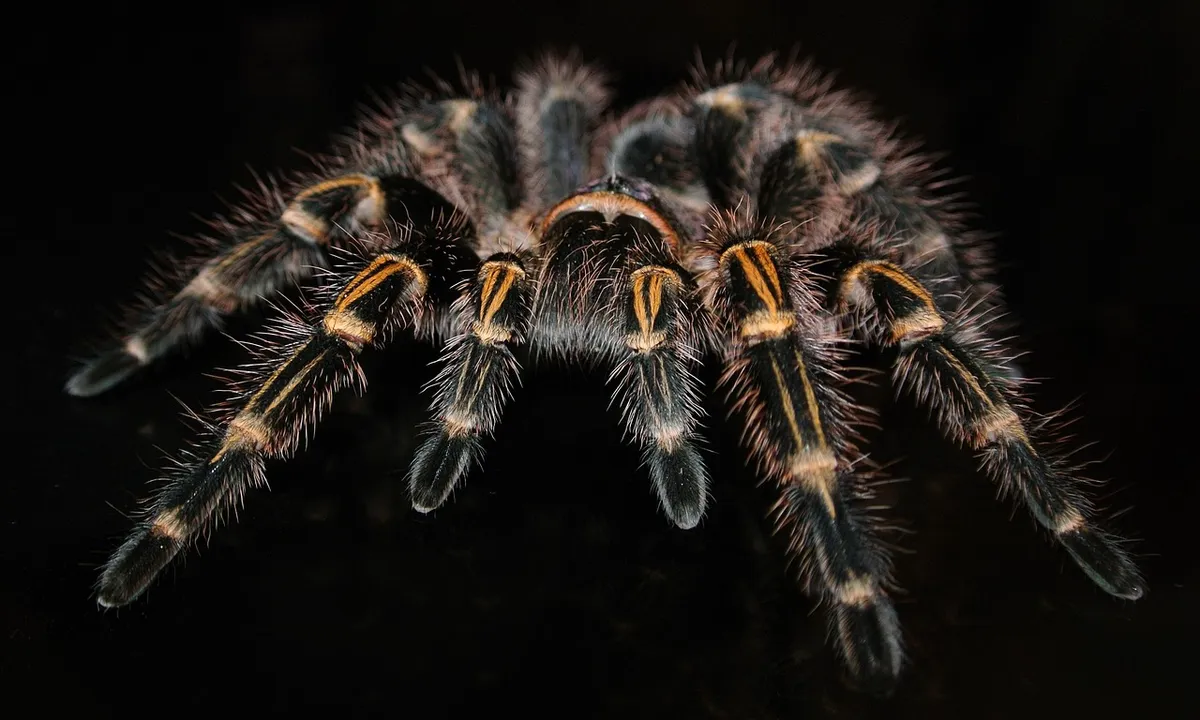
Witnessing tarantula courtship is a privilege of patience. It is not a simple encounter but a high-stakes dialogue conducted through vibration and movement. The male’s entire purpose now is to communicate he is a mate, not a meal. Tarantulas mainly communicate through vibrations transmitted through the ground. While some species may produce faint stridulations, it is the rhythm and sequence of taps, pushes, and postures that convey mating intent.
Step-by-Step Courtship and Mating
- Male approach and vibrational drumming. A mature male will cautiously enter the female’s territory. He uses his pedipalps and front legs to drum rapid, rhythmic vibrations onto the substrate or her webbing. This “courtship drumming” is species-specific. I’ve felt these faint tremors through the enclosure glass; they are a persistent, tapping plea for recognition.
- Female response and positioning. A receptive female will often answer with drumming of her own. She typically raises her front body into a receptive pose, revealing her epigastric furrow. An unreceptive female will lunge or show threat postures. The male’s success hinges entirely on correctly interpreting this split-second response.
- Brief copulation and rapid male retreat. If accepted, the male approaches, uses his tibial apophyses (hooks) to secure the female’s fangs, and inserts his modified pedipalps (emboli) to transfer sperm. This lasts mere seconds. He then disengages and flees with startling speed. Hesitation is fatal.
Risks and Outcomes: Mate Guarding and Female Aggression
Post-mating reality is harsh for the male. His energy is spent, and his reflexes dull. The female may immediately view him as prey.
- In some genera, like Poecilotheria, males may exhibit “mate guarding,” staying near the female for hours or days to mate again, which dramatically increases their risk. For most species, like my Goliath’s (Theraphosa stirmi), the advice is simple: separate them immediately after the final insertions.
- Successful sperm transfer does not guarantee an egg sac. The female can store sperm for over a year, producing a fertile sac only when conditions-nutrition, humidity, season-are perfect. I’ve had females molt out stored sperm, rendering the pairing void.
Always plan the breeding around the female’s health and be prepared for any outcome, from immediate predation to a surprise sac months later.
Are Tarantulas More Active in Mating Season?
The simple answer is yes, but the activity is not equally distributed. This seasonal shift is one of the most pronounced behavioral changes we can observe in captivity.
Activity Levels in Males vs. Females
- A mature male is transformed. His once sedentary life ends. He becomes a relentless wanderer, pacing the perimeter of his enclosure, tapping on lids, and abandoning his burrow. This is not “playful” energy; it is a driven, instinctual search. You will see him constantly.
- A receptive female’s activity is more subtle. She may renovate her burrow, web more heavily near the entrance, or be seen at her hide’s threshold more often. An unreceptive female may just be aggressively defensive. My old Rosie (Grammostola rosea) would simply threaten any intrusion with raised front legs, her version of romantic rejection.
The myth is that all tarantulas become more active; the truth is that a mature male’s frantic locomotion defines the season, while females exhibit nuanced, often cryptic, behavioral shifts. Understanding the differences between male and female tarantulas can help contextualize this behavior.
Nocturnal and Diurnal Pattern Shifts
Even strictly nocturnal species can show altered rhythms. The male’s drive overrides normal hiding behavior, leading to daytime wandering. More dramatically, web-building species often intensify their efforts.
My OBT, Flash (Pterinochilus murinus), provides a clear example. Normally, she maintains a dense funnel web. When in a receptive state, her webbing becomes frantic and expansive, sometimes sealing off entire sections of the enclosure with thick, orange silk sheets. It’s a clear, visual signal of her physiological state. This heightened activity isn’t random pacing; it’s an investment in creating a suitable nursery and a sensory net to detect a male’s vibrations.
Observing these changes requires quiet attention. Turn off the room lights and use a dim red flashlight. Watch for the new anchor points of silk, the freshly excavated dirt, the patient vigil at the burrow mouth. This is the real drama of mating season, far more intricate than simple increased movement.
Pet Care During Tarantula Breeding Season
A tarantula focused on reproduction is a creature of heightened instinct, not hobbyist routine. Your role shifts from daily manager to observant custodian. Your primary goal during this period is to provide unwavering stability and eliminate stressors that could derail natural behaviors or endanger your pet. Are the core principles of ethical tarantula breeding—welfare, minimal stress, and genetic health—being upheld? If so, your care centers on safeguarding those values through steady, observant management.
Enclosure Security and Stress Reduction
The drive to find a mate can make even a docile species surprisingly motivated. I learned this when my typically pet-rock G. rosea, Rosie, began pacing her enclosure’s perimeter during a suspected hormonal phase. A distracted tarantula is an escape artist in waiting. Security is not just about keeping them in; it’s about preventing a frantic, dangerous search that could end in a fall or a lost spider.
- Physically check all lid clasps, hinges, and ventilation panels. For sliding lids, a small piece of aquarium-safe silicone can create a simple stop.
- Reduce enclosure vibrations and unnecessary light changes. Move slowly during feeding or maintenance.
- Ensure at least one secure, dark hide is available. A preoccupied tarantula still needs a refuge to feel secure.
- Adhere strictly to a “Look, Don’t Touch” policy. Handling introduces massive stress, risks dropping a gravid female, and can cause a male to abort his mission. The silence of observation is the most respectful care you can offer during this sensitive time.
Adjusting Husbandry Practices
Do not make sweeping changes. Your tarantula’s biology is responding to subtle, consistent cues. Drastic shifts in temperature or humidity can act as false environmental triggers, confusing their internal cycle. Aim for steady parameters typical for the species, as detailed in our guide on heating and humidity requirements for popular tarantula species.
- Feeding: An adult male on a breeding loan may refuse food entirely, his focus elsewhere. Do not force it. For females, appetite can vary. Offer prey normally, but remove uneaten insects quickly to avoid disturbing her.
- Environment: Keep humidity (e.g., 70-80% for T. stirmi) and temperature stable. Avoid misting directly into the enclosure if it causes sudden spikes; use a moisture-retaining substrate and a water bowl instead.
- For Breeders: Introduction is the most critical moment. Use a large, neutral bin. Have long tweezers and multiple catch cups ready. I always use a transparent divider when introducing pairs, allowing them to see and sense each other without immediate contact, which often calms the initial defensive response. Never leave a pair unattended. Be prepared for the female to attack, and have a plan to swiftly separate them post-mating or if aggression escalates.
## Common Questions
When is the general tarantula mating season in the United States?
In the United States, tarantula mating season is not a single date but a regional phenomenon tied to local climate patterns. For most native species, like those in the Aphonopelma genus, activity peaks in late summer through fall. This typically means a window from August to November, depending on the state and specific weather conditions that year. Unlike their behavior in winter, which is generally more dormant, these warmer months see increased activity and movement as they engage in mating rituals.
When is tarantula mating season in California and Southern California?
In California, including Southern California and areas like Los Angeles, the primary mating season for native tarantulas is in the fall. You can expect to see mature males wandering most actively from late September through November. The dry, cooling temperatures of the California fall trigger this instinctual behavior in species like Aphonopelma eutylenum and other native California tarantula species.
What about tarantula mating season in the Bay Area and Mt. Diablo?
The pattern for the Bay Area, including Mt. Diablo, follows the broader California schedule. The iconic male tarantula marches here are a fall spectacle, usually occurring from late September to November. The cooling air and specific soil conditions of these coastal scrublands cue the mature males to begin their search for females.
When does tarantula mating season occur in Texas and Oklahoma?
In Texas and Oklahoma, home to species like the Texas Brown Tarantula (Aphonopelma hentzi), mating season occurs in late summer and early fall. The peak activity period for mature males is typically from August through October, as the intense summer heat begins to subside.
When is tarantula mating season in Arizona?
Arizona’s mating season is closely tied to the summer monsoon rains. For species like the Arizona Blonde Tarantula (Aphonopelma chalcodes), males become most active following these seasonal rains. This makes the peak period typically from July to September, when humidity rises and temperatures become slightly more moderate.
Are tarantulas in Colorado active at the same time?
Colorado’s mating season is similar to other western states but compressed into a shorter window due to its climate and higher elevation. Activity for native species like Aphonopelma coloradanum generally peaks in September through early October, before the colder weather sets in.
Beyond the Season
For the dedicated keeper, success isn’t measured by a single successful pairing, but by the long-term thriving of the spider in your care. The single most important factor for any tarantula, whether a wandering mature male or a sedentary female, remains a stable, stress-free environment that meets its species-specific needs. My old Chilean Rose Hair, Rosie, has taught me more about patience and observation than any other animal I’ve kept.
Take joy in the rhythms of your spider’s life, from the frantic webbing of an OBT sealing its retreat to the silent, month-long fast of a rose hair. Watch the slow, deliberate pace of a hunt, or the sudden, perfect stillness before a molt. This hobby rewards those who look closely and move slowly. Your patience is the greatest gift you can offer these remarkable, quiet creatures.
Further Reading & Sources
- Tarantula mating season is in full swing. Not everyone comes out alive – Los Angeles Times
- Tarantula mating season is coming. Brace for ‘hordes’ of them.
- Tarantula mating season starts soon. Here are the states where the spiders will be most prevalent – CBS News
Arlo is a lifelong arachnid enthusiast who believes tarantulas are the world’s most misunderstood roommates. With years of hands-on experience in tarantula care, habitat setup, and species behavior, Arlo combines expert knowledge with a dash of humor to make spider ownership less scary and a lot more fascinating. From choosing the right enclosure to understanding why your eight-legged buddy is doing that weird little pose again, Arlo is here to help you become the best tarantula parent you can be, without getting tangled in the web of misinformation.
Breeding Tarantulas