
Why Do Tarantulas Do a ‘Happy Dance’ After Eating? (Decoding Arachnid Behavior)
Published on: March 13, 2026 | Last Updated: March 13, 2026
Written By: Arlo
To an experienced keeper, the post-meal ‘happy dance’-a silent, rhythmic tapping of legs and a subtle rocking of the abdomen-is one of the hobby’s most captivating puzzles. This article isn’t about a spider’ joy, but about the precise, instinctual mechanics behind a behavior I’ve logged for years in my own collection. The dance is a functional grooming ritual, vital for removing prey debris and aiding digestion, not an expression of emotion.
- Quick Stats:
- Behavior: Post-prandial ‘Food Tap’ or ‘Happy Dance’
- Common In: Both New World (e.g., Grammostola) and Old World (e.g., Poecilotheria) tarantulas
- Typical Trigger: Completion of consuming prey, especially messy or large items
Drawing from countless feedings with spiders like my frantic OBT, Flash, and my ponderous G. rosea, Rosie, this guide will detail the biology of the dance and what it reveals about your tarantula’s health from sling to adult.
What Exactly Is the Post-Feeding ‘Happy Dance’?
You’ve just dropped a feeder insect into the enclosure. After the brief, silent strike, your tarantula doesn’t just sit still. It begins a strange, captivating ballet. This is the post-feeding ritual keepers lovingly call the “happy dance.” It’s a visible, tangible sign of a complex internal process, not merely a quirky habit.
The dance is a series of deliberate, often rhythmic motions. Front legs lift and wave in a slow, paddling motion. The abdomen lowers, with the spinnerets making a gentle, deliberate tap-tap-tap on the substrate. The entire body may execute a slow pivot or turn. Witnessing this feels like watching a private, instinctual ceremony.
- Rhythmic Leg-Waving: The primary action, where the first two pairs of legs move in a slow, alternating pattern.
- Abdomen Tapping: The spider lowers its rear, lightly drumming the spinnerets on the ground.
- Slow Pivots: A full or partial rotation of the body, often while continuing the leg movements.
This behavior is common but not universal across all 1,000+ species. My old Chilean Rose Hair, Rosie, is a “pet rock” who has performed this maybe twice in 15 years. My defensive OBT, Flash, does a rapid, web-accelerated version after every meal. These differences make the dance a fascinating point of comparison for hobbyists. The behavior is so distinctive that keepers frequently film it, leading to its fame in online memes and GIFs that help demystify tarantula behavior.
The Science Behind the Dance: Unpacking Tarantula Neurobiology
Calling it a “happy dance” is a charming anthropomorphism. In reality, it’s a pronounced neurobiological instinct driven by the high-arousal state of feeding. This isn’t about emotion; it’s about efficient survival mechanics. The dance is a physical manifestation of the tarantula’s external digestion process.
Let’s follow the sequence. The tarantula captures and envenomates prey. It then regurgitates digestive fluids, turning the insect’s insides into a liquid soup it can suck up. This is a critical, vulnerable moment. The accompanying dance likely serves multiple functional roles rooted in sensory processing. One leading theory is that the movements help spread those digestive fluids over the prey’s body. The abdomen tapping could be testing substrate stability or even laying down silk to anchor the meal. Observers can read this ‘food dance’ to gauge when the tarantula is ready to eat, as changes in pace and posture often precede ingestion.
From a neurobiological standpoint, the hunt triggers an intense wave of sensory input. The dance may be a ritualized way to process this input-a kind of reset. I’ve seen this with my Burgundy Goliath Bird Eater, Goliath. After subduing a large roach, his slower, more methodical dance seems like a full-system check before he begins the long drink. It’s a peak arousal state, where every sense is tuned to the task of consumption and safety.
Other theories include the dance being a form of satiation signaling or a leftover exploratory behavior from a successful hunt. Whatever the precise reason, it underscores a key husbandry point. Observing this behavior is a sign of a tarantula engaged in a natural, healthy feeding cycle, and it’s best witnessed without disturbance. Your role is to provide the quiet, secure environment that allows this ancient instinct to play out.
Is It Really a ‘Happy’ Dance? Interpreting Tarantula Body Language
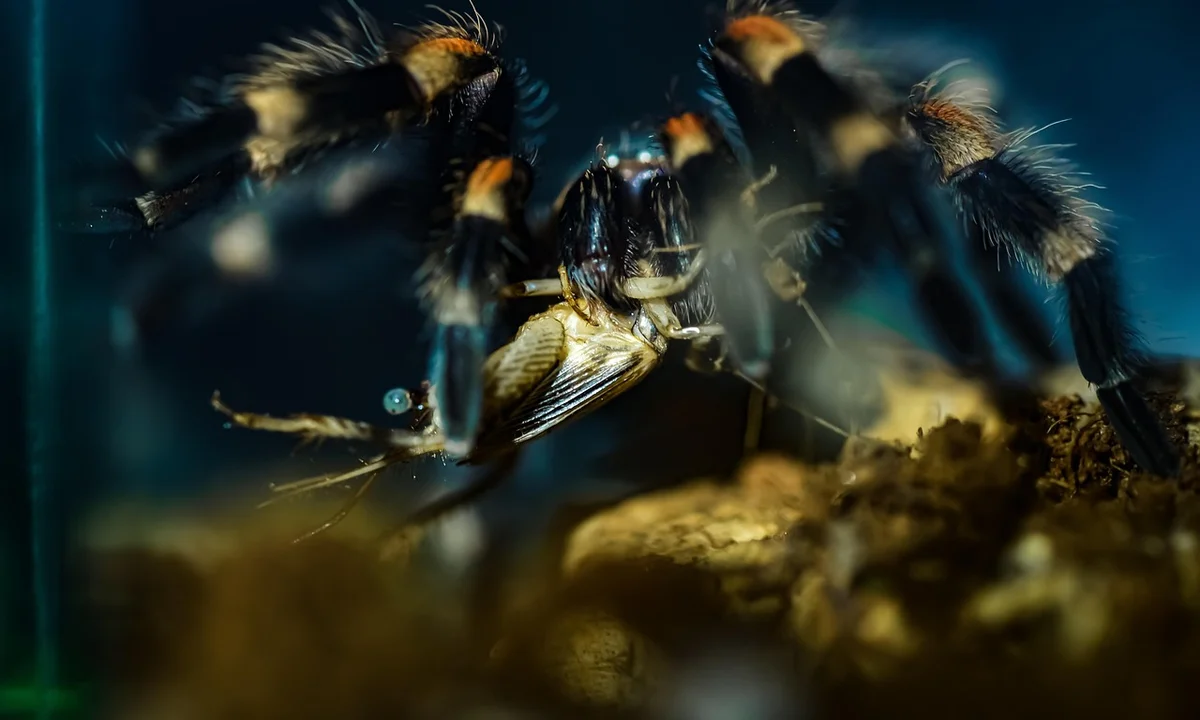
When a tarantula gently waves its legs after a meal, we call it a happy dance. This is anthropomorphism—projecting human emotion onto an animal. The behavior is a physiological response, not emotional joy. There is a common misconception that tarantulas are aggressive. Unpacking this misconception helps explain their true, often defensive, behavior.
Frame this dance as a clear sign of a successful, low-stress feeding event. A calm tarantula performing this rhythmic leg-waving is displaying innate postfeeding behavior, a positive indicator of captive welfare. Contrast it with definitive stress postures: the front legs raised high in a threat stance, or the abrupt, abrasive flicking of urticating hairs from the abdomen. To care responsibly, learn to read your tarantula’s body language for stress and defensive signs. Recognizing cues like raised legs or sudden retreat helps you adjust handling and husbandry to minimize stress.
Leg-waving occurs outside feeding, too. Mature males perform intricate waves while searching for a mate. Any tarantula might use slow leg taps to investigate new scents or textures in its enclosure. The post-meal version is distinct in its timing and relaxed tempo, unlike the more communicative signals used to convey messages in other contexts.
Do All Tarantulas Dance? Species-Specific Behavioral Traits
No, not all tarantulas dance. This trait varies widely by species and individual temperament.
In my collection, my 15-year-old Grammostola rosea, Rosie, might offer a single, lethargic leg wave after ending one of her famous hunger strikes. My Theraphosa stirmi, Goliath, is usually preoccupied with launching urticating hairs at any disturbance. My Pterinochilus murinus, Flash, almost never dances; he simply vanishes into a silken fortress within his cork bark.
Species from genera like Brachypelma and Grammostola are more frequently observed in this postfeeding display. If your tarantula eats readily and shows normal activity but skips the dance, it is not a concern. Behavioral quirks are part of what makes each spider an individual. Aggression is uncommon and typically defensive, varying by species. Understanding species-specific temperament helps you interpret their behavior.
The Hunter’s Ritual: How Feeding Triggers the Display
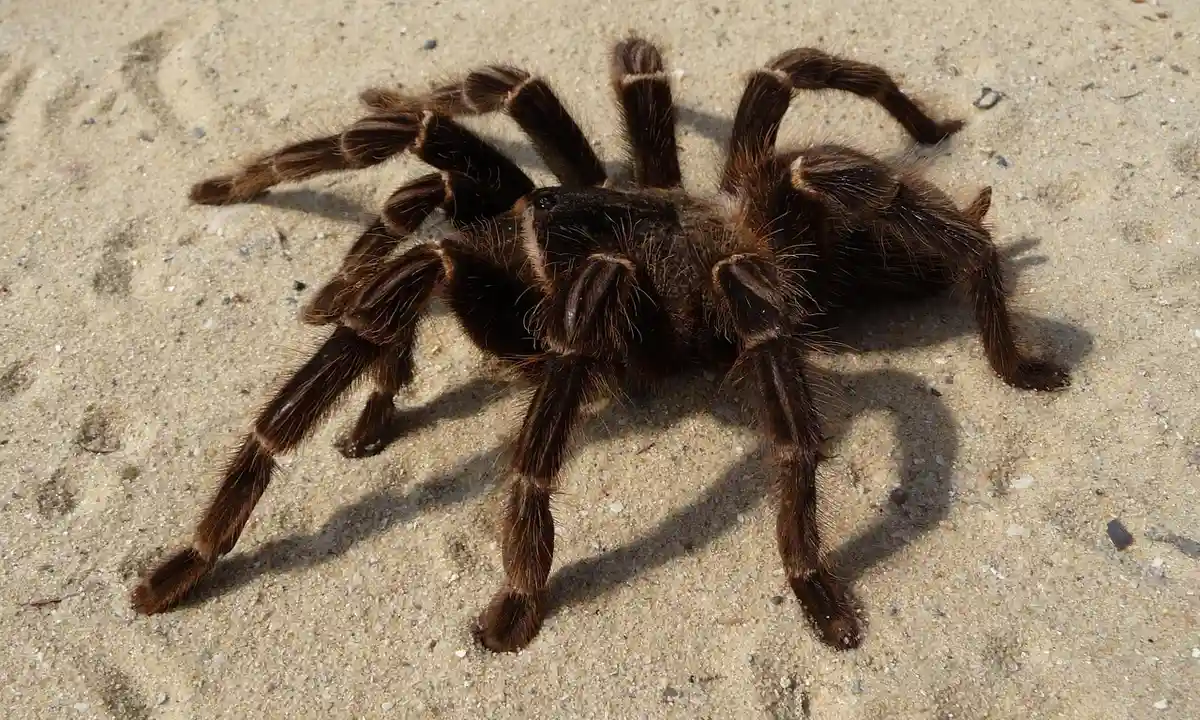
The dance is a direct consequence of the feeding cycle. It typically begins as the intense, focused hunt concludes. Follow this sequence.
- The Strike and Venom Injection: With shocking speed, the tarantula lunges, driving its fangs into the prey. Potent venom begins dissolving internal tissues.
- The Period of Stillness: The tarantula holds the subdued prey, motionless. This quiet moment lasts until the prey succumbs.
- Application of Digestive Juices: The tarantula regurgitates enzymatic fluid onto the prey, further liquefying the meal externally.
- Consumption of the Liquefied Meal: Using its pedipalps and chelicerae, the spider meticulously sucks up the nutrient-rich soup. This is a slow, deliberate process.
- The Postfeeding Dance Begins: As feeding ends, the leg-waving often starts. This behavior likely aids in cleaning mouthparts and limbs, signaling the definitive end of the predatory sequence.
This ritual underscores the tarantula’s efficiency. The dance is the hunter’s calm after the storm of activity.
Observer’s Guide: What to Do (and Not Do) During the Dance
Watching my Chilean Rose Hair, Rosie, perform her slow, methodical leg-waves after a rare meal is a study in quiet instinct. This behavior is a vulnerable moment where your tarantula is focused internally, making your role as a passive observer critical for its well-being. Follow this numbered guide to ensure you support, rather than disrupt, this natural process.
- Observe quietly from a distance, avoiding any sudden movements or vibrations against the enclosure. I learned this the hard way when a dropped book lid startled my T. stirmi, Goliath, mid-dance, causing him to flick urticating hairs in stress.
- Do not attempt to handle or disturb the tarantula. The “Look, Don’t Touch” philosophy is never more applicable than during this sensitive post-feeding period, as any interaction can break their focus and cause defensive reactions.
- Resist the urge to offer more food immediately. Their digestive process is underway, and extra prey is a useless disturbance that can spoil substrate.
- Ensure the water dish is full and clean. Some tarantulas incorporate a slow walk to their water bowl into their dance, and I’ve seen Goliath pause his movements for a long drink after consuming a roach.
- Use this time for respectful, non-invasive study. Note the rhythm of the palpal movements, the cleaning of chelicerae, and the sheer quiet of the enclosure-it’s the best free biology lesson you’ll ever get.
Beyond the Meme: Responsible Sharing of Tarantula Behavior Videos
The viral spread of “happy dance” GIFs and reels is a double-edged sword. While they generate interest, they often strip the behavior of its true meaning. As a keeper, I see sharing these moments as a chance to bridge the gap between meme and meaningful education about arachnid biology. Here is how we can share responsibly.
- Always provide context in your captions. Explain that this is post-prandial grooming, not a literal expression of joy. A short note like “My Grammostola rosea cleaning its fangs and pedipalps after eating” transforms a cute clip into a science snippet.
- Use videos as tools to demonstrate normal, stress-free tarantula behavior. Highlight the calm, deliberate actions to counteract common myths about these animals being purely aggressive or erratic. My clips of Flash, my OBT, dancing in his web fortress show a focused animal, not a “pet hole.”
- Link to reputable care resources or species profiles when sharing. If someone asks about your vibrant P. murinus, guide them to information on its speed and husbandry needs, not just the entertaining dance.
- Frame the tarantula as the subject of respectful observation. Avoid music or edits that portray the animal as a clumsy cartoon character; let its natural, fascinating behavior be the star.
## Common Questions
Is my tarantula actually happy when it does the ‘happy dance’?
No, the tarantula is not experiencing human-like happiness. The “happy dance” is an anthropomorphic term we use for a biological function. This behavior is a focused grooming and maintenance ritual triggered by the feeding process. It helps clean mouthparts and legs of prey debris and may aid in spreading digestive fluids. It is just one of the common tarantula behaviors we often interpret.
Where can I find a good ‘tarantula happy dance’ GIF or video?
They are commonly shared in dedicated tarantula keeping communities on social media platforms and forums. Search using species-specific hashtags on platforms like Instagram or Reddit. Reputable pet care channels on YouTube also feature clear, educational examples of this behavior in various species. For keepers who want to accurately identify their specimen and learn species-specific care, consult a tarantula species identification care guide. These guides help distinguish look-alikes and outline feeding, enclosure, and humidity needs for different species.
Why has the ‘happy dance’ become such a popular meme?
The behavior is visually captivating and easily anthropomorphized, making it highly shareable online. Memes use this relatable “happy” framing to make tarantulas seem more approachable and less intimidating. That contrast helps explain why many people fear tarantulas in the first place—their appearance triggers a primal alarm, even when they pose little real danger. Repeated exposure to friendly depictions can gradually help overcome arachnophobia, turning fear into curiosity. This viral trend has inadvertently introduced many people to intriguing arachnid behavior they otherwise wouldn’t encounter.
Should I try to record my tarantula’s ‘happy dance’?
Yes, recording can be a great observational tool, but always prioritize your tarantula’s comfort. Use minimal disturbance, avoid bright lights, and never provoke a meal just to film the dance. A successful, natural recording can help you share accurate information about normal tarantula behavior with other hobbyists.
Do all tarantula species perform this dance after eating?
No, this behavior is not universal. It is commonly observed in many New World species like those in the Brachypelma and Grammostola genera. Some Old World tarantulas and individuals with more reclusive temperaments may not display it visibly. Its absence is not a sign of poor health if the tarantula is eating normally. If you’re trying to tell whether your tarantula is hungry or stressed, look for feeding cues. Our feeding behavior guide explains how to interpret them.
Long-Term Success
The single most reliable predictor of your tarantula’s health is consistent, species-appropriate hydration. For almost every tarantula, a full, clean water dish is non-negotiable husbandry, far more critical than ambient humidity guesses. Digestion, organ function, and the massive hydraulic pressure required for molting all depend on it. Do all tarantula species have the same hydration needs? Not exactly—hydration needs vary by species and life stage, so tailor humidity and water access to your particular tarantula.
Watching the post-meal dance is a tiny, perfect reward. It connects you to a private, instinctive world. Find the same quiet fascination in their other rituals-the meticulous webbing of an OBT like my Flash, or the patient excavation of a burrow. This hobby moves at their pace, not ours. Your greatest skill will be learning to watch, to wait, and to simply let them be.
Further Reading & Sources
- r/tarantulas on Reddit: Does anyone else’s T “dance” after they have a meal?
- The “Happy” Tarantula Dance – What It Is And Why Tarantulas Do It
- Why Do Tarantulas “Happy Dance” | Arachnoboards
Arlo is a lifelong arachnid enthusiast who believes tarantulas are the world’s most misunderstood roommates. With years of hands-on experience in tarantula care, habitat setup, and species behavior, Arlo combines expert knowledge with a dash of humor to make spider ownership less scary and a lot more fascinating. From choosing the right enclosure to understanding why your eight-legged buddy is doing that weird little pose again, Arlo is here to help you become the best tarantula parent you can be, without getting tangled in the web of misinformation.
Understanding Tarantula Behavior