
Are Tarantulas Social? The Eight-Legged Illusion of Togetherness
Published on: March 18, 2026 | Last Updated: March 18, 2026
Written By: Arlo
Tarantulas are profoundly solitary creatures whose occasional tolerance of proximity in the wild transforms into life-or-death stakes in the cramped quarters of captivity. This article confronts a common and dangerous myth in the hobby. You may see videos or hear stories of tarantulas seemingly cohabiting, but this is a fragile, temporary state that inevitably ends in cannibalism. Housing tarantulas together is not advanced husbandry; it is a fundamental misunderstanding of their biology and a guaranteed path to stress, injury, and death for one or both animals.
Quick Stats:
- Origin: Global (Applies to all 1,000+ species)
- Type: Obligate Solitary (No communal species exist in the hobby)
- Lifespan Impact: Cohabitation drastically shortens it
This guide will arm you with the behavioral science and stark realities of tarantula solitude, providing the clear husbandry protocols to ensure your spider thrives in the peaceful, stress-free isolation it requires.
The Solitary Nature of Tarantulas: Debunking the Social Myth
In over fifteen years of keeping these animals, I have never witnessed a single behavior I would define as social bonding. Tarantulas are not merely shy loners; they are neurologically and instinctually wired for a life of profound solitude from the moment they leave the egg sac. To project mammalian or even insect-like social needs onto them is a fundamental misunderstanding of their existence.
Why “Cohabitation” is a Mismatched Term for Tarantulas
“Cohabitation” implies a shared, mutually tolerated living arrangement. For tarantulas, this concept is a biological impossibility. They do not form hierarchies, groom each other, or share food. Every other creature in their environment is categorized through a simple, brutal binary: is it food, or is it a threat? Another tarantula always falls into the latter category, often with deadly consequences. So, what do these common tarantula behaviors actually mean? Are they deliberate signals about hunger or danger, or simply instinctive reactions we misread?
Think of their enclosure not as an apartment to be shared, but as their entire world-a territory they must control to survive. My old-world Pterinochilus murinus, Flash, illustrates this perfectly. If I place a water dish two inches from her tunnel, she will, without fail, web over it within hours. She is not being playful or tidy; she is eliminating a perceived anomaly in her domain. Another tarantula is the ultimate anomaly.
Observed Behaviors Mistaken for Social Interaction
New keepers sometimes misinterpret common behaviors, leading to dangerous assumptions.
- Clustering of Spiderlings: After emerging from the egg sac, siblings may group together. This is not camaraderie; it is a temporary pause in dispersal. Their first molt often triggers a dramatic shift. I’ve seen a communal cup of rose hair slings turn into a scene of startling cannibalism almost overnight. The trigger was not hunger, but developmental instinct.
- Proximity in the Wild: Finding multiple tarantulas in a small area does not indicate community. It simply indicates prime habitat with ample burrow sites and prey. They are neighbors in the way two rival tigers might patrol overlapping territories-with tense, violent avoidance.
- Investigation: A tarantula tapping its legs near another is not a greeting. It is reading chemical cues in the silk, likely determining if the other is a potential mate or a competitor to be driven off or consumed. The silence of the enclosure before a strike is palpable.
The Inevitable Risks: Why Cohabitation Fails
The outcome of forced cohabitation is not a matter of “if” but “when.” The risks are not random accidents; they are the direct, predictable results of violating a core biological imperative.
Cannibalism: The Primary and Ever-Present Danger
This is the most direct and common result. Cannibalism in tarantulas is not an act of malice, but a default response to a territorial incursion combined with an opportunity for protein. It can happen during a molt, over food, or simply when one wanders into the other’s designated zone. I have seen a large female, well-fed, consume a smaller male introduced for breeding the moment his movements startled her. The drive is that powerful.
Chronic Stress and Its Consequences
Even if outright cannibalism is avoided, the losing animal lives in a state of perpetual fear. Chronic stress suppresses the immune system, halts feeding, and can disrupt the molting cycle, leading to fatal complications. My Theraphosa stirmi, Goliath, is a confident, bold spider. But if I simply rearrange her enclosure too much, she will refuse food for weeks and carpet her surroundings with urticating hairs. Now imagine that stressor is a permanent, living rival in her space. The animal would slowly waste away.
Competition for Resources and Space
Every element of the enclosure becomes a point of conflict.
- The Prime Hide: One tarantula will claim the best shelter, forcing the other into the open, exposed and vulnerable.
- Water and Food: The dominant spider will monopolize food items and may guard the water dish. The submissive animal becomes dehydrated and underfed.
- Molting Vulnerability: A molting tarantula is completely defenseless. In a cohabitation setup, this natural process becomes a death sentence, as the soft, immobile animal is an irresistible meal for its cage-mate.
Providing a solitary, secure enclosure is not depriving your tarantula of companionship; it is gifting it the fundamental requirement for a full, natural, and stress-free life. Their fascinating behaviors are best observed when they feel truly safe and alone in their own world.
Species Variation and Temperament: No Exceptions to the Rule
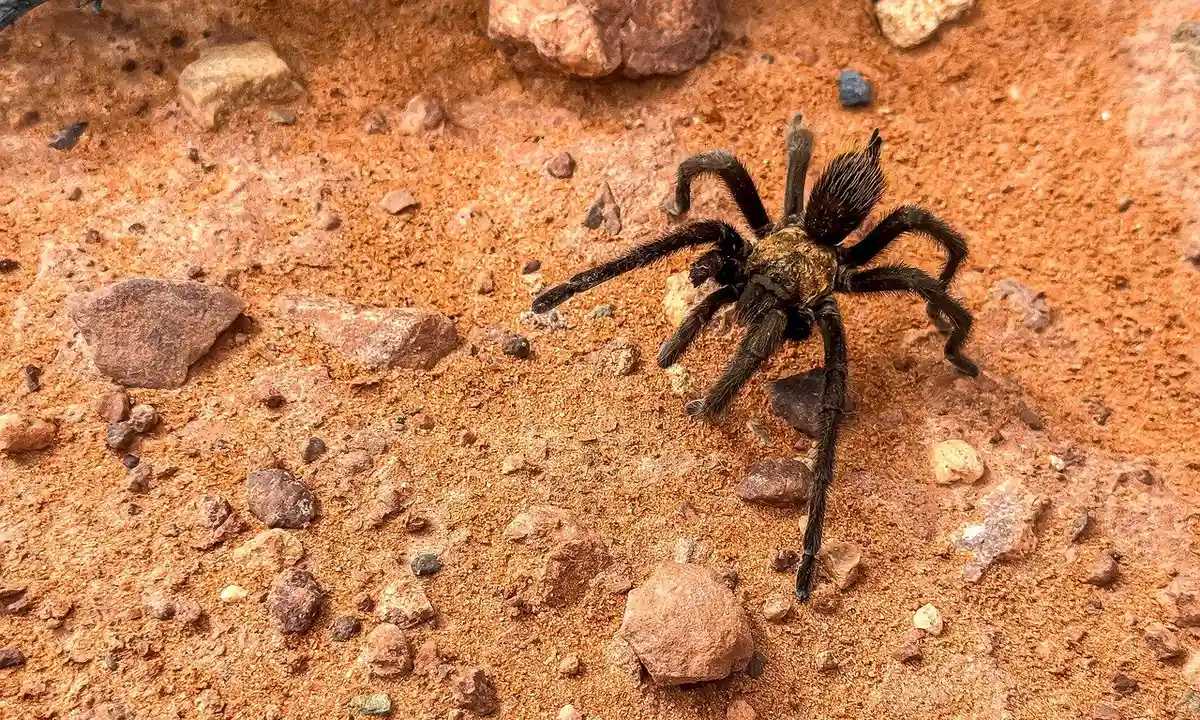
Every tarantula keeper eventually wonders if a docile species like my old Grammostola rosea, Rosie, could live with another calm individual. The answer is a definitive no. From the pet-rock stillness of a rose hair to the lightning-fast defensiveness of an OBT like my tarantula Flash, all tarantulas are hardwired for solitude. Are tarantulas aggressive? Their behavior is species-specific and highly context-dependent. Temperament does not predict tolerance; it only dictates the style of the inevitable conflict. A hungry tarantula sees any movement in its space as food, not friendship.
The Myth of “Communal” Tarantula Species
You may hear rumors of “communal” tarantulas, often referencing fleeting field observations of multiple burrows in one area. In captivity, attempting to recreate these scenarios ignores the critical role of vast escape space and independent food sources found in the wild. I have never seen a successful long-term communal setup that didn’t end in stress, injury, or cannibalism. What looks like cohabitation is usually a transient population density in a resource-rich zone, not a social colony.
Arboreal vs. Terrestrial: Equal Risks, Different Battlegrounds
Whether a tarantula lives on the ground or in the trees changes the battlefield, not the outcome. A terrestrial clash, like one involving my humidity-loving Theraphosa stirmi Goliath, happens on the substrate floor and often involves powerful, crushing strikes. An arboreal conflict turns the entire vertical enclosure into a dangerous arena where a fall can be fatal. The risk is identical: one spider will ultimately view the other as a meal or a mortal threat. In practice, temperament informs handling: arboreal tarantulas are typically more skittish and should be handled rarely, if at all. Terrestrial tarantulas can be sturdier but remain defensive, so handling should be minimal and careful.
The Sole Exception: Brief Introductions for Breeding
The single instance where two tarantulas should be in the same enclosure is for controlled breeding. This is a business transaction, not cohabitation. Even this careful process is fraught with risk, and I always treat the male as potentially expendable, which is the harsh reality of tarantula propagation. This is exactly where the core principles of ethical tarantula breeding come into focus: prioritize welfare, minimize harm, and avoid exploitation. If those principles can’t be met, even controlled breeding risks becoming unethical. The goal is a swift, supervised introduction that minimizes stress for both animals, especially the often-skittish male.
Steps for a Safe Breeding Introduction
Follow this sequence precisely. I use a large, neutral container with no hiding spots to keep events in clear view.
- Prepare the Female’s Enclosure: Ensure the female is well-fed a week prior to reduce her hunting drive. Remove all prey leftovers from her tank.
- Introduce the Male: Gently place the male into the female’s enclosure, opposite her location. Never drop him directly on or near her.
- Observe Without Interference: Watch for communication. The male will drum his pedipalps and legs. If the female responds positively with similar taps, he may approach.
- Be Ready to Separate: Have a catch cup and soft paintbrush handy. If the female rears up or makes a sudden lunge without the male coupling, remove him immediately.
- Post-Coupling Removal: After a successful pairing, the male will disengage and flee. You must separate them the moment the breeding is complete, as the female’s predatory instinct returns instantly.
I have performed this dance with nervous males and receptive females, and the tension in the room is palpable. The silence of the enclosure breaks only with the subtle scratch of legs on glass. It is a reminder that we are orchestrating a primal, dangerous act for the continuation of the species.
Optimal Solitary Care: Providing Everything One Tarantula Needs
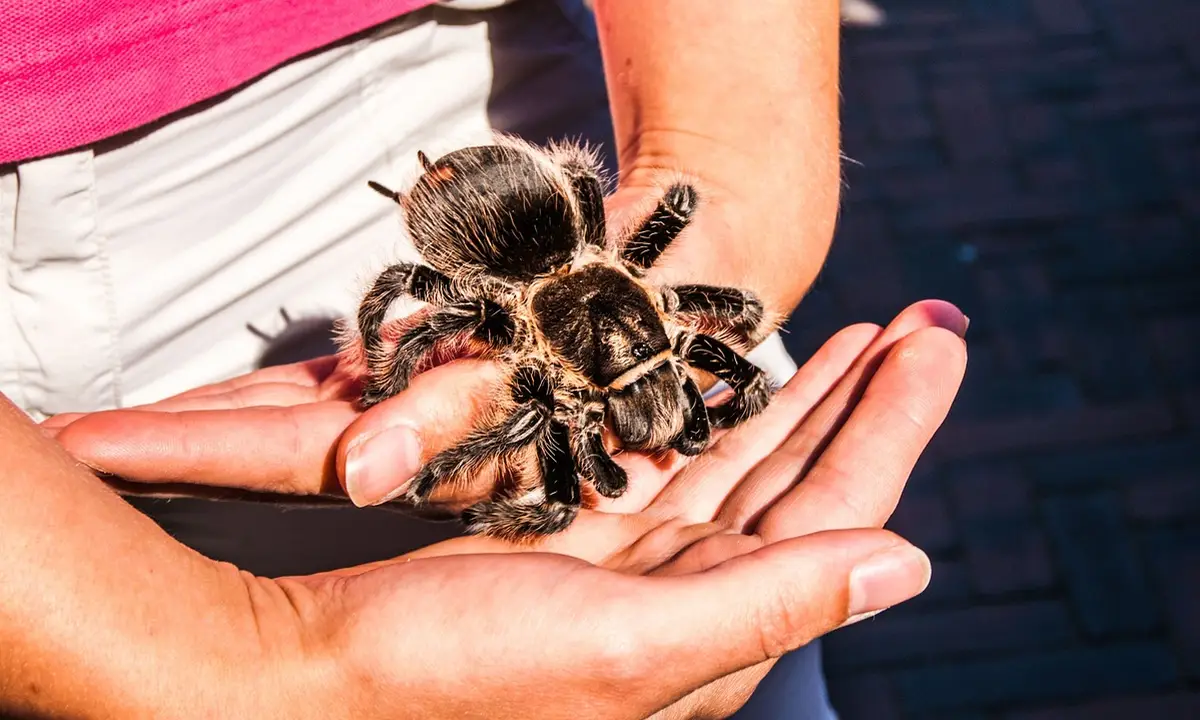
Solitary does not mean simplistic. A lone tarantula thrives when its enclosure replicates the security and resources of a private territory. Your primary job is to engineer a complete, sustainable world within the confines of glass or acrylic.
Enclosure Setup for a Content, Solitary Tarantula
Think of the enclosure as a portrait of its inhabitant’s natural history. For my Chilean Rose Hair, Rosie, this means a shallow layer of dry substrate and a modest hide. For Goliath, my moisture-loving Theraphosa stirmi, it’s a deep, damp peat base that maintains 80-85% humidity. Success hinges on matching the setup to the species’ ecological niche, not a one-size-fits-all box.
Follow this framework for a foundational setup:
- Substrate Depth: Offer 1.5 to 2 times the leg span for burrowing species. For terrestrial adults like Rosie, 3-4 inches of a soil-cocofiber mix prevents injury from falls.
- Moisture & Ventilation: Balance is critical. My OBT, Flash, needs cross-ventilation and dry substrate to prevent mold, while Goliath’s enclosure requires a moist corner and less airflow to hold humidity.
- The Hide: A secure retreat is non-negotiable. Use cork bark, half-pots, or constructed caves. I’ve seen Flash seal itself inside a silk-lined burrow for weeks, a clear sign of feeling safe.
- Anchors & Enrichment: Provide branches, fake plants, or cork for webbing and climbing. Flash’s enclosure is a dense, orange-silk cathedral because I gave him ample anchor points.
Temperature gradients matter. I maintain a room temperature of 70-78°F (21-25.5°C) for all my tarantulas, using small space heaters in winter rather than risky heat mats. Humidity matters as much as temperature in a tarantula enclosure. Most species do well with moderate humidity—roughly 40-60%—adjusting for tropical versus arid species. Always provide a shallow, clean water dish—dehydration is a silent killer, even for desert species.
Maintaining Multiple Tarantulas in One Room
Housing several tarantulas individually in a shared space is common, but it demands systemized care. My tarantula room holds Rosie’s arid setup, Goliath’s humid tank, and Flash’s defensive web fortress. The key is managing microclimates without letting one species’ needs compromise another’s, especially in terms of enclosure size.
Implement these practices for harmonious multi-tarantula care:
- Zonal Organization: Group enclosures by similar humidity needs. I keep Goliath’s tank on one shelf with a humidifier nearby, while Flash and Rosie are on another with enhanced airflow.
- Independent Monitoring: Use individual hygrometers and thermometers in every enclosure. Room averages lie; Goliath’s substrate must feel damp to the touch, while Rosie’s should be bone-dry.
- Secure Protocol: Work on one enclosure at a time, closing it securely before moving to the next. I learned this after a frantic rehousing of Flash nearly led to an escape-his speed is breathtaking.
- Quarantine New Arrivals: Any new tarantula spends 3-6 months in a separate room first. This prevents introducing mites or pathogens to your established collection.
Bioactive setups can help manage waste and humidity, but introduce clean-up crews like springtails only after thorough research. Regular, observant maintenance-spot-cleaning, refilling water dishes, checking for premolt signs-is the rhythm of responsible collective care.
Responsible Husbandry Means Understanding Their Nature
Tarantulas are not lonely. Their solitude is an evolutionary masterpiece, fine-tuned over millions of years. Interpreting their need for a territory as a need for companionship is a profound misunderstanding. Respecting their innate wildness is the highest form of care we can offer. For advanced tarantula keepers, proper care means species-specific enclosures, precise humidity and temperature, and tailored diets. Handling is kept to a minimum and care decisions follow careful observation.
Consider the feeding response. When my OBT strikes a cricket, it’s a blinding, precise event. If another tarantula were present, that strike could just as easily be aimed at a leg or carapace. Cannibalism isn’t aggression; it’s opportunistic survival. Co-habitation forces them into a perpetual state of competition and stress, shortening lifespans.
The “Look, Don’t Touch” philosophy stems from this understanding. Handling induces stress, risks falls, and exposes you to urticating hairs or venom. I admire Goliath’s impressive size from outside the glass, respecting his hair-kicking displays as communication, not a challenge. Your reward is witnessing natural behaviors: meticulous grooming, subtle burrow excavation, the patient ambush.
This understanding shapes everything. I choose enclosures that prioritize the tarantula’s security over my viewing convenience. I interpret fasting periods, like Rosie’s month-long hunger strikes, as normal biological rhythms, not cause for panic. By seeing the world through their eight eyes, we become better stewards of their remarkable, solitary lives.
Common Questions
Can I temporarily house two tarantulas together, just for a short time?
No, you should never house tarantulas together, even temporarily. The risk of cannibalism or injury is immediate and high, as they see each other as threats or food from the moment of introduction. There is no safe duration for shared housing outside of a controlled, supervised breeding attempt.
What about baby tarantulas (slings)? Can they live together since they came from the same sac?
While spiderlings may cluster together after emerging, this is a temporary dispersal phase, not social bonding. As soon as they undergo their first molt, their solitary instincts activate, leading to almost certain cannibalism. They must be separated into individual enclosures very early for their safety.
My two tarantulas seem to ignore each other in a shared tank. Isn’t that a good sign?
This is a dangerous illusion. What appears to be tolerance is almost always a tense, temporary stalemate or one tarantula being chronically stressed into inactivity. This stressful state suppresses their immune system and feeding response, and the situation can turn fatal in an instant over food, space, or during a molt.
Are there any tarantula species that are truly communal and safe to house together?
No. There are no truly communal tarantula species in the pet trade. While some species may be found in higher densities in prime wild habitats, this is not communal living but proximity due to resources. In the confines of an enclosure, all species will ultimately treat another tarantula as a competitor or prey.
If I provide a huge enclosure with multiple hides, won’t that prevent problems?
Even in a large enclosure, the fundamental problem remains: tarantulas are wired to perceive their entire territory as theirs alone. One will still become dominant, claiming the prime resources and forcing the other into a state of stress and need. The risk of a fatal encounter during a molt or over food never disappears. To avoid common tarantula enclosure setup mistakes, ensure the enclosure is large enough, includes multiple secure hides, and uses appropriate substrate and ventilation. Thoughtful layout like this helps prevent aggression and stress during molts and meals.
How do I safely keep multiple tarantulas if they can’t be together?
You keep multiple tarantulas by housing each one in its own secure, species-appropriate enclosure. These enclosures can be in the same room, but you must manage them as independent territories. Always work on one enclosure at a time, ensuring it is securely closed before attending to the next to prevent escapes or accidental introductions. Also, ensure each enclosure has proper ventilation to maintain air quality and appropriate humidity. Use secure vents or mesh to allow airflow while preventing escapes.
Long-Term Success in Solitude
The most vital rule in tarantula care, learned through hard experience, is to provide a dedicated, secure enclosure for every single individual. Co-habitation is not an option; it is a direct threat to their well-being, inevitably leading to cannibalism, chronic stress, or fatal injury from a single missed meal. In addition, a tarantula’s lifespan is shaped by species-specific needs, proper temperature and humidity, and nutrition. These environmental and care factors influence how long and how well the animal lives.
Your success lies not in creating a community, but in curating a perfect, solitary world for each animal. I find profound satisfaction in watching Flash weave his entire enclosure into a silken funnel, or seeing Rosie finally accept a cricket after a six-month fast. The magic is in the quiet, individual drama: the patient ambush, the meticulous burrow construction, the delicate ballet of a molt. Provide the space, the correct moisture, and the peace, and you will be rewarded with a front-row seat to a captivating, solitary life lived entirely on its own terms.
Further Reading & Sources
- Tarantula Social Behaviors | Arachnoboards
- Why are tarantulas so friendly? Are they the only spiders that like humans? – Quora
- r/askscience on Reddit: Do pet tarantulas/Lizards/Turtles actually recognize their owner/have any connection with them?
Arlo is a lifelong arachnid enthusiast who believes tarantulas are the world’s most misunderstood roommates. With years of hands-on experience in tarantula care, habitat setup, and species behavior, Arlo combines expert knowledge with a dash of humor to make spider ownership less scary and a lot more fascinating. From choosing the right enclosure to understanding why your eight-legged buddy is doing that weird little pose again, Arlo is here to help you become the best tarantula parent you can be, without getting tangled in the web of misinformation.
Understanding Tarantula Behavior