
Caring for the Brazilian Black Tarantula (Grammostola pulchra)
The Grammostola pulchra earns its reputation as one of the hobby’s most coveted and tranquil treasures, a living sculpture of pure, velvet black. This guide provides the exact parameters to nurture that inky sheen from a tiny, curious sling into a magnificent, long-lived adult. Success lies in mimicking the warm, humid grasslands of its South American home with patience and precise care.
Quick Stats:
- Origin: Grasslands of southern Brazil, Uruguay
- Type: New World Terrestrial
- Growth Rate: Painfully slow
This guide provides the exact, species-specific husbandry needed to successfully raise a G. pulchra from a tiny, earth-colored sling into the magnificent, jet-black adult you envision.
Introducing the Velvet Shadow: Grammostola pulchra
Meeting a Brazilian Black tarantula is like watching midnight move. Its entire body is coated in a profound, light-absorbing black that has a soft, plush appearance. This uniform velvet black, a rarity in the tarantula world, is why the Grammostola pulchra earns its poetic nickname as the Velvet Shadow. They are a terrestrial species, growing to a solid legspan of six to seven inches, with a notably calm and patient demeanor.
In my years keeping various Grammostola species, the pulchra’s temperament stands out for its consistency. While my old Chilean Rose Hair, Rosie, is a docile “pet rock,” her moods can be inscrutable during her famous fasting periods. The Brazilian Black, in contrast, typically exhibits a steady, predictable calmness. They are a testament to the “Look, Don’t Touch” philosophy, as their stunning appearance is best admired from outside the glass, minimizing stress for both keeper and spider.
Their growth is methodical, with spiderlings starting as a modest gray before deepening into that iconic jet black with each successive molt. Watching a pulchra molt is observing a living sculpture being revealed, its new exoskeleton emerging with an almost iridescent sheen before maturing into that perfect matte finish. This species offers a deeply rewarding practice in observant, respectful care.
Building the Perfect Enclosure: Habitat and Husbandry
Recreating the pulchra’s native grassland and scrubland environment is straightforward when you focus on a few key principles. Successful husbandry hinges on providing security through proper space, a deep substrate for burrowing, and stable, moderate humidity. I’ve found that mimicking these natural conditions leads to visible confidence in your tarantula, from bold exploration to flawless molts. Ensuring a proper burrowing environment is a critical part of this process.
Choosing and Sizing the Terrarium
As a terrestrial tarantula, floor space is far more critical than height. In terms of space, the footprint is what matters most for a terrestrial tarantula. A larger, shallower enclosure gives the tarantula room to roam and molt safely. A fatal fall is a real risk, so the enclosure’s height should not exceed 1.5 times the tarantula’s diagonal leg span. For an adult, a 10-gallon aquarium or a similar-sized front-opening terrarium works perfectly. For juveniles, simple plastic containers with ample ventilation holes are cost-effective and secure.
I learned the importance of secure lids the hard way with my Orange Baboon Tarantula, Flash. One unweighted lid was all it took for an overnight escape that turned my laundry room into a high-stakes recovery operation. For your pulchra, a tight-fitting, ventilated lid is non-negotiable for safety and peace of mind.
Creating the Foundation: Substrate and Humidity
The substrate is the cornerstone of your pulchra’s world. It needs to hold moisture for humidity and be deep enough for digging. I use and recommend a mixture of coconut fiber, peat moss, and organic topsoil, which retains humidity well and packs firmly for burrow construction. Provide a substrate depth of at least 6 inches for an adult; they may not always burrow, but the option is crucial for their well-being.
Grammostola pulchra thrive at a moderate humidity range of 65-75%. You maintain this not by daily misting, which can stress the animal, but by periodically pouring water directly into one corner of the substrate. This creates a moisture gradient, allowing your tarantula to choose its preferred dryness. This is how you create a proper substrate moisture gradient for your tarantula. By giving a dry-to-wet range, you let it regulate its own microclimate. A hygrometer helps you monitor levels without guesswork.
- Ideal Substrate Blend: 60% coconut fiber, 30% peat moss, 10% organic topsoil.
- Humidity Maintenance: Keep one-third of the substrate damp. Let the top layer dry out completely between waterings.
- Sign of Correct Humidity: Your tarantula will drink readily from its water dish and molt without complications.
Temperature, Lighting, and Quiet Placement
Brazilian Blacks do best at room temperatures between 70°F and 78°F (21°C to 26°C). They require no special lighting; ambient room light on a natural day-night cycle is perfectly sufficient. Avoid placing the enclosure in direct sunlight, which can rapidly create lethal temperature spikes.
The placement of the terrarium is about minimizing vibration and sudden disturbances. Choose a quiet corner away from high-traffic areas, stereos, or frequent door slams, as tarantulas are highly sensitive to vibrations through the substrate. This quiet placement encourages natural behavior and reduces stress, which is especially important for a species known for its calm disposition.
Essential Decor: Hides, Water Dishes, and Enrichment
Decor serves functional needs first. A sturdy hide is mandatory. Provide a cork bark flat or a half-log buried partially into the substrate to offer a secure, dark retreat where your tarantula can spend most of its time. Even if they choose to sit in the open, knowing a hide is available reduces anxiety. Terrestrial and arboreal tarantulas have different essential enclosure features. For terrestrials, a broad, secure hide and deeper substrate support stability. For arboreals, vertical space and elevated retreats are essential.
A shallow, wide water dish with fresh water should always be present. I use ceramic dishes or jar lids, ensuring they are sunk flush with the substrate to prevent tipping and to allow easy access for drinking. My Burgundy Goliath, who loves high humidity, taught me that a large water dish also contributes subtly to the enclosure’s moisture levels.
Enrichment is about creating a textured landscape. Adding a few leaves, a piece of driftwood, or even a smooth stone gives your pulchra tactile variety and can encourage gentle exploration during its nocturnal wanderings. Keep the layout open to prevent falls and easy to see for your enjoyment. The goal is a simple, effective, and safe replica of its natural environment.
The Rhythm of Care: Feeding and Diet
Watching a Grammostola pulchra feed is a lesson in patient power. They are deliberate predators, not frantic scavengers. Your feeding strategy must match their calm metabolism to prevent obesity and stress.
Prey Options and Sizing
Variety is beneficial, but simplicity often wins. The core of a captive diet is live, gut-loaded feeder insects. I primarily use crickets and dubia roaches for my crew, as they are nutritious and stimulate hunting behavior.
The golden rule for prey size is that it should be no larger than the tarantula’s carapace (the armored section of its body). A prey item that is too large can injure your tarantula or be refused, rotting in the enclosure. For big tarantulas, a complete size guide helps you anticipate growth and plan appropriate prey sizes. The guide covers expected adult dimensions and feeding practices to match them.
| Feeder Insect | Best For | Notes |
|---|---|---|
| Pinhead Crickets | Spiderlings (Slings) | Perfect tiny size. Remove uneaten ones quickly. |
| Small/Medium Crickets | Juveniles to Adults | Widely available. My staple for Rosie and Goliath. |
| Dubia Roach Nymphs | All Life Stages | Nutrient-rich, less noisy, cannot climb smooth walls. |
| Red Runner Roaches | Active Juveniles/Adults | Fast movement triggers feeding response. |
| Mealworms/Superworms | Occasional Treat | Always offer pre-killed or crushed; they can burrow and bite. |
Feeding Schedule from Spiderling to Adult
Appetite slows with size. A Brazilian Black spiderling is a growing machine, while an adult is a serene monument. Adjusting your schedule to their life stage is the single most important aspect of nutritional care.
- Spiderlings (1-2″): Offer 1-2 appropriately sized prey items every 4-5 days. They need fuel for rapid growth.
- Juveniles (2-4″): Transition to one prey item weekly. Watch for a rounded abdomen; skip a week if it looks plump.
- Sub-Adults to Adults (4″+): This is where patience is key. Feed one large cricket or roach every 10-14 days. Adults may fast for months, especially leading up to a molt. My G. rosea, Rosie, once fasted for 9 months-this is normal for some species.
Always remove uneaten prey within 24 hours. A roaming cricket can stress a molting or fasting tarantula.
The Silent Transformation: Understanding the Molt
Ecdysis, or molting, is the most vulnerable and fascinating process in a tarantula’s life. This is not a sickness but a rebirth, where they shed their exoskeleton to grow or regenerate lost limbs. For a Brazilian Black, it is a slow, secretive event.
Recognizing Pre-Molt Signs
Your tarantula will tell you a molt is coming. Ignoring these signs and offering food is a common mistake.
- The Fast: A complete refusal of food is the most obvious signal. An adult may stop eating for weeks or months.
- The Darkening: The vibrant black color will appear dull, sometimes taking on a grayish or bald-patch appearance as the new exoskeleton forms beneath.
- The Retreat: They will often seal themselves into their hide or burrow with webbing, creating a safe chamber.
- The Bald Spot: Many species kick urticating hairs, creating a bald patch on the abdomen. A G. pulchra may do this, but a suddenly dark, hairless abdomen is a classic pre-molt indicator.
The Molting Process and Post-Molt Care
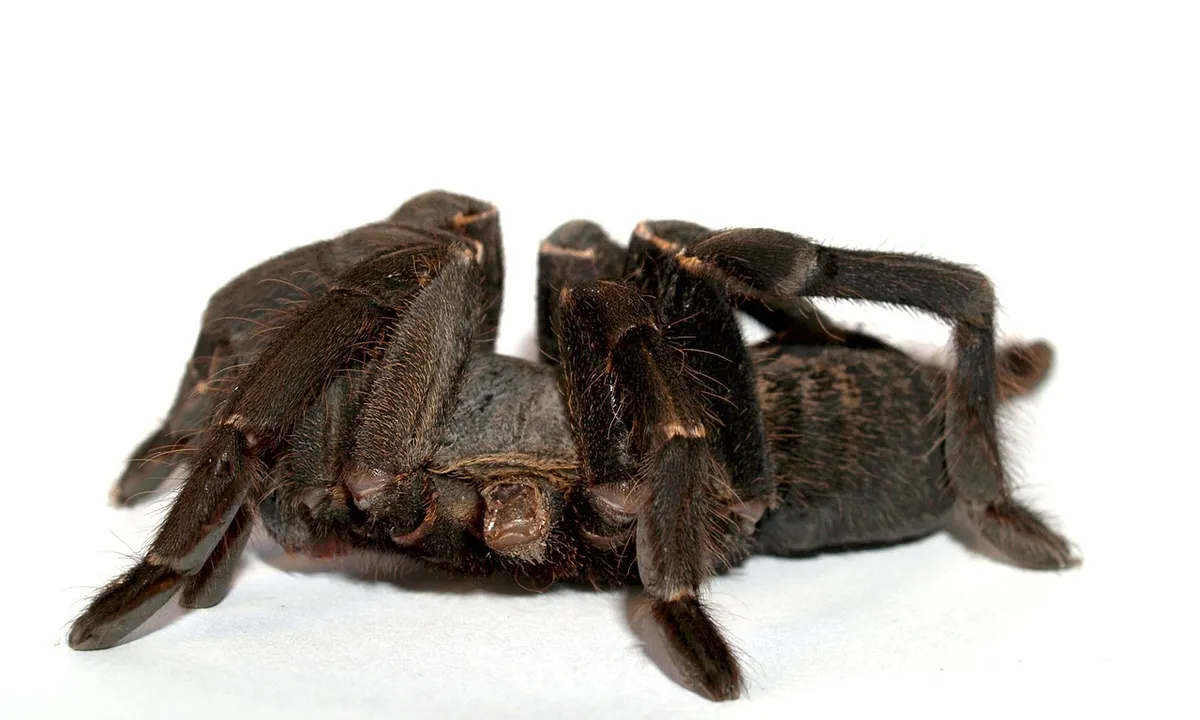
When the time comes, they will lay on their back. Do not panic and never, ever interfere during the molt. Turning them over is a death sentence. The process can take hours.
- The Flip: The tarantula turns onto its back or side. This is normal, not a sign of distress.
- The Split: The old carapace lifts, and the tarantula begins the meticulous work of extracting itself from its old skin.
- The Extraction: Long legs are slowly pulled free. This is an exhausting process. The silence in the enclosure is palpable.
- The Hardening: After freeing itself, the tarantula remains still. Its new exoskeleton is soft, wet, and incredibly vulnerable. It will darken and harden over several days.
Post-molt, absolute tranquility is required for at least a week. No feeding, no handling, minimal disturbance. The fangs, which are also shed, need to harden from white to deep black before they can be used. Offer water in a shallow dish, but wait 7-10 days before attempting to feed your newly resplendent black jewel.
Health, Safety, and Observational Enjoyment
Keeping a Brazilian Black is a commitment to observation, not interaction. Their health is maintained through consistent, appropriate husbandry, and your safety is ensured by respecting their nature.
Common Health and Behavioral Issues
- Dehydration: More deadly than starvation. Signs include a shrunken, wrinkled abdomen and lethargy. A tarantula with its mouth submerged in a water dish is an emergency. Provide a full water dish at all times and keep the substrate’s moisture gradient appropriate.
- Falls: A major cause of injury and death. A ruptured abdomen is often fatal. Ensure climbing decor is low and secure, and the fall distance from the lid is minimal.
- Prolonged Fasting: As discussed, this is usually pre-molt. Unless the abdomen appears dangerously small, trust the process. I have learned more about patience from my fasting tarantulas than from any other aspect of the hobby.
- Stress Behaviors: Constant hiding, flicking urticating hairs (though G. pulchra is reluctant), or threat postures indicate a problem. Re-evaluate enclosure location (is it too busy?), security (are they exposed?), and husbandry parameters.
Safety for You and Your Tarantula
This hobby thrives on a “Look, Don’t Touch” philosophy. Handling provides zero benefit to the tarantula and introduces real risk for both of you — especially since holding your tarantula isn’t a sign of affection. A fall from waist height is fatal. Their venom, while not medically significant for most, can cause pain, itching, or allergic reactions.
Your primary safety tools are observation and preparation. Use long, soft-tipped tweezers for all enclosure maintenance. When rehousing, have a catch cup ready and work over a large, soft bin. I once had my Burgundy Goliath, a heavy hair-kicker, make a sudden move during a rehouse; the prepared tub contained the situation without stress or escape.
The greatest joy comes from witnessing natural behaviors: the careful construction of a burrow, the silent ambush of a cricket, the glorious reveal after a perfect molt. By prioritizing their security and your mindful observation, you cultivate a profound respect for one of nature’s most impeccably designed predators.
Caring for Juvenile and Spiderling Grammostola pulchra
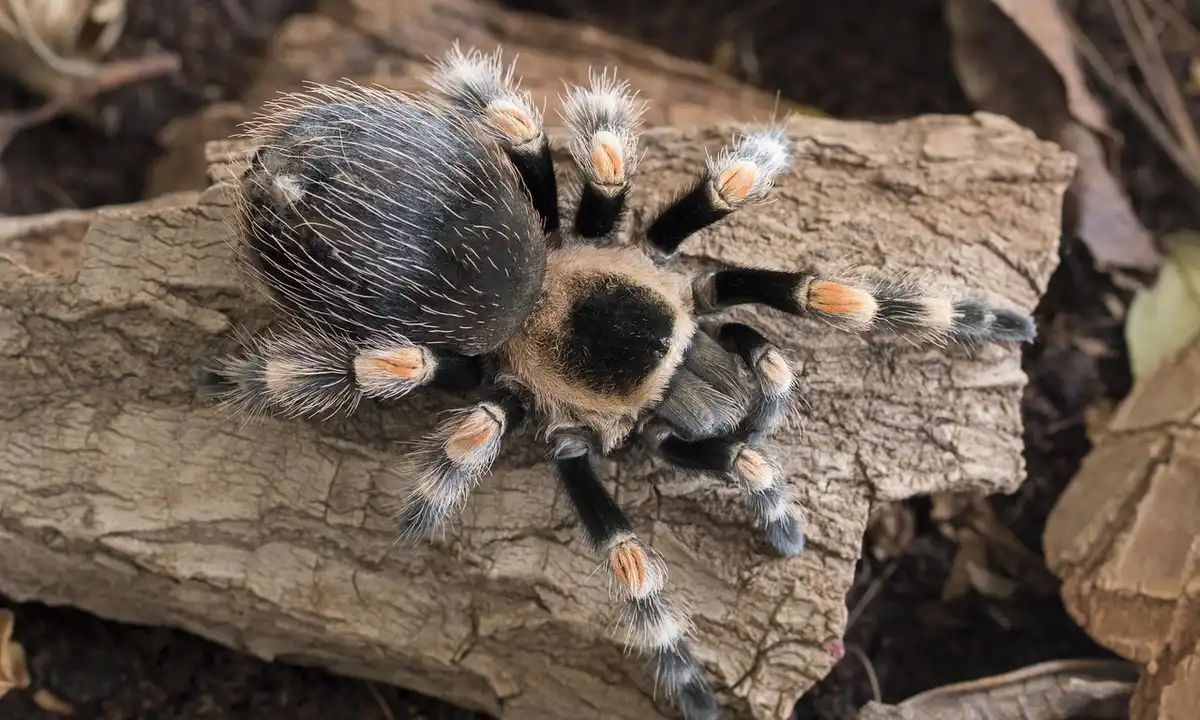
Raising a tiny Grammostola pulchra from a speck-sized spiderling is a lesson in patience. You witness profound change in silence. Their care pivots on precision. A spiderling’s world is measured in square inches, not feet. I keep my slings in delicately modified deli cups with ventilation holes melted along the sides. This prevents tiny feet from catching. Spiderlings dehydrate fast, so I maintain a humidity range of 70-75% by lightly misting one corner of the enclosure every other day.
Enclosure Setup for Small Stages
A cluttered space is a safe space for a young tarantula. Provide ample cover. My go-to recipe for a spiderling home includes these layers. Depth matters: some tarantula species thrive with deep vs shallow substrate, while others do better with a shallow layer. Tailor the substrate to your species’ natural habits.
- Substrate Base: Use 2-3 inches of moist coconut fiber or a peat moss blend. This depth allows for burrow starts and holds humidity without being soggy.
- Structure: Add a curved piece of cork bark for hiding. A plastic bottle cap serves as a perfect, tip-proof water dish.
- Security: Dried moss or leaf litter adds texture and reduces open space, cutting stress.
Juveniles graduate to small terrestrial tanks. I move mine into 5-gallon enclosures once their leg span exceeds 2 inches. The shift from cup to tank is a critical moment; I always use a gentle catch cup method to guide them, never my hands. Remember Flash, my OBT? One swift, orange bolt taught me that respect for speed starts at the smallest size.
Feeding and Growth Patterns
Spiderlings may eat every 3-4 days, but appetite varies. Offer pre-killed pinhead crickets or flightless fruit flies. Watch for a raised abdomen-a sign of premolt. During this time, they refuse food. Do not offer prey. A silent enclosure is a molting enclosure. A successful molt for a spiderling can happen in mere hours, but leave them completely undisturbed for a full week afterward to harden.
- Temperature: Keep ambient temperatures between 75-80°F (24-27°C). A small, external heat mat on one side of the enclosure can create a gradient.
- Hydration: Always have a water dish. For slings, I use a damp cotton ball changed daily to prevent bacterial growth, but a bottle cap is safer once they’re larger.
- Observation: Growth is slow. Grammostola pulchra spiderlings might only molt 1-2 times a year. Document each molt with a photo; the shed skin reveals sex.
I learned humidity control from Goliath, my humid-loving T. stirmi. But for pulchra slings, I aim for damp, not wet. Mold is a real enemy. If you see condensation pooling, you have overdone it; increase ventilation immediately.
Long-Term Commitment: Lifespan and Final Tips
Welcoming a Brazilian Black into your home is a decades-long dialogue. Female Grammostola pulchra can live over 20 years. Males typically reach 5 to 7 years. This isn’t a pet; it’s a legacy. My Rosie, a G. rosea, has been with me for 15 years. Her sedentary nature mirrors the pulchra’s eventual calm. The key to longevity is consistent, uneventful care-a routine that becomes second nature.
Mastering the Adult Enclosure
An adult needs a 10 to 20-gallon terrestrial tank with a secure lid. They are powerful. Focus on floor space, not height, to prevent dangerous falls. My final setup philosophy centers on bioactive stability.
- Substrate Depth: Provide 6-8 inches of a well-draining mix. I use 60% coconut fiber, 30% peat moss, and 10% play sand. This holds burrows and manages moisture.
- Bioactive Elements: Add springtails and isopods. These clean-up crews break down waste and mold, reducing your maintenance to occasional spot-cleaning.
- Humidity for Adults: Moderate humidity around 60-70% suffices. Achieve this by overflowing the water dish into the substrate weekly, avoiding direct misting on the tarantula.
Resist the urge to redecorate frequently. These tarantulas establish territorial maps. Changing their layout causes significant stress. I only fully replace substrate during a major rehousing, which may be years apart. Selecting a suitable substrate is part of keeping the enclosure well-maintained. The best substrates are stable, inert, and moisture-retentive to support burrowing, so you won’t need to change them often.
Final Husbandry Commandments
After years breeding and keeping, my core principles are simple. They prioritize the animal’s quiet life over our curiosity.
- Look, Don’t Touch: Grammostola pulchra is docile but fragile. A fall from table height can rupture their abdomen. Their urticating hairs, while less offensive than my Goliath’s, can still irritate skin and eyes. Observation is the richest interaction.
- Feed Strategically: Adults may only eat once every 2-3 weeks. Offer one appropriately sized cricket or roach. Remove uneaten prey within 24 hours to avoid stress or injury to your tarantula.
- Molting Vigilance: Adults molt less often, sometimes once a year. The signs are stark: a darkening carapace, refusal of food, and increased webbing. Do not offer food for at least two weeks after a mature tarantula molts; their fangs need time to harden from translucent to deep black.
- Climate Consistency: Use a reliable thermostat with any heat source. Sudden temperature swings are a silent killer. Aim for a stable 70-78°F (21-26°C) year-round.
Your commitment echoes in the details. The clean water, the stable warmth, the untouched hide. Success is measured in the uneventful months between molts, in the steady growth of a creature that asks for nothing but respect. Start with that respect, and your Brazilian Black will thrive under your watchful, caring eye.
Common Questions
Is the Grammostola pulchra a good tarantula for beginners?
Yes, the Brazilian Black is often recommended as an excellent beginner tarantula due to its typically calm and docile temperament. Their slow growth rate and straightforward husbandry requirements teach patience and consistent care. However, their long lifespan and “look, don’t touch” nature require a commitment to observational pet keeping. When considering what are the best tarantula species for beginner pet owners, the Brazilian Black is frequently cited as a top option due to its beginner-friendly behavior. Its forgiving care and calm disposition make it a solid entry point for new keepers.
What are the most critical aspects of Grammostola pulchra care?
The most critical aspects are providing a secure, escape-proof enclosure with deep, moisture-retaining substrate and avoiding excessive height to prevent fatal falls. Maintaining moderate humidity (65-75%) through the substrate, not misting, is vital for successful molts. Furthermore, mastering a slow feeding schedule to prevent obesity is essential for their long-term health.
Where can I find a reliable Grammostola pulchra care sheet or PDF?
Reputable care sheets or PDF guides can be found on dedicated arachnid forums, specialty exotic pet websites, and through established tarantula keeping societies. Always cross-reference information from multiple trusted sources, as care advice can vary. The guide provided here consolidates extensive, species-specific husbandry into a comprehensive format. This tarantula species identification care guide ties practical care to the process of correctly identifying each species. Accurate identification informs tailored enclosure, humidity, and diet needs across tarantula species.
Are there any UK-specific considerations for Grammostola pulchra care?
For UK keepers, the primary consideration is often maintaining a stable ambient temperature between 70-78°F (21-26°C), especially during cooler months. Using a small, thermostat-controlled heat mat on one side of the enclosure can create a necessary gradient. Standard room humidity in UK homes is often suitable, but monitor with a hygrometer and adjust substrate moisture as needed.
Is handling a Brazilian Black Tarantula recommended?
Handling is strongly discouraged. It provides zero benefit to the tarantula and poses significant risks, including fatal falls, stress, and potential urticating hair flicking. The Grammostola pulchra’s beauty and calm nature are best appreciated through observation, making it a perfect “pet hole” or display animal that thrives when left undisturbed in its enclosure.
What is the value of checking Reddit or forums for care advice?
Platforms like Reddit offer real-world, anecdotal experiences from a large community of keepers, which can be invaluable for troubleshooting specific issues or understanding behavioral nuances. However, forum advice should complement, not replace, information from verified care guides and reputable breeders, as practices and opinions can vary widely.
The Final Molt
Your Brazilian Black’s care hinges on one non-negotiable factor: a mostly dry environment with a water dish.Grammostola pulchra originates from grasslands, not rainforests, and their greatest long-term risk is fungal infection from perpetually damp substrate. Provide a moisture-retaining layer beneath a deep, dry top stratum, refreshing the water dish weekly.
Appreciate the deliberate pace of this species. My own pulchra might spend a week excavating a single burrow corner, only to fill it in the next. Their hunting style is a patient ambush, not a frantic chase. You earn their trust through consistent, quiet care and by resisting the urge to interfere. Watching a healthy Grammostola pulchra simply exist-a sleek, obsidian monument in its territory-is the hobby’s quiet reward.
Further Reading & Sources
- r/tarantulas on Reddit: Care for a Brazilian Black Tarantula
- Grammostola pulchra – The Tarantula Collective
- Grammostola pulchra (Brazilian black) care guide
Arlo is a lifelong arachnid enthusiast who believes tarantulas are the world’s most misunderstood roommates. With years of hands-on experience in tarantula care, habitat setup, and species behavior, Arlo combines expert knowledge with a dash of humor to make spider ownership less scary and a lot more fascinating. From choosing the right enclosure to understanding why your eight-legged buddy is doing that weird little pose again, Arlo is here to help you become the best tarantula parent you can be, without getting tangled in the web of misinformation.
Popular Species