
Is My Tarantula Playing Dead? Understanding Tonic Immobility
Published on: February 13, 2026 | Last Updated: February 13, 2026
Written By: Arlo
Tarantulas are masters of cryptic stillness, but when your spider suddenly rolls onto its back and lies completely limp, you’re witnessing a deep-seated defense mechanism, not a game. This behavior, called tonic immobility, is a stress-induced freeze response that mimics death to deter predators. Your tarantula is not “playing” in any conscious sense; it has entered a state of involuntary paralysis, often triggered by handling or enclosure disturbance. Drawing from my years in the hobby, including tense moments with my fast OBT, Flash, this guide will demystify this alarming behavior and teach you to respond calmly.
Quick Stats:
- Behavioral Context: Defensive Stress Response (Tonic Immobility)
- Commonly Observed In: New World Terrestrial Tarantulas (e.g., Grammostola, Brachypelma)
- Key Trigger: Acute Perceived Threat, Often from Handling or Sudden Vibration
This guide will walk you through identifying tonic immobility, distinguishing it from the critical process of molting, and implementing a “look, don’t touch” husbandry approach to prevent this stressful event.
What is Tonic Immobility in Tarantulas?
Imagine finding your tarantula frozen in place, legs tucked tight, utterly unresponsive. This is tonic immobility, a fascinating stress-induced catatonic state. In the wild, it acts as a last-ditch defense, tricking predators into losing interest. For our captive tarantulas, it’s a stark signal of perceived extreme threat, often triggered by handling, loud vibrations, or a clumsy rehousing.
Biologically, it’s a shutdown of voluntary movement-the spider isn’t “playing” in a conscious sense but is locked in a physiological response. I’ve seen this with my old-world tarantula, Flash the OBT, during a particularly stressful enclosure transfer. His usually vibrant orange form became a motionless sculpture for nearly twenty minutes. This experience cemented my commitment to the “Look, Don’t Touch” philosophy, as forcing interaction can push a tarantula into this vulnerable state.
Not all species are equally prone. Docile types like my Chilean Rose Hair, Rosie, may rarely exhibit it, while more nervous or defensive species can enter immobility more readily. The key takeaway is that tonic immobility is a sign of severe stress, not a quirky behavior to be encouraged.
How to Tell if Your Tarantula is in Tonic Immobility
Recognizing this state prevents panic and misguided actions. You must observe quietly and patiently, letting the animal recover on its own terms.
Key Signs of Tonic Immobility
Look for this specific cluster of behaviors. The tarantula will typically be on its back or side, but I’ve also seen it occur in a crouched position. Are these common tarantula behaviors, and what do they mean? Typically, a back-lying posture signals molting, while a crouched stance can indicate defensiveness or environmental stress.
- Complete Rigidity: The body and legs are locked in place, like a carved figurine. There is no gentle swaying or leg adjustment.
- Tight Leg Positioning: Legs are often curled inward close to the cephalothorax, not splayed loosely. It’s a defensive ball, not a relaxed sprawl.
- Absence of Reflexes: A very gentle puff of air from across the room or a subtle vibration on the enclosure table elicits zero reaction. This profound unresponsiveness is a hallmark.
- Silent Enclosure: No stridulation (hissing sounds) is heard, and no urticating hairs are kicked. The tarantula is in a total shutdown.
Time is the most critical factor; a tarantula in tonic immobility will remain frozen for several minutes to over an hour before “waking up.”
How to Differentiate From Actual Death
This is where calm observation saves the day. Never jump to conclusions or attempt to “rescue” a motionless tarantula immediately.
First, assess posture. A dead tarantula’s legs almost always collapse into a loose, splayed position called a “death curl,” where the tarsi (feet) curl inward under the body. In tonic immobility, the legs maintain a stiff, controlled tuck, not a limp collapse. This death curl explained in depth is part of our tarantula final posture guide. Understanding how it differs from tonic immobility helps with accurate assessment.
Next, use the time test. Leave the enclosure entirely alone for a few hours. Check back discreetly. A tarantula in tonic immobility will eventually show tiny signs of life: a single leg slowly uncurling, a pedipalp twitch, or a gradual righting of the body. My Burgundy Goliath, Goliath, once gave me a scare after a heavy molt, but after four hours of absolute stillness, I saw the first deliberate shift of a front leg.
Finally, look for other indicators. Death, especially if it occurred days prior, may bring a noticeable sour odor or a darkened, desiccated abdomen. Tonic immobility presents a tarantula that, while motionless, still looks visually intact and hydrated.
| Tonic Immobility | Actual Death |
|---|---|
| Legs are stiff and held in a tight, controlled position. | Legs are limp and typically splayed in a “death curl.” |
| Body remains upright or on its side without collapsing. | Body often appears flattened or collapsed against the substrate. |
| Will show gradual movement after a period of time (minutes to hours). | Shows no movement over an extended period (24+ hours). |
| No foul odor is present. | May emit a distinct decaying smell after some time. |
When in doubt, the only action you should take is to ensure the enclosure parameters are correct and then step back to allow nature to take its course. Poking or prodding a tarantula in this state only compounds its stress and can delay recovery. Avoiding common tarantula enclosure setup mistakes—such as incorrect temperature, humidity, substrate, or cramped space—is crucial. Keeping setup correct reduces stress and supports a smoother recovery.
Common Triggers of Tonic Immobility in Captivity
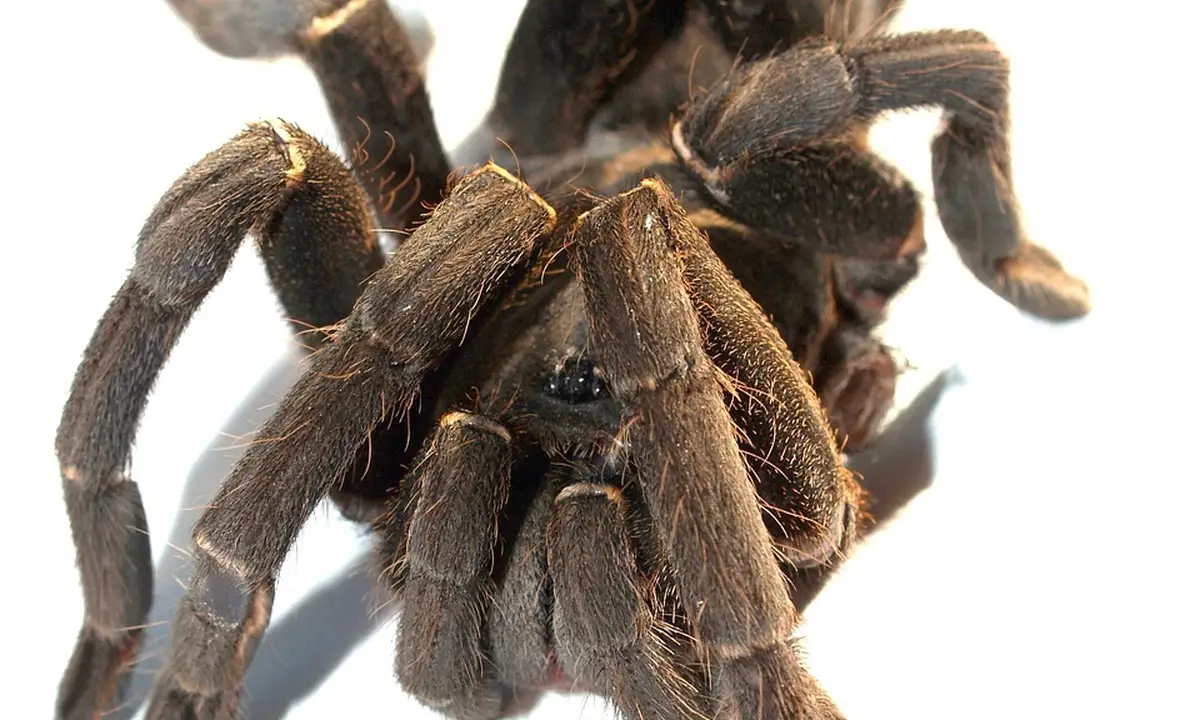
Tonic immobility is a fear response, not a game. Your tarantula freezes when it feels extreme threat. I have seen this rigid stillness in my own pets.
Sudden vibrations are a primary trigger, sensed through delicate leg hairs. Rosie once remained motionless for an hour after a cabinet door slammed nearby.
- Place enclosures on stable surfaces away from stereos or busy walkways.
- Move deliberately during feedings and water changes to avoid startling shocks.
Direct handling is a frequent cause. I strictly follow a “Look, Don’t Touch” philosophy. During a rehousing, my Goliath entered this state, lying perfectly still on the new substrate for twenty tense minutes.
Abrupt light changes can mimic a looming predator. Flash’s orange body would tense under a sudden lamp beam. I now use indirect, ambient lighting for all my enclosures.
Predator-like movements from other household pets are a major stressor. The sight of my cat pacing once triggered a freeze response in Rosie. Enclosures now have secure, fitted lids for visual and physical security.
Poor enclosure conditions create a baseline of stress, making defensive reactions more likely. Key husbandry missteps include incorrect humidity and inadequate hiding places.
- Temperature: Maintain 70-80°F for most species, using a thermostat.
- Humidity: Species-specific needs are critical. Goliath requires 80-85%, while Rosie thrives at 60-70%.
- Substrate: Provide a deep layer of coconut fiber or peat moss for burrowing and security.
Other Defensive Behaviors Tarantulas Use
Tarantulas possess a diverse arsenal of defenses. Knowing them helps you interpret your pet’s stress and ensure its well-being. If you’re a complete beginner, this is a friendly introduction to tarantulas and what to expect when caring for one. It covers the basics to help you start confidently.
Kicking urticating hairs is a hallmark of New World species like my Goliath. He releases a cloud of barbed hairs from his abdomen when annoyed, causing skin irritation.
- Always wear gloves and safety glasses during cage maintenance.
- Increase ventilation temporarily if you see hair clouds to avoid inhalation.
Threat postures are a clear visual warning. Flash raises his front legs, revealing his bright orange fangs. This posture means “retreat immediately.”
Biting is a definitive last resort, typically preceded by other warnings. While my Rosie has never bitten, Flash’s venom is medically significant. I use long, soft-tipped tweezers for all interactions near him.
Rapid flight is often the first choice. A startled tarantula will bolt to its hide. Ensure your enclosure has a secure cork bark or clay pot hide to facilitate this escape.
Defensive webbing acts as a tactile alarm system and barrier. Flash webs his entire enclosure, creating a silken fortress that alerts him to vibrations. Disturbing this webbing can heightens stress.
- Respect webbed tunnels and retreats; avoid unnecessary dismantling.
- In bioactive setups, live plants can coexist with webbing if chosen carefully.
What to Do if Your Tarantula Enters Tonic Immobility
Witnessing your tarantula flip onto its back, legs curled, can stop your heart. The first and most critical rule is to override your panic. Your calmness is the single greatest factor in ensuring a safe resolution. This is a defensive state, not a medical emergency.
Follow these steps in exact order:
- Do Not Touch. Do not attempt to right them. Do not prod or poke. Any physical contact now is interpreted as a predator’s attack, potentially prolonging the state or triggering a desperate bite or hair-flicking response.
- Eliminate Immediate Threats. Is a ceiling light blazing directly on them? Gently shade the enclosure. Is a loud movie or music playing? Turn it down. Your goal is to make the environment feel safe again.
- Secure the Area. If the tarantula is out in the open during a rehousing, gently place a deli cup or hide near them-but not over them-to provide a potential refuge upon recovery.
- Sit Back and Wait. This is the hardest part. Give them time. Recovery can take from a few minutes to over an hour. I once watched Rosie remain in this state for forty-five agonizing minutes after a cage transfer before she slowly righted herself and walked calmly into her new burrow.
Intervention should only be considered if the tarantula is in literal physical danger, such as perched on the edge of a high table. In that rare case, use a soft brush to very gently guide—never lift or flip it to safety, accepting the risk of a defensive reaction. For a safer, step-by-step approach to holding your pet tarantula, refer to a reputable care guide. These guides teach proper positioning, support, and how to read signs of stress to watch for.
Preventing Tonic Immobility Through Stress-Free Husbandry
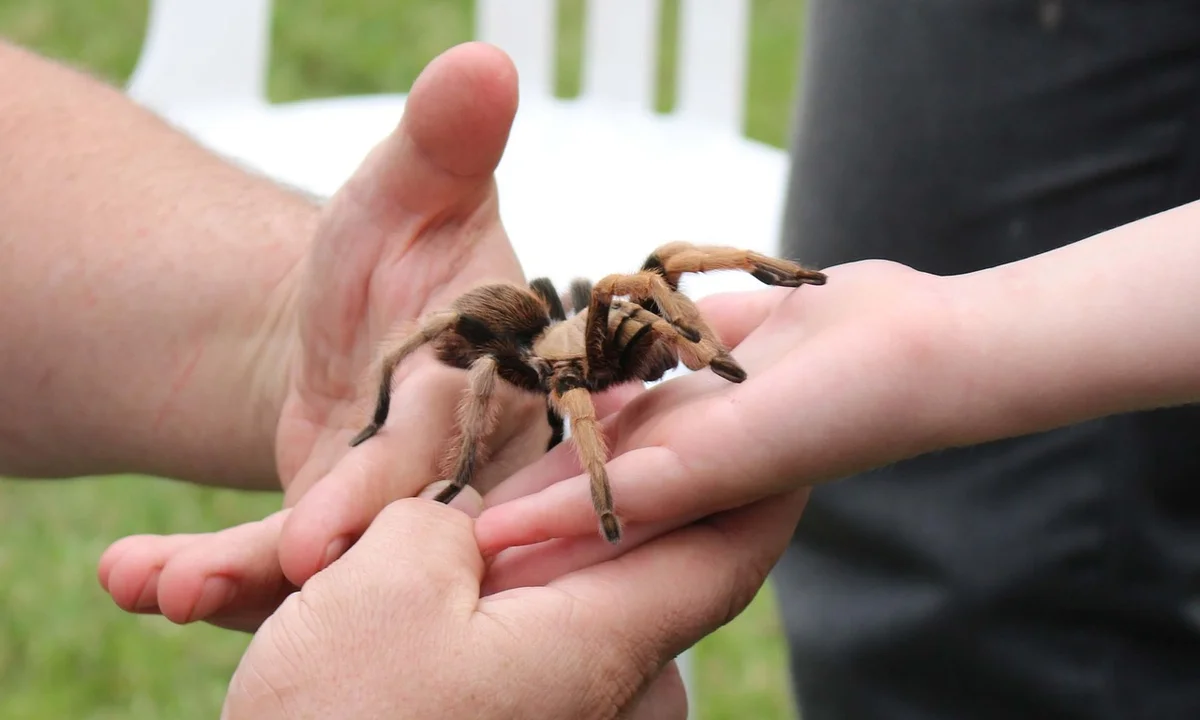
The best medicine is prevention. We cannot eliminate every tarantula’s instinct, but we can build a world where they feel so secure that the response is almost never triggered. This approach also helps prevent common tarantula health problems, such as dehydration and molt difficulties. Regularly checking enclosure conditions and care supports lasting health.
Optimizing the Enclosure for Security
Think like a prey animal. Security is not a luxury; it’s a biological imperative. Your setup must provide instant retreat options.
- Deep, Packable Substrate is Non-Negotiable. For terrestrials like my Goliath, I provide a minimum of 8-10 inches of slightly damp substrate (a 70/30 topsoil and excavator clay blend works wonderfully). This allows for proper burrow construction, which is a tarantula’s ultimate safe room.
- Offer Multiple Hides. Even for burrowing species, a cork bark flat or half-log provides an initial sense of security. For my OBT Flash, whose entire enclosure is silk, the webbing itself is the hide-so I ensure his cork bark anchor points are sturdy and immovable.
- Clutter the Floor Space. A bare tank is an exposed tarantula. Use leaf litter, silk plants, or small pieces of cork to break up sigh lines. This creates a more complex, secure landscape where they can move without feeling seen.
- Match the Lid to the Athlete. For heavy-bodied terrestrials like mature females, a front-opening enclosure is ideal to prevent dangerous falls. For agile climbers like slings and some arboreals, a secure, well-ventilated top is fine-but always check for gaps.
Maintaining a Calm Environment
Your tarantula’s world is one of vibration and light. Your husbandry routine must respect that.
- Gentle Feeding. Do not drop prey items from a height. Use long, soft-tipped tweezers to place crickets or roaches gently near the tarantula’s burrow entrance or web, avoiding direct contact.
- Predictable Lighting. Avoid placing enclosures in direct sunlight or in rooms with strobe-like TV light. A consistent, indirect light cycle mimics nature and reduces sudden, startling shadows.
- Vibration Management. Place enclosures away from stereo speakers, subwoofers, or frequently slammed doors. I learned this after placing Goliath’s tank on a shelf next to my home office printer-every print job sent him into a threat posture. He’s much calmer in a quieter corner.
- The “Look, Don’t Touch” Mentality. Handling is a profound stressor, forcing a terrestrial animal into an unstable, exposed position. Choosing not to handle is not a lack of interaction; it is a profound form of respect for the animal’s natural biology. The hobby’s greatest joys come from observation, not manipulation.
Debunking Myths About Tarantulas “Playing Dead”
Many new keepers watch their pet curl up, go still, and assume a dramatic game of possum is underway. I’ve been there. The truth is far more fascinating: tarantulas do not possess the complex cognitive ability for deception or play as we understand it. What you’re seeing is a primal, involuntary stress response, a state biologists call tonic immobility.
Think of it as a hardwired circuit breaker. When a threat seems inescapable-a perceived predator’s shadow, a sudden vibration-the spider’s nervous system can simply shut down visible movement. This isn’t a conscious choice. This catatonic state is a last-ditch survival strategy, betting that a motionless target will be abandoned by whatever is bothering it. My Burgundy Goliath Bird Eater, T. stirmi, once entered this state during a cage transfer, becoming a rigid, silent statue for nearly twenty minutes until the perceived danger passed.
What You’re Actually Seeing: Common Behaviors Mistaken for “Play”
Beyond tonic immobility, other natural routines are often misinterpreted. Let’s separate the myths from the molt.
- The “Pet Rock” Fast: Species like my 15-year-old G. rosea, “Rosie,” are famous for voluntary fasts. A tarantula sitting still for months, ignoring food, isn’t playing dead; it’s conserving energy. Their metabolism is incredibly slow.
- The Pre-Molt Shutdown: Before shedding its exoskeleton, a tarantula will cease all activity. It often lies on its back or side, legs tucked. This vulnerable, motionless period is critical growth, not theater.
- The Defensive Tuck: A startled tarantula, especially a New World species, may pull its legs in tight against its body to protect its ventral side. This makes it look like a fuzzy, inert ball. It’s a guarded defensive posture, ready to flick urticating hairs.
- The Stress Spiral: Chronic stress from incorrect humidity, constant vibrations, or an enclosure that’s too large can lead to prolonged inactivity and refusal to eat. This is a health warning sign, not a behavior.
How to Respond to a Motionless Tarantula
Finding your spider inert is always a moment of pause. Follow these steps to assess the situation safely and respectfully.
- Do Not Poke or Prod: Never use tongs or your fingers to try to “wake” the spider. You will massively compound its stress and may trigger a defensive bite or hair-flicking.
- Observe from a Distance: Look for very subtle signs of life. Watch the carapace for slight respiratory movements. A completely limp, splayed posture is more concerning than a tightly tucked one.
- Check the Environment: Is the humidity correct? Is the temperature stable? Are there loud noises or lights disturbing the enclosure? Correct any husbandry issues quietly.
- Consider the Timeline: Has it been days or months? Has the tarantula refused recent meals? A pre-molt fast or a typical rose hair fast can last an astonishingly long time.
- When in Doubt, Wait it Out: In all but the most extreme cases (like a visible injury), patience is the absolute best medicine. Interference often causes more harm than the original issue.
I learned this patience with “Flash,” my OBT. A tarantula’s world is built on vibration and patience; our sudden movements are like earthquakes in their silent realm. Respecting their innate behaviors—not assigning them human motives—is the cornerstone of advanced, ethical arachnoculture. What looks like play is almost always a profound expression of the spider’s instinctive reality. Tarantulas hunt by patient ambush, sensing vibrations and then striking with speed. They inject venom to immobilize prey and begin digestion.
FAQs
Is tonic immobility the same as when a tarantula flicks hairs or shows a threat posture?
No, these are different levels of a defensive escalation. Threat postures and hair flicking are active, conscious defenses where the tarantula is trying to warn a threat away. Tonic immobility is a passive, involuntary last resort where the nervous system shuts down voluntary movement entirely. It occurs when the spider perceives the threat as inescapable and all other defenses have failed or been bypassed.
Are some tarantula species more likely to go into tonic immobility than others?
Yes, generally, more docile and slow-moving New World terrestrial species (like Grammostola or Brachypelma) are more prone to entering this catatonic state as a primary defense. Defensive or fast-moving species (like many Old World tarantulas or arboreals) are far more likely to choose flight, threat postures, or biting over freezing. However, any tarantula can exhibit this behavior under extreme perceived stress.
Can tonic immobility harm my tarantula?
The state itself is not directly harmful, but it is a clear indicator of severe psychological stress. The primary risk comes from a keeper panicking and mishandling the spider, which can cause physical injury or prolong the stress. Repeatedly triggering this response indicates a chronically stressed animal, which can lead to refusal to eat, a weakened immune system, and a lower overall quality of life.
How long is too long for a tarantula to remain motionless?
While recovery typically takes minutes to an hour, a tarantula can remain in a tonic immobility state for several hours in extreme cases. You should only become concerned if the posture changes to a classic, limp “death curl” or if no movement is observed after 24 hours. Always rule out a potential molt, as pre-molt stillness can last for days or weeks and is a completely different process. To tell the difference, look for signs of a molt such as a shed exoskeleton nearby. If the tarantula is molting, movement should resume after the molt is complete; if it is dying, it will remain unresponsive.
If my tarantula does this once, will it always be “skittish”?
Not necessarily. A single event triggered by a specific incident (like a clumsy rehousing) does not doom your tarantula to a life of fear. However, it is a powerful message that your husbandry or interaction methods need review. By implementing a calm environment, providing deep substrate and hides, and strictly adhering to a “look, don’t touch” philosophy, you can help your tarantula feel secure and reduce the likelihood of a repeat event.
The Final Molt
When your tarantula lies still, your first priority is its environment. The single most critical factor for a spider in any vulnerable state is correct hydration, which is managed almost entirely through substrate moisture and a full water dish. An arid species on soggy ground is at risk, while a tropical tarantula on bone-dry soil is slowly dying. Your care in this moment is environmental, not physical. Heating and humidity requirements vary by species, even among popular tarantulas. Tropical tarantulas such as the pinktoe (Avicularia avicularia) generally need higher humidity and warmth, while desert-dwelling species tolerate drier air.
True joy in arachnoculture comes from witnessing their natural behaviors unfold on their own terms. Watch the silent industry of webbing up a new hide, the meticulous excavation of a burrow, or the sudden, precise strike at a cricket. Your patience is the foundation of their well-being. A tarantula observed, not manipulated, reveals a fascinating world of instinct and beauty. Trust in your setup, provide the essentials, and let the spider simply be.
Further Reading & Sources
- Tonic Immobility: the Role of Fear and Predation | The Psychological Record
- Apparent death – Wikipedia
- 8 Spiders That Play Dead (& Facts You Should Know)
Arlo is a lifelong arachnid enthusiast who believes tarantulas are the world’s most misunderstood roommates. With years of hands-on experience in tarantula care, habitat setup, and species behavior, Arlo combines expert knowledge with a dash of humor to make spider ownership less scary and a lot more fascinating. From choosing the right enclosure to understanding why your eight-legged buddy is doing that weird little pose again, Arlo is here to help you become the best tarantula parent you can be, without getting tangled in the web of misinformation.
Understanding Tarantula Behavior