
Mexican Redknee Tarantula (Brachypelma hamorii): Biting Behavior and Temperament
Published on: February 21, 2026 | Last Updated: February 21, 2026
Written By: Arlo
The Brachypelma hamorii, commonly known as the Mexican Redknee, holds an almost mythic status as the gentle ambassador of the tarantula hobby. Its reputation for a placid temperament is well-earned, but understanding its behavior is key to a harmonious keeping experience. This article examines when and why a Redknee might bite, its overall demeanor, and how your care directly influences its stress levels. True to its New World lineage, this species prefers to flick urticating hairs rather than bite, making a defensive strike an uncommon last resort.
Quick Stats:
- Origin: Dry foothills and scrublands of central Mexico
- Type: New World, terrestrial
- Growth Rate: Slow; a female can take 5-7 years to reach maturity and may live over 20 years
This guide provides the specific, observation-based husbandry needed to safely guide your Brachypelma hamorii from a vulnerable sling to a magnificent, long-lived adult specimen.
The Inherent Temperament of Brachypelma hamorii
Watching a Mexican Redknee move is an exercise in patience. This tarantula exhibits a profoundly calm disposition through slow, deliberate leg placement and a general reluctance to engage. Their first instinct is nearly always to retreat or freeze, making a defensive bite an exceptionally uncommon event. This temperament stands in stark contrast to the explosive defensiveness of my OBT Flash or the stubborn, unpredictable fasting spells of my Chilean Rose Hair Rosie.
I once rehoused a mature female Redknee who, upon gentle encouragement with a soft paintbrush, simply walked onto my hand and sat there for a moment before ambling into her new home. That profound lack of panic or aggression is typical for the species and a key reason for their popularity.
What Defines the Mexican Redknee’s Personality?
You can identify their personality through three clear, observable behaviors. These indicators reveal a creature built for calm coexistence rather than conflict.
- Tendency to Retreat: Given any disturbance, their primary response is to back slowly into a hide or burrow.
- Frequency of Threat Displays: Threat poses and hair-flicking are rare; they are masters of de-escalation.
- Activity Levels: They are not nomadic. You will often find them in perfect stillness, a dusty pink and black statue in the silence of the enclosure.
The sensory experience is one of quiet deliberation-the gentle rustle of substrate under careful feet, the iridescent sheen of their carapace in the light, and a palpable aura of non-confrontation.
Docile or Defensive: How It Stacks Up Against Other Species
When placed on a spectrum of common pet tarantulas, the Mexican Redknee’s position is clear. This predictable and low-key nature solidifies its status as a top-tier beginner species. For first-time tarantula owners, calm temperament matters. This is why it’s often listed among the best tarantula species for beginners. The table below illustrates this comparative temperament.
| Species | Relative Defensiveness | Typical Reaction to Perceived Threat |
|---|---|---|
| Orange Bitey Thing (P. murinus) | Extremely High | Immediate threat pose, lightning-fast strike or retreat |
| Burgundy Goliath Bird Eater (T. stirmi) | Moderate to High | Proactive kicking of urticating hairs, may rear up |
| Chilean Rose Hair (G. rosea) | Low to Moderate | Erratic; may flick hairs, bolt, or simply ignore |
| Mexican Redknee (B. hamorii) | Low | Methodical retreat; defensive displays are a last resort |
Unlike my Goliath, who kicks hairs at shadows, or Flash who turns his entire enclosure into a defensive web fortress, the Redknee offers a stable and manageable behavioral baseline.
Evaluating the Actual Risk of a Bite
Let’s speak directly to the worry. From a well-cared-for pet in a stable environment, a bite is extraordinarily rare. Your respectful distance and proper husbandry reduce the risk to almost zero. Individual variation exists-some specimens are more bold-and life stage matters; spiderlings can be skittish, while adults often mellow with size.
How Likely is a Mexican Redknee to Bite Its Keeper?
Based on widespread keeper experience and the spider’s own biology, the likelihood is minimal. A defensive bite is a final option, not a common feeding response directed at a large, non-prey animal like you. In over a decade of keeping them, I have never been bitten by a Brachypelma during routine care.
Common Triggers for Defensive Behavior and Potential Bites
Understanding these triggers allows you to prevent stress. Most bites occur from a cascade of perceived threats, not from random aggression.
- Sudden Vibrations or Impacts: Loud noises or bumping the enclosure can startle them into a defensive state.
- Direct Physical Prodding: Touching the tarantula, especially with bare hands, removes its choice to retreat.
- Enclosure Intrusion During Maintenance: Reaching in quickly without allowing the animal to move away can provoke a reaction.
- Pre-Molt Vulnerability: When their exoskeleton is soft and they feel exposed, their defensive threshold is much lower.
Secondary triggers stem from poor husbandry. Chronic stress from incorrect humidity (aim for 60-70%) or temperatures outside the 70-80°F range can make any tarantula more irritable and prone to defend itself. Common heating and humidity mistakes include not calibrating gear or letting humidity drift outside target ranges. Regular checks with a reliable thermometer and hygrometer help prevent harm. Always check conditions before performing enclosure tasks.
Interpreting Pre-Bite Warning Signs and Defensive Displays
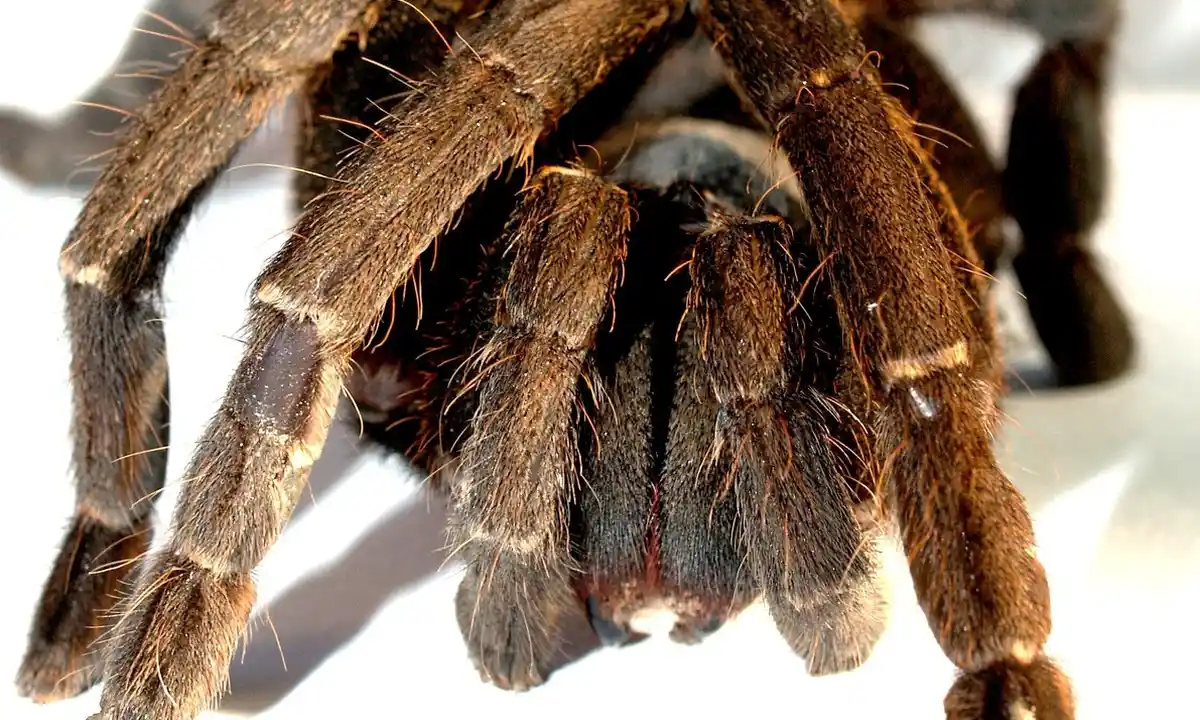
The Mexican Redknee (Brachypelma hamorii) is a master of non-verbal communication. This species almost always provides a clear, escalating series of warnings before even considering a bite, making attentive observation your best tool for prevention. Ignoring these signals is the fastest way to escalate a situation.
Watch for this behavioral sequence, from mild annoyance to serious threat:
- Subtle Withdrawal: The tarantula abruptly stops moving and may retreat into its hide. This is its first request for space.
- Oriented Alertness: It turns its entire body to face you, with its first pair of legs lifted slightly off the substrate. You have its full, wary attention.
- Full Defensive Display: The culmination is the iconic threat posture, often paired with urticating hair flicking. This is a final, unmistakable warning.
The Threat Posture and Urticating Hair Flick
When a Redknee decides you’ve come too close, it will rear back onto its hind legs, lifting its carapace and front legs high to expose its gleaming fangs. This dramatic pose is not aggression, but a desperate visual deterrent saying “I am dangerous, leave me alone.” The silence of the enclosure in this moment is palpable.
Concurrent with the posture, it may use its back legs to kick a cloud of microscopic, barbed hairs from its abdomen. Urticating hairs are a highly effective primary defense because they allow the tarantula to deter a threat from a distance without risking physical contact. For the keeper, these hairs cause irritating rashes and are a much more likely nuisance than a bite.
If you trigger this display, de-escalate immediately. Here is the calm response I’ve used for years:
- Freeze all movement immediately. Do not jerk your hands away.
- Avoid breathing directly onto the enclosure or creating sudden air currents.
- Slowly and smoothly move your hands away from the enclosure’s opening.
- Step back and give the animal at least 30 minutes of complete quiet. Do not resume maintenance.
Does a Warning Always Precede a Bite?
While the sequenced warnings are reliable, a bite can happen with startling speed in cases of acute stress or physical accident. Accidental compression, such as a finger pressing against its body during a rehousing, can trigger an instantaneous reflexive bite. There is no posturing when the animal feels truly trapped.
My defensive OBT, Flash, taught me to read micro-expressions of stress. Knowing your tarantula’s relaxed baseline—how it rests, how it moves—is the key to anticipating and avoiding these high-pressure scenarios altogether. With generally placid species like the Redknee, a sudden change in this baseline is your most urgent alert. By learning to read your tarantula’s body language for stress and defensive signs, you can spot trouble before it escalates. Noticing cues like tensed legs or a sudden shift to a defensive posture helps you back off and keep handling safe.
The Physical Reality of a Mexican Redknee Tarantula Bite
Dispelling mythology is critical. A bite from a Mexican Redknee is a defensive act of last resort, and its medical consequences for a healthy adult are typically minor and localized. Sensational stories far outweigh the mundane reality.
Most describe the sensation as a sharp, sudden pinch. The immediate pain is often compared to a bee or wasp sting, though the overall experience is frequently shorter and less intense. The psychological startle is usually more memorable than the physical discomfort.
Immediate Pain, Symptoms, and Venom Toxicity
On a simple 1-10 pain scale, a Redknee bite consistently falls between a 3 and a 4 for most keepers. The initial puncture burns sharply, with pain peaking within the first hour before gradually fading. You can expect a predictable set of local reactions.
- Redness and swelling around the two tiny fang marks.
- Localized warmth and throbbing at the site.
- Itching that can persist for several days as the area heals.
The venom of Brachypelma hamorii is considered medically insignificant, meaning it lacks the potency to cause systemic illness in humans. Your body’s inflammatory response to the foreign proteins causes the swelling and itching, not widespread toxicity. Symptoms usually resolve fully within a week.
Allergic Reactions and Rare Complications
As with any venom, individual allergic reactions are possible but exceptionally rare. Signs that warrant immediate medical attention include difficulty breathing, swelling of the lips or throat, generalized hives, or dizziness. These are signs of anaphylaxis, not typical venom effects.
In practical terms, the mechanical wound is often of greater concern than the venom. The twin punctures can introduce bacteria, so meticulous cleaning with soap and water is the single most important post-bite action. Monitor for signs of infection like escalating pain, pus, or red streaks spreading from the site. A tetanus booster may be advisable if yours is not current.
Principles for Safe Interaction and Handling Tolerance
After fifteen years with my Chilean Rose Hair, Rosie, and managing the defensive speed of my OBT, Flash, I advocate for a fundamental rule. Your Mexican Redknee (Brachypelma hamorii) thrives when observed, not handled, as this “Look, Don’t Touch” approach eliminates unnecessary stress and its associated bite risk.
- Prioritize the spider’s comfort over curiosity. Handling is a profound stressor, disrupting feeding, increasing hiding, and potentially triggering a defensive bite from even a docile species.
- If movement is essential, such as for enclosure upgrades, follow a meticulous script. I use the same cautious protocol for my urticating hair-kicking Goliath as I would for a redknee.
Recommended Handling Practices to Avoid Bites
These steps are for essential transfers only, not for leisure. Rushing this process is how escapes and accidents happen, as I learned during a tense rehousing with Flash.
- Assess the tarantula’s current state. A calm, roaming spider is a candidate. Never attempt this if the tarantula is in pre-molt (dark, shiny abdomen), feeding, or displaying threat postures.
- Use a soft brush or large deli cup to gently guide the tarantula. Never grab legs or carapace. Place the container in its path and coax it inside with a light touch behind its abdomen.
- Keep handling sessions extremely brief, close to the ground over a soft surface. Limit any direct hand contact to less than a minute, and always have an escape plan.
- Always wash hands before and after with unscented soap. This removes chemicals, salts, and food scents that could confuse or irritate the spider.
Minimizing Stress During Essential Enclosure Care
Routine maintenance should be nearly imperceptible to your tarantula. Working slowly and predictably prevents the sudden confrontations that lead to defensive behavior. These are essential tarantula maintenance tasks that help keep the enclosure stable and safe. Keeping up with them reduces stress for both you and your pet.
- Feed using long, blunt-tipped tweezers. Drop the prey item near the tarantula’s hide, never directly onto it, to avoid triggering a mistaken defensive strike.
- Spot-clean when the spider is stationary on the opposite side of the enclosure. Use tools to remove boluses and molt debris.
- For full rehousing, prepare the new habitat first. Gently herd the tarantula into a large catch cup on a contained surface, like a table, to manage any sudden movement.
- Long tools are your best friends. They allow you to perform tasks from a distance, keeping your hands out of the tarantula’s perceived threat zone.
Immediate Response and Care After a Bite Incident
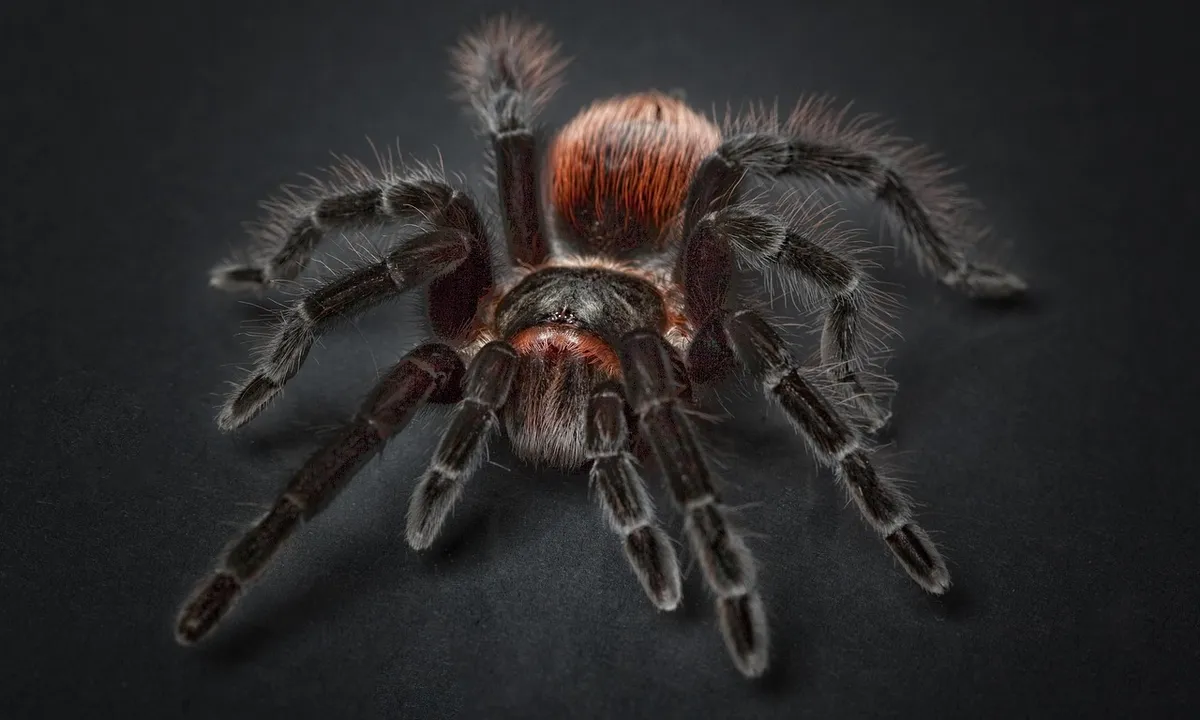
A bite from a Brachypelma hamorii is highly uncommon and typically mild, but a prepared keeper stays calm. Your primary goals are to secure the animal and care for the wound without panic, ensuring safety for all.
- Focus on a methodical response. Fear can lead to jerky motions that may harm the tarantula or worsen the situation.
- Have a simple first aid kit accessible near your enclosures, including antiseptic, bandages, and a cold pack.
First Aid Steps to Take Immediately
Act swiftly but gently. Securing the tarantula prevents a dangerous fall, which is a greater immediate risk than the bite itself. This is part of a safe, step-by-step guide on how to hold your pet tarantula. It helps you practice calm, controlled handling.
- Remain calm and gently place the tarantula back into a secure enclosure. Use a cup or guide it with a brush to avoid further agitation.
- Wash the puncture site thoroughly with soap and warm running water. Clean for at least two minutes to reduce the chance of infection.
- Apply a cold compress to reduce swelling and an antiseptic cream. Wrap ice in a cloth and apply it to the area in 10-minute intervals.
- Monitor the site for several hours for changes. Note any increase in pain, redness, or localized warmth that deviates from normal healing.
When to Seek Professional Medical Attention
Serious reactions are rare but require recognition. Knowing these signs allows you to advocate for yourself effectively in a medical setting.
- Seek immediate attention for systemic symptoms: difficulty breathing, severe swelling spreading from the bite site, dizziness, or a rapid heartbeat, which may indicate an allergic reaction.
- Watch for infection indicators over the next few days, such as pus, red streaks leading from the wound, or fever. Tarantula fangs can introduce bacteria.
- Keep a clear photo of your tarantula on your phone. Providing the species name (Brachypelma hamorii) informs medical staff that the venom is not considered medically significant for most people.
Husbandry for a Contented Tarantula: Reducing Stress and Defensiveness
A Mexican Redknee’s famous calm demeanor is not a guaranteed trait; it is a direct reflection of its captive environment. Proper husbandry directly shapes temperament by minimizing the stressors that trigger defensive bites or hair-flicking. I’ve seen my usually placid Rosie, the Grammostola rosea, adopt a threat posture simply because her hide was rearranged during cleaning. For a species like the Redknee (Brachypelma hamorii), providing a predictable, secure world is the single most effective way to encourage that placid “pet rock” behavior we cherish.
Focus on these actionable pillars of care to foster behavioral well-being:
- Offer an enclosure that mimics their arid scrubland home, providing deep digging substrate and firm hiding spots.
- Maintain stable temperature and humidity gradients within specific ranges to prevent physiological stress.
- Implement a “look, don’t touch” philosophy to avoid startling the animal and to respect its space.
- Feed consistently but not excessively, as a hungry tarantula can be more opportunistic and defensive.
Enclosure Setup for Security and Calm
Think of the enclosure as the tarantula’s entire universe. A poorly designed world creates a nervous inhabitant. Your primary goal is to provide so much security that the tarantula never feels the need to defend itself. For a terrestrial species like the Mexican Redknee, this means prioritizing floor space over height to prevent dangerous falls. This is especially important when determining how much space to allocate for a tarantula enclosure.
Here is the specific blueprint for a security-focused setup:
- Deep Substrate: Provide a minimum of 5-6 inches of a moisture-retentive yet well-draining mix, like coconut fiber or a bioactive soil blend. This allows for natural burrowing and tunneling, a fundamental security behavior. My Burgundy Goliath, Theraphosa stirmi, immediately stopped its frequent hair-kicking when I upgraded it to a deep, packed substrate layer where it could excavate a proper burrow.
- Secure Hide: Offer at least one snug, opaque hide, like cork bark flat or a half-log, firmly placed on the substrate. The tarantula should touch the sides and top when inside, creating a feeling of being enveloped.
- Ample Floor Space: An enclosure length and width of 2-3 times the tarantula’s diagonal leg span is ideal. Too much open space feels exposed, while too little feels cramped.
- Escape-Proof Lid: Use a locking or very secure, ventilated lid. A single escaped tarantula, like my OBT Pterinochilus murinus “Flash” once demonstrated, leads to massive stress for both you and the animal, often resulting in defensive behavior during recapture.
Optimal Temperature and Humidity Ranges for Behavioral Health
Incorrect environmental parameters are silent stressors that manifest as erratic behavior. Maintaining a temperature gradient of 70-78°F (21-25.5°C) and a humidity range of 60-70% is critical for a Redknee’s physiological and psychological comfort. Use digital gauges placed at substrate level for accurate readings, not analog stick-ons.
Here is how deviations impact behavior:
- Too Cold (Below 70°F): Metabolism slows, leading to lethargy or a refusal to eat. A cold tarantula may become unexpectedly defensive if disturbed while trying to conserve energy.
- Too Hot (Above 82°F): Heat stress causes frantic pacing, constant climbing, and extreme agitation. This heightened activity is a precursor to defensive strikes.
- Humidity Too Low: Risk of difficult molts (ecdysis). A tarantula approaching a molt in dry conditions becomes reclusive and highly vulnerable, and any disturbance can be met with defensive posturing.
- Humidity Too High: Promotes mold growth and bacterial bloom in the substrate, which can cause health issues. A tarantula in a soggy, foul enclosure is under constant environmental stress, reducing its tolerance for any interaction.
Create a gentle gradient by heating one side of the enclosure slightly. This allows your tarantula to thermoregulate by moving between slightly warmer and cooler areas, giving it control and reducing overall anxiety. Understanding the ideal temperature and humidity ranges for tarantula enclosures helps you set the gradient safely. These ranges guide how you heat and humidify to support healthy molts and calm behavior. A stable, correct environment tells your tarantula that all is well, paving the way for the calm, observable temperament this species is known for.
Common Questions
What is the typical temperament of a Mexican Redknee Tarantula?
The Mexican Redknee is renowned for its exceptionally calm and docile disposition. Its first instinct is nearly always a slow retreat or to freeze rather than show aggression. This predictable, low-key nature makes it one of the most recommended beginner tarantula species.
How painful is a bite from a Mexican Redknee Tarantula, and what are the effects?
The bite is often compared to a bee sting, with sharp, immediate pain that typically fades within an hour. Effects are usually localized, including redness, swelling, and itching around the fang marks. The venom is considered medically insignificant, and symptoms generally resolve fully within a week with proper cleaning.
What are the recommended handling practices to avoid being bitten?
The safest practice is a “look, don’t touch” philosophy, as handling is a significant stressor. If an enclosure transfer is essential, gently guide the tarantula using a soft brush or catch cup, never your hands. Always keep sessions brief, close to the ground, and ensure the spider is not in a pre-molt or defensive state beforehand. For safe transport and rehouse, use a secure, ventilated container and keep it on a stable surface. Transfer quickly and return the spider to its prepared enclosure as soon as possible.
Do Mexican Redknee Tarantulas show warning signs before they bite?
Yes, they almost always provide clear warnings before escalating to a bite. These begin with subtle withdrawal, progress to an alert posture with raised front legs, and culminate in a full threat display where they rear back to expose their fangs. They will often flick urticating hairs well before considering a bite.
Are Mexican Redknee Tarantulas considered defensive or docile compared to other species?
They are considered one of the most docile species commonly kept. Compared to highly defensive Old World tarantulas or even more skittish New World species, the Mexican Redknee’s primary response is a methodical retreat. Defensive displays are a genuine last resort, not a common reaction.
What should you do if you are bitten by a Mexican Redknee Tarantula?
First, remain calm and safely secure the tarantula to prevent injury. If the tarantula has escaped, calmly locate and recapture it using a container and gloves. Immediately wash the puncture site thoroughly with soap and warm water to prevent infection. Apply a cold compress to reduce swelling and monitor the area, seeking medical attention only if signs of a severe allergic reaction or infection appear.
Cultivating a Lifetime of Observation
With their renowned temperament, the true key to a healthy Brachypelma hamorii is replicating the dry microclimates of its native scrubland. The single most critical husbandry parameter is providing bone-dry substrate, a constantly available water dish, and only overflowing that dish to dampen a small corner of the enclosure once every week or two. Chronic dampness is a far greater threat than any bite, leading to fatal mycosis.
Your reward for this precise care is a decades-long study in serene behavior. You will witness the deliberate excavation of a burrow, the patient ambush from its entrance, and the stunning contrast of their vivid colors against the earth. Their famously slow growth rate teaches profound patience; a specimen can take nearly a decade to reach its full, glorious coloration. Unlike my frantic OBT, Flash, a Redknee’s world moves with a deliberate, quiet grace. Success is measured not in handling sessions, but in the silent, perfect moments of a natural behavior performed under your careful watch.
Further Reading & Sources
- Brachypelma hamorii – The Tarantula Collective
- A Guide to Caring for a Mexican Red-Knee Tarantula
- Mexican Red – Knee Tarantula – Binder Park Zoo
Arlo is a lifelong arachnid enthusiast who believes tarantulas are the world’s most misunderstood roommates. With years of hands-on experience in tarantula care, habitat setup, and species behavior, Arlo combines expert knowledge with a dash of humor to make spider ownership less scary and a lot more fascinating. From choosing the right enclosure to understanding why your eight-legged buddy is doing that weird little pose again, Arlo is here to help you become the best tarantula parent you can be, without getting tangled in the web of misinformation.
Understanding Tarantula Behavior