
What is a ‘Wet Molt’? Understanding and Preventing This Fatal Condition
A ‘wet molt’ is the hushed crisis of tarantula husbandry, a physiological failure where the spider cannot fully extricate itself from its old exoskeleton, resulting in a lethal entanglement. This article dissects the why and how, offering a clear path to prevention. The cornerstone of avoidance is precise environmental control and a hands-off philosophy when your tarantula is most vulnerable.
- Primary Catalyst: Improper humidity balance at critical times
- Highest Risk: New World species and juveniles in rapid growth phases
- Critical Window: The days immediately before and during ecdysis (molting)
This guide translates years of observation and care into actionable steps to safeguard every molt, from the fragile sling to the formidable adult.
The Silent Crisis: Defining a Wet Molt
To understand a wet molt, you must first picture a successful one. Ecdysis, or molting, is a meticulously timed biological ballet. Your tarantula secretes a new, soft exoskeleton beneath the old one. It then flips onto its back, exerts immense hydraulic pressure, and carefully extracts itself from the old shell. The most critical phase comes next: the new cuticle must harden and sclerotize through controlled exposure to air.
A wet molt is the catastrophic failure of this final stage. The new exoskeleton remains pliable, sticky, and tragically soft. It fails to sclerotize. The tarantula is left trapped in a body that cannot support it, like a butterfly that emerged into a rainstorm, its wings forever glued together and unable to dry. Legs may curl and fuse to the body. The abdomen can appear dangerously translucent and wet. Movement is impossible. This condition is almost always fatal.
Root Causes: Why Wet Molts Happen
Wet molts are not random acts of bad luck. They are environmental failures we can prevent. The primary causes are:
- Excessive Humidity During the Molt: This is the chief villain. While some species require high ambient humidity for general health, the actual molting process requires a balance. Air saturated with moisture (often above 85-90%) prevents the new cuticle from drying and hardening properly.
- Stagnant Air and Poor Ventilation: Still air allows humidity to become trapped right around the tarantula’s body, creating a lethal microclimate even if the enclosure’s overall humidity reads as “correct.”
- Saturated Substrate: A waterlogged bottom layer is a recipe for disaster. It constantly evaporates moisture upward, surrounding a molting tarantula in a wet blanket of air. The tarantula may also be in direct contact with this dampness.
- Pre-existing Weakness or Injury: A tarantula already compromised by old age, injury, or illness has a less resilient system. Its body may lack the resources to execute the complex molt cleanly, making it more susceptible to environmental pitfalls.
Humidity: The Double-Edged Sword
This is where husbandry gets precise. My Burgundy Goliath Bird Eater (T. stirmi) thrives at 75-80% ambient humidity. I achieve this with a large water dish, moist substrate on one end of her enclosure, and heavy misting. Yet, even for her, a wet molt is a risk if ventilation is poor. The key is ambient moisture in the air, not a soaked environment.
Contrast this with my Chilean Rose Hair (G. rosea), Rosie. Her needs are bone-dry. Adding significant humidity for a species like this, especially around a molt, invites catastrophe. You must research the specific moisture gradient your species requires and never assume “more is better” during the molt itself. For most terrestrials, a slightly damp patch of substrate far from the hide is sufficient; the tarantula will choose its preferred spot.
The Vital Role of Cross-Ventilation
Ventilation is your silent guardian against wet molts. Stagnant air kills. Good cross-ventilation means airflow-holes on opposite sides of the enclosure, often paired with ventilation low on one side and high on the other to encourage circulation. This moves moist air out and allows fresh air in.
In my experience, a stuffy enclosure feels wrong the moment you open it. I use enclosures with extensive mesh or acrylic doors drilled with multiple small holes. For my OBT, Flash, whose heavy webbing can block airflow, I am extra vigilant. If you see persistent condensation on the walls, your ventilation has failed; you must immediately adjust the setup before the next molt cycle. Airflow is non-negotiable, as vital as the substrate itself.
Recognizing the Signs: Symptoms of a Wet Molt
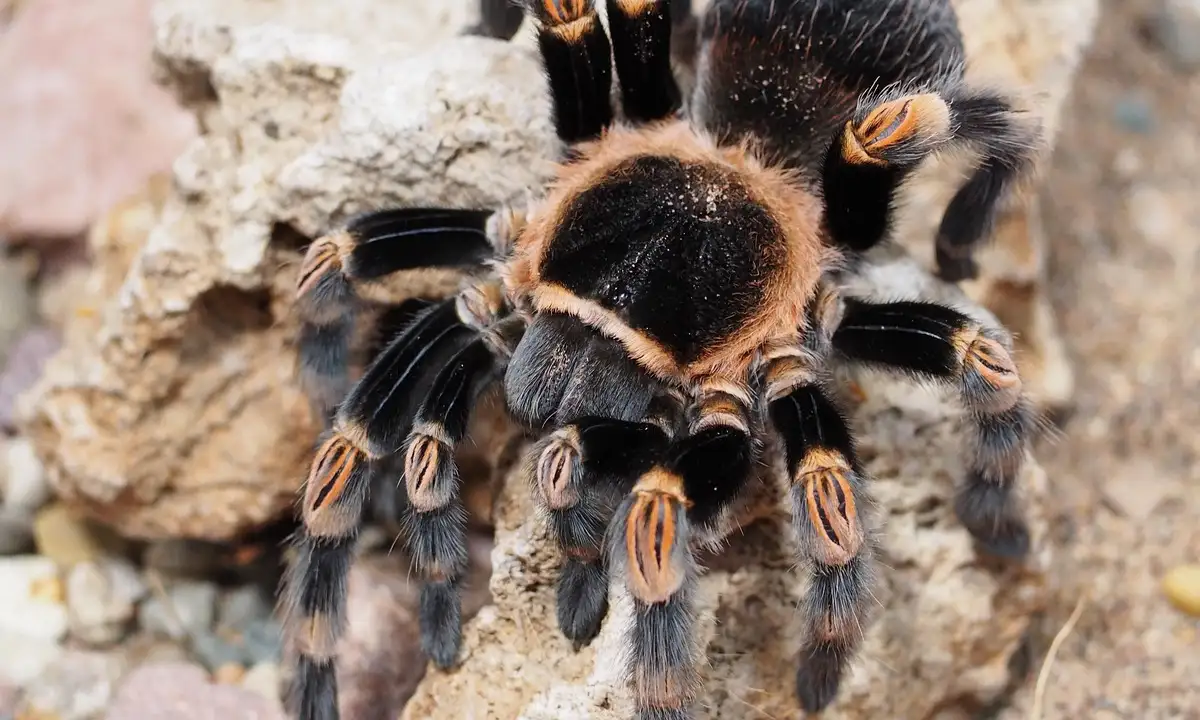
Spotting a wet molt early is your only chance to potentially help. The process grinds to a disturbing halt. A normal molt flows with a quiet, hydraulic grace; a wet molt is a chilling stillness where every minute counts. Watch for these specific symptoms.
- Prolonged, Stalled Molt Position: A healthy tarantula will complete its molt, from flipping over to extracting its body, within several hours. If your tarantula has been motionless on its back or side in the molt posture for over 24-48 hours, this is a major red flag.
- Glossy, Tacky New Exoskeleton: The freshly revealed skin should lose its initial wet sheen and begin to darken within hours. In a wet molt, the new exoskeleton stays pale, shiny, and sticky to the touch, like damp parchment.
- Visible Fluid Droplets: Look for tiny beads of clear or milky hemolymph (the tarantula’s blood) trapped between the old and new skin or coating the new body. This is a definitive sign of internal fluid regulation failure.
- Severe Lethargy and Unresponsiveness: Post-molt, a tarantula is fragile but will slowly right itself. A tarantula experiencing a wet molt is utterly immobile. It will not react to gentle air puffs or vibrations near the enclosure. Its legs may appear crumpled or stuck.
Wet Molt vs. Normal Molt: A Critical Comparison
Understanding this difference is foundational to good husbandry. I’ve witnessed dozens of molts across my collection, from Rosie’s slow, methodical sheds to Flash’s lightning-fast transformations. The contrast between a successful molt and a failing one is profound, written in the language of timing, texture, and tension.
| Normal Molt | Wet Molt |
|---|---|
| The entire process, from flip to full extraction, is typically completed in a single session lasting 4-12 hours for most adult species. | The process stalls completely, with the tarantula trapped in molt posture for days without progress. |
| The new exoskeleton hardens and darkens rapidly, often showing full color within 24 hours. The old skin is a crisp, dry cast. | The new skin remains pale, soft, and moist to the eye. It may have a tacky, plastic-like texture. The old skin often appears soggy. |
| The tarantula is reclusive and vulnerable post-molt but will right itself and begin to move carefully as its exoskeleton cures. | The tarantula is completely immobile and unresponsive. Legs are often folded or adhered together by fluid. |
| Internal fluid pressure is properly managed and redirected to split the old exoskeleton; the new body is dry. | Fluid regulation fails. Hemolymph leaks into the space between the old and new skins, creating a fatal barrier. |
Why Wet Molts Are Typically Fatal
A successful molt is a rebirth. A wet molt is a physiological prison sentence. The freshly emerged tarantula is trapped in a waterlogged suit it cannot escape.
The new exoskeleton, or cuticle, is soft and pliable for only a short period after ecdysis, relying on the controlled drying and hardening process to gain structural integrity. When surrounded by excessive moisture, this process fails. The cuticle remains a weak, gelatinous sheet.
This leads to two catastrophic failures. First, the soft exoskeleton cannot support the tarantula’s own weight or internal hydrostatic pressure. Its body, particularly the abdomen, can become crushed or grotesquely deformed under its own mass. It cannot stand, much less walk.
Second, the damp, soft cuticle is the perfect substrate for opportunistic pathogens. Bacterial or fungal infections can colonize the tarantula’s surface in hours, leading to rapid, fatal sepsis. In the wild, a compromised tarantula is quick prey; in our care, it succumbs to microscopic invaders we cannot see until it is far too late. This highlights the importance of addressing common tarantula health problems promptly and effectively.
From my experience, once a tarantula is visibly stuck in a wet molt-legs curled, abdomen misshapen, unable to right itself-the point of no return has almost certainly been passed. Intervention at this stage often only prolongs suffering. Some care guides describe this as the “death curl”—the final posture observed in tarantulas that have ceased to recover. A deeper guide to tarantula health explains how to distinguish a reversible distress curl from an irreversible final posture and what humane steps, if any, are appropriate.
Emergency Response: Is There Any Treatment?
If you discover a tarantula in a suspected wet molt and it shows faint signs of life, action must be immediate, delicate, and realistic. Distinguishing a molt from a decline can help you decide how to respond. Success is exceedingly rare, but these steps offer a slim chance.
- DO NOT touch or pull the tarantula. Any physical manipulation will tear its impossibly delicate new skin and cause fatal injury.
- Immediately improve ventilation. Remove any enclosure lid, and use a fan in the room (not pointed directly at the tarantula) to increase air circulation. The goal is to lower ambient humidity quickly.
- Gently absorb excess moisture. Use the corner of a dry paper towel or a small artist’s brush to carefully wick away pooled water from the enclosure floor near the tarantula. Avoid touching the tarantula itself.
- Create a dry, warm area. If possible, move the entire enclosure to a warmer spot (low 80s°F). A small space heater across the room can help, but avoid drastic temperature spikes.
- Wait in silence. For the next 12-24 hours, provide absolute quiet and darkness. Do not attempt to offer food or water.
You must also prepare for the kindest, hardest choice: euthanasia. If the tarantula shows no improvement or its condition deteriorates, allowing a natural death may mean hours of suffering. The accepted humane method for invertebrates is placement in a freezer. This is a last act of responsibility.
I faced this with a Caribena versicolor sling years ago. Despite perfect ventilation, it molted directly into a water droplet. I followed every step, but after 18 hours of it lying motionless with crumpled legs, I knew. Making that decision for a creature so small and so wanted is a haunting, sobering lesson in the fragility we are tasked with protecting.
Proactive Prevention: Your Best Defense Against Wet Molts
Preventing a wet molt is not about complex intervention; it is the foundation of respectful, observant care. Your role is to craft a stable environment where the natural process of ecdysis can unfold without deadly interference from excess moisture. This hinges on three pillars: substrate management, enclosure engineering, and species-specific knowledge.
Mastering Substrate and Moisture
The substrate is your tarantula’s terrestrial world. It must be deep enough for burrowing and packed firmly to prevent collapses. I use a 5 to 6-inch depth for my adult fossorial species. That burrowing instinct underpins the guidance in the ultimate guide to tarantula burrows. It explains why they dig and how to support that behavior in captivity. A moisture gradient is critical: the top layer should be bone-dry, while the lower third can be slightly damp to the touch, mimicking the security of a deep, cool burrow.
To create this gradient, I pour water directly into one corner of the substrate, allowing it to seep downward. This technique prevents surface sogginess. Misting is a poor choice for humidity control and can be catastrophic. I learned this early on when misting near my Chilean Rose Hair, Rosie; it only spiked humidity briefly and left droplets on the walls that could distress a molting spider. Never mist directly onto a tarantula, especially one in pre-molt. Also, keep in mind that heating and humidity go hand in hand—many common mistakes in this area can harm your tarantula. For example, using heat sources without a thermostat or relying on humidifiers that cause rapid humidity swings can stress or injure your spider.
- Use substrates like coconut fiber or topsoil mixes that retain humidity without becoming waterlogged.
- Pack the substrate down firmly to support burrow walls and prevent cave-ins.
- Always provide a full, shallow water dish for drinking; this is a safer hydration source than a wet environment.
Engineering the Perfect Enclosure
Ventilation is the silent partner to humidity control. Stagnant, moist air is the primary ingredient for a wet molt. You need cross-ventilation-air holes on opposing sides of the enclosure-to create a gentle, passive airflow that whisks away excess moisture without creating a draft.
Balancing this with humidity retention is species-specific. For my OBT, Flash, I use an enclosure with extensive ventilation panels to maintain the bone-dry conditions his species thrives in. For Goliath, my Theraphosa stirmi, I use a tank with lower cross-ventilation and a deep, damp substrate layer to maintain 80% humidity without stifling the air. The key is to avoid sealed, “fauna box” type lids that trap every molecule of evaporated water; sometimes, I drill small additional holes to improve air exchange.
Species-Specific Vigilance
Not all tarantulas share the same risk. Moisture-dependent genera like Theraphosa (Goliath Bird-eaters) or Chromatopelma are at higher risk if housed with poor ventilation. Your first step in prevention is researching the natural history of your specific tarantula—is it from an arid scrubland or a humid rainforest floor? That awareness ties into the five biggest humidity-ventilation mistakes tarantula care often involves. Understanding those mistakes helps you tailor humidity and airflow to each species. This informs every husbandry decision. My docile G. rosea, Rosie, comes from arid Chile and would suffer in the humid setup I maintain for Goliath.
Monitoring the Pre-Molt Phase
As your tarantula enters pre-molt, its needs shift. Signs include a darkening abdomen, loss of appetite (Rosie famously stops eating for months), and increased reclusiveness. In the week before a suspected molt, I slightly reduce moisture added to the substrate, relying on the established gradient and a full water dish to provide hydration without elevating ambient humidity. This helps ensure the air is not saturated when the new, soft exoskeleton is exposed.
- Look for a duller carapace and the tarantula weaving a molting mat or sealing its burrow.
- Do not offer food during this time, as live prey can injure a vulnerable tarantula.
- Resist all temptation to disturb or handle the animal; stress can complicate the molt.
FAQs
What is a ‘Wet Molt’?
A wet molt is a catastrophic failure in a tarantula’s molting process where the new exoskeleton cannot dry and harden properly. This leaves the tarantula trapped in a soft, sticky skin, unable to move or support its body. It is almost always fatal due to physical deformation and secondary infections.
What causes a wet molt?
The primary cause is excessive humidity in the enclosure during the critical molting period. Other factors include stagnant air from poor ventilation, waterlogged substrate, and pre-existing health issues in the tarantula. It’s an environmental failure, not a random event, emphasizing the need for precise husbandry. Signs of incorrect humidity in a tarantula enclosure can include condensation on the glass and mold growth, or molting difficulties. Regularly monitor humidity with a gauge and adjust ventilation or substrate moisture to keep conditions stable.
What are the symptoms of a wet molt?
Look for a molt that stalls for over 24 hours with the tarantula motionless on its back. The new exoskeleton remains glossy, pale, and tacky, often with visible fluid droplets. The tarantula shows severe lethargy and unresponsiveness, with legs possibly curled or fused.
How can a wet molt be treated?
Immediately improve ventilation by increasing airflow and gently absorb excess moisture near the tarantula with a dry paper towel. Create a warm, dry environment and provide absolute quiet. However, treatment success is very rare, and humane euthanasia may be necessary to prevent prolonged suffering. To align with proper care, ensure the tarantula’s enclosure is properly ventilated and securely closed, using a mesh top or vents to promote air exchange. Regularly monitor humidity and airflow to keep a dry, warm environment without stagnation.
What are the prevention strategies for a wet molt?
Prevent wet molts by maintaining proper humidity levels specific to your tarantula’s species, ensuring excellent cross-ventilation to avoid stagnant air. Use a moisture gradient in the substrate and always provide a water dish instead of misting. A proper substrate moisture gradient means a drier surface with moister areas deeper in the substrate, letting your tarantula choose its preferred humidity. Monitor pre-molt signs closely and avoid disturbances during this vulnerable time.
Long-Term Success
Preventing a wet molt always circles back to a single, non-negotiable factor: For species requiring it, maintaining adequate hydration through substrate moisture and a full water dish is your most powerful preventative tool. A dry spider is a vulnerable spider, and the molting process demands every internal resource it has. Your vigilance with humidity isn’t about creating a swamp; it’s about providing a safety net of ambient moisture your tarantula can use at its discretion.
Beyond the substrate, the greatest joy in this hobby comes from quiet observation. Watch your tarantula’s engineering as it lays down silken trip lines, or the careful ritual of a hunt. My old G. rosea, Rosie, will sit for months in perfect stillness, a lesson in patience I’m still learning. This patient observation is your best diagnostic tool, allowing you to notice the subtle signs-increased webbing, a darkening abdomen-that signal the approach of a healthy molt. Respect the process, provide the foundation, and you’ll witness one of nature’s most precise miracles in the silence of your own home.
Further Reading & Sources
- Get To Know About Molted Feather Clumps And Fright Molts In Birds – Birdfy
- The Basics: Feather Molt | All About Birds
- Moulting – Wikipedia
Arlo is a lifelong arachnid enthusiast who believes tarantulas are the world’s most misunderstood roommates. With years of hands-on experience in tarantula care, habitat setup, and species behavior, Arlo combines expert knowledge with a dash of humor to make spider ownership less scary and a lot more fascinating. From choosing the right enclosure to understanding why your eight-legged buddy is doing that weird little pose again, Arlo is here to help you become the best tarantula parent you can be, without getting tangled in the web of misinformation.
Molting Process