
How Long Can a Chilean Rose Hair (G. rosea) Survive Without Water?
Published on: February 23, 2026 | Last Updated: February 23, 2026
Written By: Arlo
A desiccated Chilean Rose Hair can appear dead, its legs tucked tight, a silent statue in a bone-dry enclosure. This species, famous for its stoic nature, prompts the critical question every keeper faces: how long can a pet tarantula truly survive without water? Based on my 15 years with Rosie, my G. rosea, I can say that while they are remarkably resilient, their ability to endure drought is not a feature to test. An adult can potentially survive weeks, even months, in a dry state, but this is a survival mode that causes immense stress and organ damage, not a sustainable husbandry practice. This article breaks down the science of tarantula hydration and the precise signs of dehydration you must watch for.
Quick Stats:
- Origin: Arid scrublands of Chile and Bolivia
- Type: New World, Terrestrial
- Growth Rate: Exceptionally slow
This guide will provide the clear, experience-based husbandry needed to ensure your tarantula, from fragile sling to venerable adult, never faces the silent threat of dehydration.
The Survival Timeline: How Long Without Water?
A robust adult tarantula may persist for several weeks to a few months without a fresh water source, but treating this as a known fact, rather than a dire warning, is a fundamental mistake in animal stewardship.
This timeline fractures under the weight of individual variables; my elderly Grammostola rosea, Rosie, has weathered accidental dry spells with stoic resilience, while a spiderling in my care perished after just ten days without adequate humidity. The difference between a durable survivor and a rapid decline hinges on biology, not luck.
- Species Origin: Tarantulas from arid ecosystems are evolutionary masters of water retention compared to rainforest dwellers.
- Body Mass: A large abdomen acts as a fluid reserve, granting adults a buffer that tiny slings simply do not possess.
- Life Stage: Growing juveniles and molting individuals have critically heightened hydration needs for new tissue formation.
- Overall Health: A tarantula already stressed by injury, parasite load, or poor nutrition will dehydrate with alarming speed.
Unpacking the Variables: What Affects Water Needs?
Species and Natural Habitat
Evolution sculpts a tarantula’s relationship with water. My Burgundy Goliath, Theraphosa stirmi, hails from humid forest floors where moisture is constant; its physiology expects it. My Chilean Rose Hair, however, evolved in scrubland where dew and rare rains are the only sources, leading to a slower, more conservative metabolism.
| Common Name | Scientific Name | Native Humidity Range |
| Chilean Rose Hair | Grammostola rosea | 40-60% |
| Burgundy Goliath Bird Eater | Theraphosa stirmi | 75-85% |
Individual and Life Stage Factors
A tarantula’s water requirement is not static. A voracious juvenile building mass needs more than a sedentary adult. The process of ecdysis, or molting, demands significant internal hydration to split the old exoskeleton and expand the new one-I always increase moisture when I see a pre-molt lethargy set in.
Assessing your tarantula’s specific need is a three-step observation habit.
- Identify the species: Research its native climate to establish your baseline humidity strategy.
- Note its life stage: Adjust care for a delicate sling, a fast-growing juvenile, or a mature adult.
- Observe its current behavior and cycle: A reclusive tarantula in pre-molt requires a different approach than an active one building extensive web tunnels.
Reading the Signs: Symptoms of Dehydration
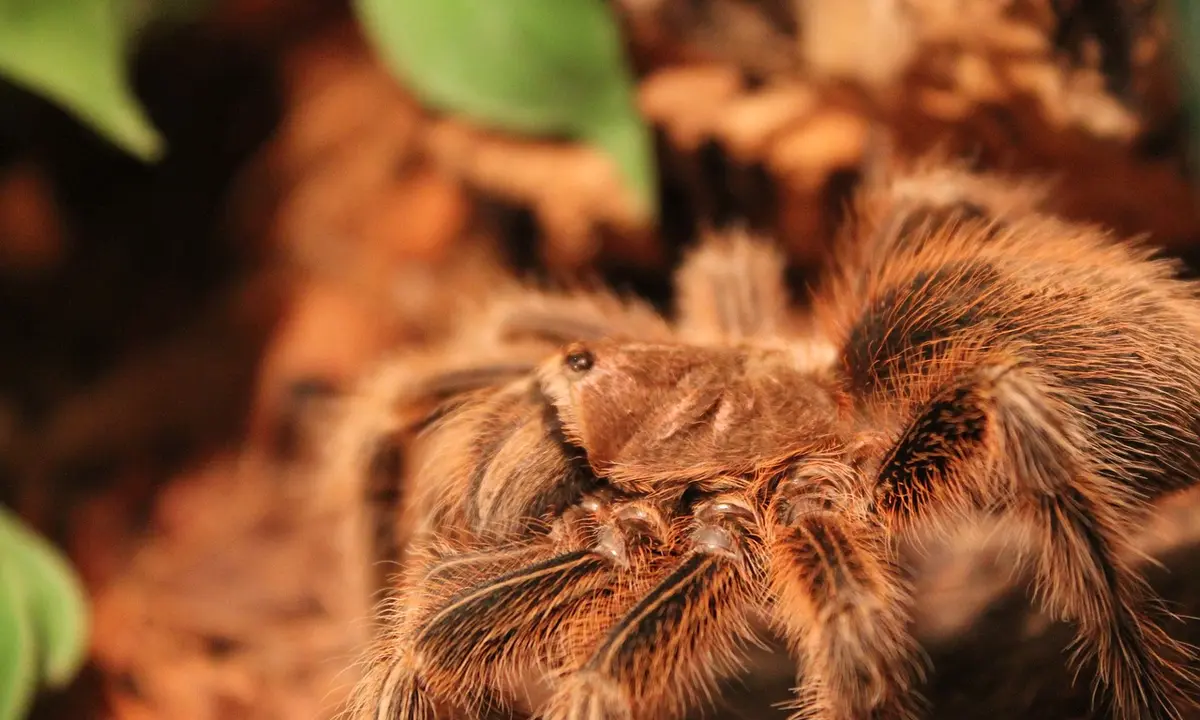
Missing the subtle cues of a thirsty tarantula is easy. Their needs are quiet, expressed through shifts in appearance and behavior rather than sound. By watching body language—posture, leg position, and movement—you can spot stress before it escalates. Reading their defensive signs—like a tarantula flattening, raising its legs, or flicking urticating hairs—lets you adjust handling and setup accordingly. Learning to read tarantula body language is your most critical skill in preventing a crisis before it begins.
Physical Symptoms (The “Look Test”)
Perform a visual check during normal cage maintenance. A dehydrated tarantula will show these clear, physical warnings: To tell if your tarantula is dehydrated, learn the quick cues and take action early to rehydrate. This awareness helps you keep your tarantula healthy.
- A Shrunken, Wrinkled Abdomen: The plump, rounded opisthosoma deflates, showing distinct wrinkles or folds like a raisin. This is the most glaring red flag.
- A “Skeletal” Appearance: The space between the carapace (head) and abdomen becomes pronounced, and the pedipalps and legs may look thin and spindly.
- Dull, Lackluster Setae: The vibrant hairs on species like my Goliath (T. stirmi) lose their luster, appearing matted and faded instead of crisp and bright.
- Pronounced Lethargy: Movements become slow and labored. A normally active spider may sit in one place for days, even in the open.
Behavioral Clues (The “Action Test”)
Behavior shifts often accompany the physical changes. Watch for these actions:
- Refusing Prey: A hungry tarantula that consistently ignores food, especially over weeks, may be prioritizing water.
- Prolonged Hiding: While many species are reclusive, an unusual, uninterrupted retreat can signal distress.
- Seeking Moisture: You may find the spider sitting directly in its water dish or pressed against the dampest glass corner of the enclosure.
I once missed the early signs with my OBT, Flash, who spent two full days motionless atop his cork bark. Only when I noticed his slightly puckered abdomen did I realize he wasn’t just being calm-he was conserving every drop of moisture. A full water dish and a light corner misting had him back to webbing furiously within 48 hours. That silent lesson taught me to observe, not assume.
Hydration in Action: How to Provide Water Properly
Providing water isn’t just about dumping liquid in a cage. It’s about creating a reliable, safe source that respects the spider’s natural behaviors and your specific species’ needs. Your goal is to offer hydration without inducing stress or compromising the enclosure’s environmental balance.
The Primary Method: The Water Dish
For the vast majority of tarantulas, from arid Grammostola to tropical Theraphosa, a simple water dish is the cornerstone of hydration. Misting is a poor substitute. A dish allows for natural, deliberate drinking and provides a stable humidity reservoir without soaking the entire enclosure. My Chilean Rose Hair, Rosie, will sometimes sit for ten minutes, front legs delicately dipped, drinking her fill-a behavior misting never encourages.
- Choose a Shallow, Sturdy Dish: Use a bottle cap, a small ceramic petri dish, or a resin decor piece. It must be too shallow for drowning and heavy enough not to tip.
- Anchor it Securely: Sink the dish slightly into the substrate or place it on a flat, stable surface away from the tarantula’s main burrow entrance.
- Use Fresh, Dechlorinated Water: Room-temperature tap water treated with a reptile water conditioner is perfect. Avoid distilled water.
- Clean and Refill Weekly: Dump out old water, wipe the dish to remove algae or substrate, and refill. This prevents bacterial growth.
Supplementary Moisture: Misting and Substrate
The water dish is primary, but some situations call for added atmospheric moisture. This is not about spraying the spider directly.
Strategic Misting: Lightly mist only one side of the enclosure glass or decor. This is useful for tropical species (like my T. stirmi) or for a spider showing pre-molt dryness. For arid species like G. rosea, avoid misting entirely; a damp substrate can cause more stress than dehydration.
Substrate Moisture & Gradients: For moisture-dependent species, pour a generous amount of water directly into one corner of the substrate. This creates a gentle moisture gradient—one area is damp, the rest is dry—allowing the tarantula to choose. My Burgundy Goliath’s enclosure always has a perpetually damp peat moss corner he retreats to, while the rest of his space stays comfortably humid, not wet. This is how you create a proper substrate moisture gradient for your tarantula. Keep an eye on the gradient and refresh the damp area as needed to prevent mold and ensure balance.
The Role of Environment: Humidity, Substrate, and Heat
Your tarantula’s enclosure is its entire world. The conditions within that microclimate directly control the rate at which it loses precious moisture to the air. High heat and low humidity act like an invisible drain, steadily pulling water from your tarantula’s book lungs and delicate tissues. By understanding the ideal temperature and humidity ranges for your tarantula, you can tailor the enclosure to keep moisture balanced. These targets vary by species, but aiming for them helps prevent stress and dehydration.
I keep most of my enclosures between 72-78°F (22-26°C). Temperatures consistently above 85°F (29°C) drastically increase metabolic and respiratory water loss. For humidity, think in terms of brackets aligned with a species’ origin:
- Arid/Dry: 40-50% relative humidity (e.g., Grammostola, Aphonopelma)
- Moderate/Temperate: 50-65% relative humidity (e.g., Brachypelma, Tliltocatl)
- Tropical/Humid: 70-80%+ relative humidity (e.g., Theraphosa, Avicularia)
These numbers are guides, not absolutes. I verify them with a simple digital hygrometer placed near the substrate. The right substrate is your primary tool for managing this moisture. It acts as a reservoir.
- Coconut Fiber (Coir): Excellent moisture retention, good structure for burrowing. I use this as a base for most of my mixes.
- Prepared Topsoil (Organic, No Additives): Holds moisture well and is very natural. I always bake it before use to eliminate pests.
- Peat Moss: Holds tremendous water but can become acidic and compacted. I use it sparingly in mixes for moisture-loving species.
- Sphagnum Moss: A superb humidity aid. I add clumps to corners or burrow entrances for tropical tarantulas like my Goliath.
- Vermiculite: A mineral that holds water and releases it slowly. I sometimes blend a small amount into substrate for my most humidity-dependent animals.
A deep layer of appropriate substrate allows you to create a moisture gradient-damp at the bottom, drier on top-giving your tarantula the power to choose.
Species-Specific Strategies: From Deserts to Rainforests
General advice fails here. Do all tarantula species have the same hydration needs? No—tarantulas from the Atacama Desert and those from the Amazon basin have fundamentally different hydration blueprints. Their care must reflect that.
Caring for Arid and Desert Species
Think of species like my Grammostola rosea, Rosie. Her Chilean homeland experiences long, dry periods. Her setup is simple: a deep, dry substrate, a hide, and a water dish that is never empty. For arid species, the water dish is the non-negotiable cornerstone of hydration; everything else can be bone-dry.
I provide a shallow, wide ceramic dish for Rosie, refreshed weekly. She doesn’t always drink from it visibly, but its presence regulates the tiny pocket of humidity in her hide. “Dry” does not mean sterile. An occasional, light overflow from the dish into one corner of the substrate provides a subtle moisture sink without raising overall humidity. This mimics the rare dew or condensation she might find in the wild.
Rosie has gone on fasts lasting over eight months. Throughout these hunger strikes, her full water dish remained. Her resilience is built for aridity, but even she has limits that a constant water source prevents.
Caring for Tropical and Humidity-Loving Species
Now, consider my Theraphosa stirmi, Goliath. His world is one of constant, thick moisture. His enclosure requires active management. I maintain 75-80% humidity for him not by misting, which is fleeting, but through damp, deep substrate and a large water dish that also serves as a soaking pool.
His substrate is a 6-8 inch deep mix of coconut fiber, topsoil, and sphagnum moss. I pour water directly into the corners, saturating the bottom third. The top stays loose and drier, preventing pest issues. This method creates a stable, rising humidity that lasts for weeks.
Balancing this moisture with ventilation is critical to prevent stagnant air and mold. I use cross-ventilation-holes on opposite sides of the enclosure-to allow for air exchange without creating a drying tunnel. A hygrometer is essential here. Without one, you are guessing, and guessing often leads to a dehydrated or respiratory-stressed animal. Observing your tarantula is the final test: a content, humid-loving species will often sit out in the open, while one that is too dry may sequester itself in a damp corner or, worse, spend excessive time over the water dish. For more tips on monitoring your tarantula’s health, see what are the signs of incorrect humidity in a tarantula enclosure.
Common Questions
How long can a tarantula survive without water?
An adult tarantula from an arid species can potentially survive for several weeks to a few months without water, entering a severe survival state. However, this is extremely stressful and harmful, not a recommended practice. Providing constant access to fresh water is a fundamental responsibility of care. Spiderlings and juveniles have far less reserve and may perish within days.
What factors affect a tarantula’s water needs?
The primary factors are species origin, life stage, and individual health. Tarantulas from arid climates are more efficient at water retention than tropical species. Growing spiderlings and individuals preparing to molt have significantly higher hydration requirements. A tarantula’s overall body condition and activity level also directly influence how quickly it uses its water reserves.
How do you provide water to a tarantula properly?
The most effective method is a shallow, sturdy water dish filled with dechlorinated water, cleaned and refilled weekly. For most species, this is sufficient. For moisture-dependent species, you can add a moisture gradient by dampening one corner of the substrate. Avoid spraying or misting the tarantula directly, as this can cause stress. Substrate choice is a key part of maintaining a tarantula’s enclosure, varying by species. Regular checks and occasional refreshing keep moisture and humidity stable.
What are the signs of dehydration in a tarantula?
Clear physical signs include a shrunken, wrinkled abdomen and a thin, “skeletal” appearance between the body sections. Behavioral clues include prolonged, unusual lethargy and the tarantula sitting in or directly over its water dish. A dehydrated tarantula may also refuse food for extended periods. To tell if hunger or stress is driving these behaviors, check our feeding behavior guide for tarantulas. It helps distinguish normal appetite from stress- or dehydration-related changes.
How does a tarantula’s environment affect its water requirements?
Enclosure heat and humidity are critical. High temperatures accelerate water loss through respiration. Low humidity, especially for tropical species, acts like a constant drain on moisture. Using an appropriate substrate that can hold moisture (like coconut fiber) helps maintain a stable microclimate and reduces the spider’s environmental stress.
Sustaining Hydration, Sustaining Life
For all their stoic resilience, tarantulas exist in a delicate balance with their environment. The single most important husbandry parameter for preventing fatal dehydration is not misting or humidity percentages, but providing a clean, full water dish at all times. This simple, permanent resource gives your spider full agency to drink when its physiology demands, creating a buffer against miscalculated enclosure humidity or prolonged fasting periods.
Beyond the water dish, the true joy lies in quiet observation. Watch for the subtle dip of the carapace as your tarantula drinks, or the methodical way my Burgundy Goliath, Goliath, will sometimes stand over his dish in his humid enclosure. Notice the intricate tunnels of a fossorial species, which help trap moisture at deeper, cooler levels. This patient observation is your greatest tool-it transforms basic care into an understanding of a life being lived on its own silent, deliberate terms.
Further Reading & Sources
- Chilean Rose Hair Care – The Tarantula Collective
- Chilean Rose-haired Tarantula Fast Facts Scientific Name: Grammostola rosea
- Chilean Rose Tarantulas | Arizona Exotics | -Arthropods Resources
Arlo is a lifelong arachnid enthusiast who believes tarantulas are the world’s most misunderstood roommates. With years of hands-on experience in tarantula care, habitat setup, and species behavior, Arlo combines expert knowledge with a dash of humor to make spider ownership less scary and a lot more fascinating. From choosing the right enclosure to understanding why your eight-legged buddy is doing that weird little pose again, Arlo is here to help you become the best tarantula parent you can be, without getting tangled in the web of misinformation.
Heating and Humidity