
The Escaped Tarantula Recovery Checklist: How to Find Your Pet Safely and Quickly
Published on: December 24, 2025 | Last Updated: December 24, 2025
Written By: Arlo
An escaped tarantula is a keeper’s silent alarm, a sudden shift from curated care to a precision search mission in your own home. This article provides a calm, step-by-step field guide born from experience, including my own frantic search when my defensive P. murinus, Flash, disappeared behind a bookshelf. Your first move is always to pause, secure the room, and methodically check every dark crevice within a three-foot radius of the enclosure.
Quick Stats:
- Origin of Crisis: Most escapes occur during feeding, maintenance, or failed enclosure locks.
- Type of Hunt: A slow, visual sweep beats a frantic rummage; tarantulas are masters of stillness.
- Recovery Timeline: Immediate action yields the highest success, with most found within the first 12 hours.
This checklist will transform your anxiety into actionable steps, guiding you to a safe reunion with your pet.
Your First Critical Steps After the Escape
Securing the Immediate Area
Do not panic. Your first actions are about containment, not immediate capture. I learned this the hard way years ago, chasing a sling in circles while it simply ran under a baseboard. Your primary goal is to stop the escape from becoming a household-wide crisis.
Immediately close all doors to the room. Turn off ceiling fans and any portable fans that could disorient or blow a lightweight spider. Block the gap under the door with a towel. If you have other pets, secure them in another room.
Check nearby vertical surfaces. Many tarantulas, especially arboreal species or startled terrestrials, will climb walls or curtains. Look for tiny shadows or silhouettes against light-colored walls. An escaped spider is not trying to get far; it is trying to find a secure, dark crevice. Tarantulas grip with claw-like tarsi and dense hairs that help them cling to walls. Their feet provide adhesion that lets them climb vertical surfaces with surprising ease.
Reading the Escape Clues
Before you tear the room apart, pause and observe. The scene holds evidence. Look for a faint trail of substrate leading from the enclosure. A damp patch or a single strand of silk on the tank’s rim can indicate the exit path.
Consider your tarantula’s species and personality. My old-world Flash (P. murinus) would bolt for the darkest, most cluttered corner to web up. My Goliath (T. stirmi), a heavy-bodied terrestrial, would likely seek a tight, humid hiding spot. The spider’s natural instincts are your best map to its current location.
Check warm spots first. Heat sources like electronics, appliance motors, or cable boxes are powerful magnets for a cold-blooded animal. Run your hand along the back and top of your computer tower or gaming console-you might feel the subtle warmth they seek.
Building Your Systematic Search Plan
Nighttime Search: Following Natural Behavior
Tarantulas are primarily nocturnal. Turn off all lights and wait at least an hour after full darkness. Return with a dim flashlight or a red-light headlamp, which is less startling. Move slowly and scan at spider-eye level.
Listen. In the silence, you might hear the faint, scratchy tick of eight feet on a hard surface. Focus your search on the room’s perimeter. Check along baseboards, behind furniture pushed against walls, and in the plush space under sofas and bookshelves.
This method works because you are searching when the animal feels most confident to move, increasing your chances of seeing it actively exploring. I’ve found more escapees in two hours of patient night searching than in a full day of frantic daylight rummaging.
Daytime Search: Checking Potential Hiding Spots
During the day, your tarantula will be tucked away. You must think like a spider seeking a secure retreat. Methodically check every possible cavity.
- Inside shoes, boots, and bags left on the floor.
- Between books on a shelf and inside hollow decor.
- In the folds of curtains and drapes, especially near the floor.
- Behind and underneath all furniture-use a flashlight to illuminate shadows.
- In houseplant pots, between leaves, and in the drainage tray.
For larger terrestrial species like a Goliath bird eater, gently feel along the underside of upholstered furniture where it meets the frame. Wear gloves to protect from potential urticating hairs. The search is a slow, tactile process of eliminating safe harbors one by one. If you have a particularly defensive species, have a large deli cup and a stiff piece of cardstock ready to safely cup and slide them once found.
Executing a Safe and Humane Capture
Assembling Your Capture Kit
Gather these tools before you search. A prepared kit prevents panic and keeps you both safe. I keep mine in a dedicated tackle box after a midnight chase for Flash, my Orange Bitey Thing.
- A clear plastic deli cup or critter keeper with secure lid.
- Stiff cardstock or a flexible piece of plastic for guiding.
- A soft-bristled paintbrush for gentle coaxing.
- Long, blunt-ended tweezers (12+ inches) for moving obstacles.
- A flashlight with a red filter or dim setting to avoid startling.
- Thick gloves for moving furniture, not for handling the tarantula.
Your goal is to guide, not grab, using barriers and patience as your primary tools. The cup and card method is your cornerstone-it creates a mobile, temporary wall.
Techniques for Defensive vs. Docile Tarantulas
Behavior dictates your approach. A stressed tarantula perceives you as a predator, and forcing contact can cause falls or defensive bites. Common signs your tarantula is stressed or aggressive include a raised threat posture and exposed fangs. If you notice these cues, back away and avoid handling.
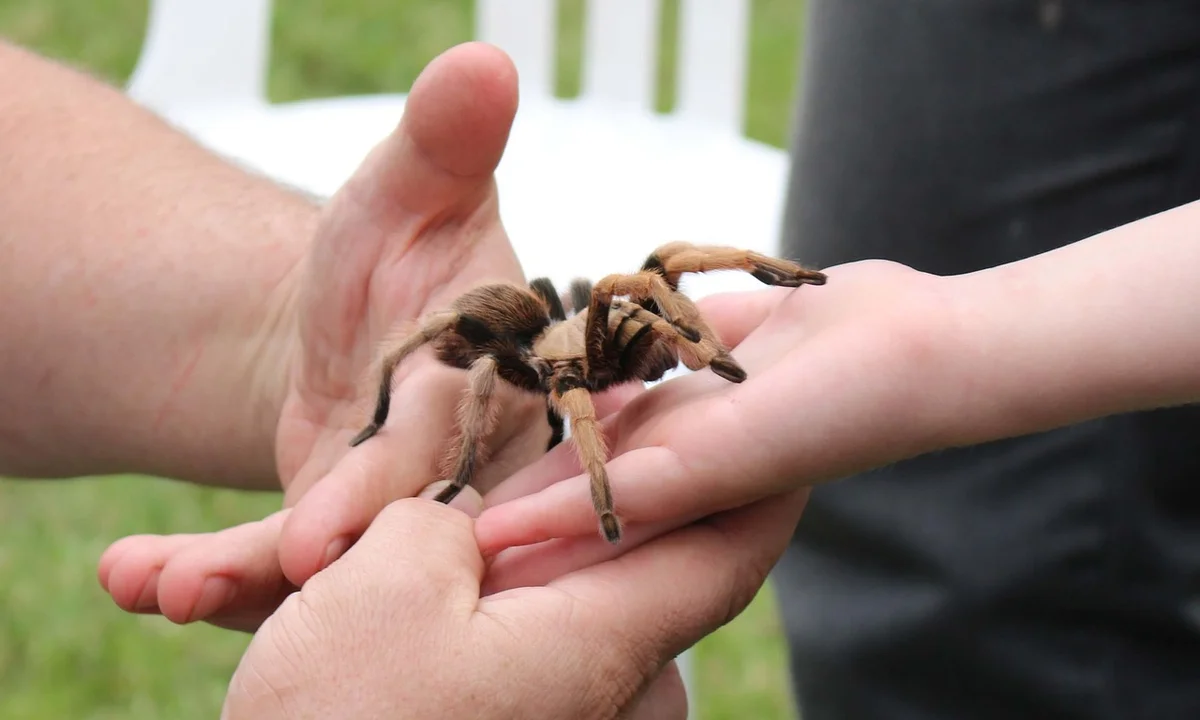
For docile species like my old Rosie (Grammostola rosea), the process is often straightforward. Slowly lower the cup over her. Slide the cardstock underneath, sealing her inside. Her typical stillness works in your favor, but move with a steady, unwavering slowness to avoid triggering a sudden bolt.
Defensive, fast tarantulas like my Pterinochilus murinus require a different tactic. Flash views any intrusion as a threat. Do not attempt to cup her directly if she is raised and posturing.
- Use the long tweezers to gently place the cup in her path, open-side toward her.
- With the paintbrush, apply light pressure behind her abdomen, encouraging her to walk forward into the container.
- If she rears up or flicks urticating hairs (a common tactic of my Theraphosa stirmi, Goliath), pause. Wait for her to settle.
For any defensive specimen, your mantra is containment first, capture second-corner them gently against a wall or baseboard to limit escape routes. I have successfully rehoused Flash three times using this method of controlled herding.
Post-Recovery Care and Observation
Setting Up a Quarantine Enclosure
Do not return your tarantula directly to its home enclosure. A simple, sparse quarantine tank lets you monitor it and prevents hidden injuries from becoming infected. If you must handle it during enclosure cleaning, keep it in the quarantine tank and use slow, steady movements to minimize stress. Handle only when necessary, and reintroduce to the home enclosure only after you’ve completed the cleaning and observed the tarantula’s condition for a safe period.
My emergency setup is a small, ventilated plastic box with these components:
- Two inches of slightly dampened coconut fiber substrate (70% humidity for moisture-dependent species, bone dry for arid ones).
- A shallow bottle cap for water.
- A single piece of cork bark or plastic hide for security.
- No live prey for at least 48 hours.
This minimalist approach eliminates climbing hazards and allows you to see your tarantula clearly at all times. This setup also supports proper quarantine for a new tarantula. Keep a dedicated quarantine enclosure in a quiet, warm area (72-78°F for most species) for 4-6 weeks, and monitor feeding and molts before considering introduction to other tarantulas.
Monitoring for Injury and Stress
The silence of the enclosure is your best indicator. A healthy tarantula will sit still, but alert. These can also be early warning signs that something may be wrong. If you notice lethargy or a change in eating, shedding, or general behavior, consult an exotic-pet veterinarian. Watch closely for these signs over the next week.
Check for physical damage first. Look for leaking hemolymph (a clear or milky fluid) from the abdomen or limbs, or a limp, dragging leg. A small injury can be sealed with a dab of pure cyanoacrylate (super glue), a technique I’ve used twice with success, but major trauma requires an exotic veterinarian.
Observe behavioral stress. Refusal of food is normal, but prolonged agitation-constant pacing, frantic climbing, or repeated threat poses-signals a problem. My T. stirmi once fasted for two weeks after an escape, burying itself completely to recover.
Resist the urge to handle or disturb it. Provide water and peace. Successful recovery is measured in stillness: when your tarantula resumes its normal, calm posture, you can consider returning it to its permanent home. When it’s settled, plan a safe transport to its permanent enclosure. Use a secure, escape-proof container and minimize handling during the move to rehouse it safely.
Securing the Habitat to Prevent Repeat Escapes
Finding an escaped tarantula is a heart-pounding experience you do not want to repeat. The most critical step after a recovery is a forensic examination of the enclosure to engineer a failsafe system. Every gap is a potential exit, and tarantulas are masterful contortionists driven by pure instinct.
Choosing and Modifying Enclosure Lids
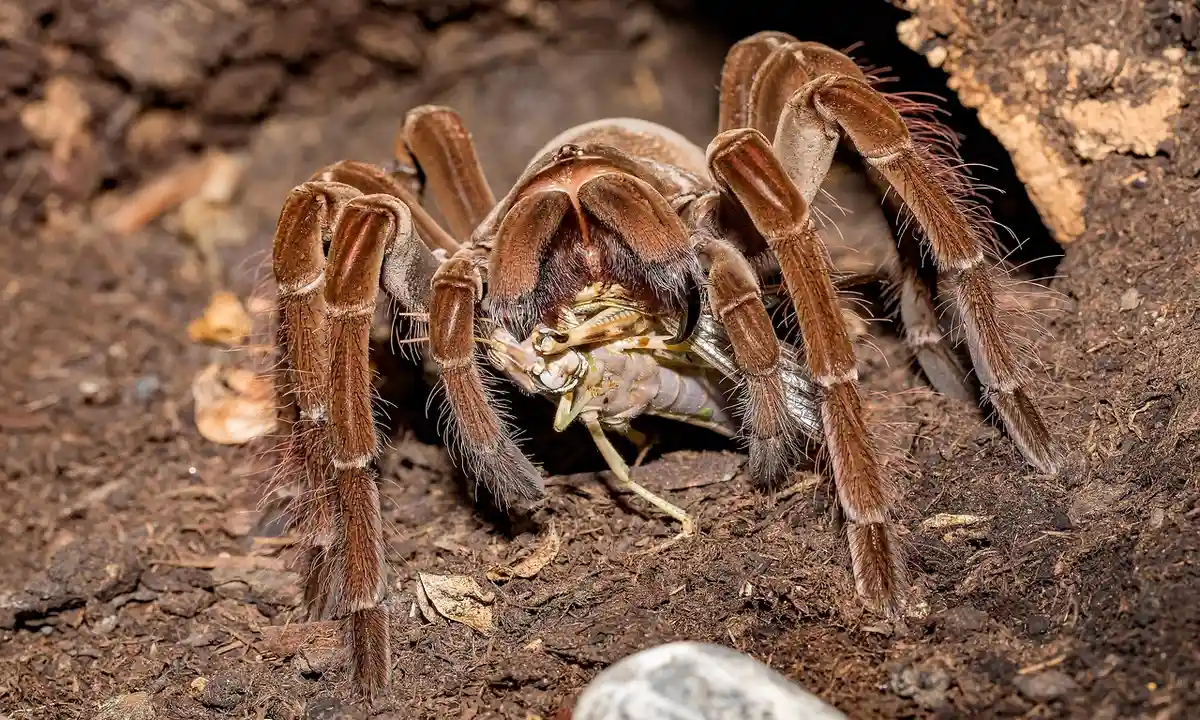
The lid is the most common failure point. A standard metal mesh screen, while providing ventilation, is a double hazard. It can snag and injure a falling tarantula’s legs and, more importantly, it is easily manipulated by strong chelicerae. My T. stirmi, Goliath, has deformed several mesh corners with his sheer power.
Your best options are:
- Acrylic or Plastic with Drilled Holes: This is my preference for all my terrestrial species. I drill ⅛-inch holes in a crosshatch pattern across the top and sides for cross-ventilation. It is escape-proof, prevents leg injury, and maintains humidity beautifully for my moisture-dependent pets.
- Glass with a Secure Sliding Top: Effective, but the track must be perfectly clean and the glass must have a lip. I learned this after my P. murinus, Flash, once slid a poorly-fitted glass pane open a mere 3 millimeters-just enough for her to vanish.
- Modified Mesh: If you must use screen, line the entire interior rim with a 2-inch band of clear packing tape. This creates a slick, unclimbable barrier they cannot grip. Always apply the tape to the inside, as external tape risks your tarantula sticking to it during exploration.
Beyond the lid, run your finger along every seam. Seal tiny gaps at cage corners with non-toxic silicone aquarium sealant, allowing it to cure fully for 48 hours before reintroducing the animal.
Establishing a Pre-Exit Routine
Most escapes happen during maintenance, not from structural failure. You need a ritual, a series of checks performed every single time the enclosure is opened. This routine is as vital as locking your front door.
My personal pre-exit routine, forged from past close calls, follows these steps:
- Contain the Area: I work over a large, empty plastic storage tote. If the tarantula bolts, it falls into this contained basin, not onto the floor. For my fast arboreals, I often do this in a bathtub.
- Tool Preparation: Long, soft-bristled paintbrushes and clear plastic deli cups with lids are placed within arm’s reach before I even touch the enclosure. Fumbling for tools mid-escape is a recipe for disaster.
- The Two-Point Seal Check: Before lifting, I visually confirm the tarantula’s location. I then check that any sliding doors or latches are fully disengaged to avoid a jerky, partial opening. My hands are dry; moisture can make a tarantula’s grip fail.
- Controlled Access: Open only the section you need. For watering, I might slide the lid open just enough for the water dish. There is no need to expose the entire enclosure for a simple task.
- Mindful Closure: After the task, I visually scan the enclosure rim and the interior for any legs near the top. I listen for the definitive click or feel the firm resistance of a fully seated lid. I then give it a gentle, upward tug test to confirm it is secure.
This methodical process transforms a nerve-wracking event into a calm, controlled interaction, drastically reducing stress for both you and your eight-legged pet. It turns reactive panic into proactive, confident care.
## Common Questions
How long can my tarantula survive outside its enclosure?
Most tarantulas can survive for several weeks outside their enclosure, as they are resilient and their metabolism is slow. Their primary need is access to water, which they will seek out in places like bathroom fixtures or damp basement areas. However, they are at greater risk from environmental hazards like dehydration, other pets, or accidental injury the longer they remain lost. In a home setting, going without water for too long is a serious risk to a tarantula’s health. That’s why keeping a steady water source and proper humidity is essential for pet care and long-term survival.
Is my escaped tarantula a danger to my family or other pets?
A tarantula’s primary instinct when escaped is to hide, not to seek confrontation. They pose minimal danger to humans, but a frightened tarantula may bite defensively if cornered or mishandled. For other pets like cats or dogs, the tarantula is more likely to be seen as prey, so securing other animals is a critical first step to protect your spider. If a bite occurs or the tarantula escapes, calmly secure it with a container and lid, avoiding direct contact. Then wash the bite area with soap and water and seek medical advice if there is persistent pain, swelling, or signs of infection. For further guidance, refer to the tarantula bite safety steps.
Should I use food or bait to lure my tarantula out?
Using live prey as bait is generally not effective and can complicate your search by adding another moving creature to track. Instead, focus on mimicking their ideal hiding environment by placing small, dark containers like deli cups along the walls. Your best “bait” is patience and a systematic nighttime search when they are naturally active.
What should I do if I find my tarantula in a dangerous spot, like inside an appliance?
Immediately unplug the appliance if it is safe to do so. Do not attempt to poke or prod the tarantula out, as this may force it deeper into machinery. Instead, create a gentle exit path by placing its capture cup at the opening and using a soft brush or gentle air puff from a distance to encourage it to walk out on its own into the container.
When should I give up the search and consider my tarantula lost for good?
Do not give up the search for at least several weeks. Continue periodic nighttime checks and keep the room secure. Tarantulas are exceptionally good at remaining hidden and may only reveal themselves when they need water or during a molt. Many are found weeks later in stored boxes, closet corners, or behind rarely moved furniture.
Long-Term Security and Serenity
Once your tarantula is safely contained, shift your focus permanently to prevention. The non-negotiable rule for every keeper is verifying a secure, gap-free enclosure lid before and after every single interaction, no exceptions. I reinforce this habit after my Burgundy Goliath, Goliath, once leveraged his considerable strength against a slightly warped acrylic door. The profound silence of an empty enclosure is a teacher you only need once. Equally important is ensuring proper ventilation without sacrificing security. Choose vented lids or screened panels designed to seal tightly so air can circulate while staying gap-free. Double-check locks, latches, and the seal where lid meets wall. This simple, consistent action is your best defense against future escapes.
With security assured, you can fully appreciate the quiet drama of your tarantula’s world. Observe the careful placement of silk by your webbing species, or the patient sculpting of a burrow. I spend hours watching my Chilean Rose Hair, Rosie, in her perfect stillness-a masterclass in calm. Patience is the cornerstone of this hobby. Rushing, poking, or constantly disturbing your pet undermines the trust you’re building and masks their true nature. The most rewarding insights come from respectful distance and attentive watching, allowing the animal to express its natural behaviors without interference, rather than trying to elicit reactions through stimulation.
Further Reading & Sources
- My Tarantula Escaped! How To Find A Lost Tarantula
- Catching an Escaped Tarantula | Pets on Mom.com
- My pet tarantula escaped! Help! | Arachnoboards
Arlo is a lifelong arachnid enthusiast who believes tarantulas are the world’s most misunderstood roommates. With years of hands-on experience in tarantula care, habitat setup, and species behavior, Arlo combines expert knowledge with a dash of humor to make spider ownership less scary and a lot more fascinating. From choosing the right enclosure to understanding why your eight-legged buddy is doing that weird little pose again, Arlo is here to help you become the best tarantula parent you can be, without getting tangled in the web of misinformation.
Understanding Tarantula Behavior